World Governments Are Pulling Back on Foreign Aid, but Migrant Workers Just Hit a $729 Billion Record
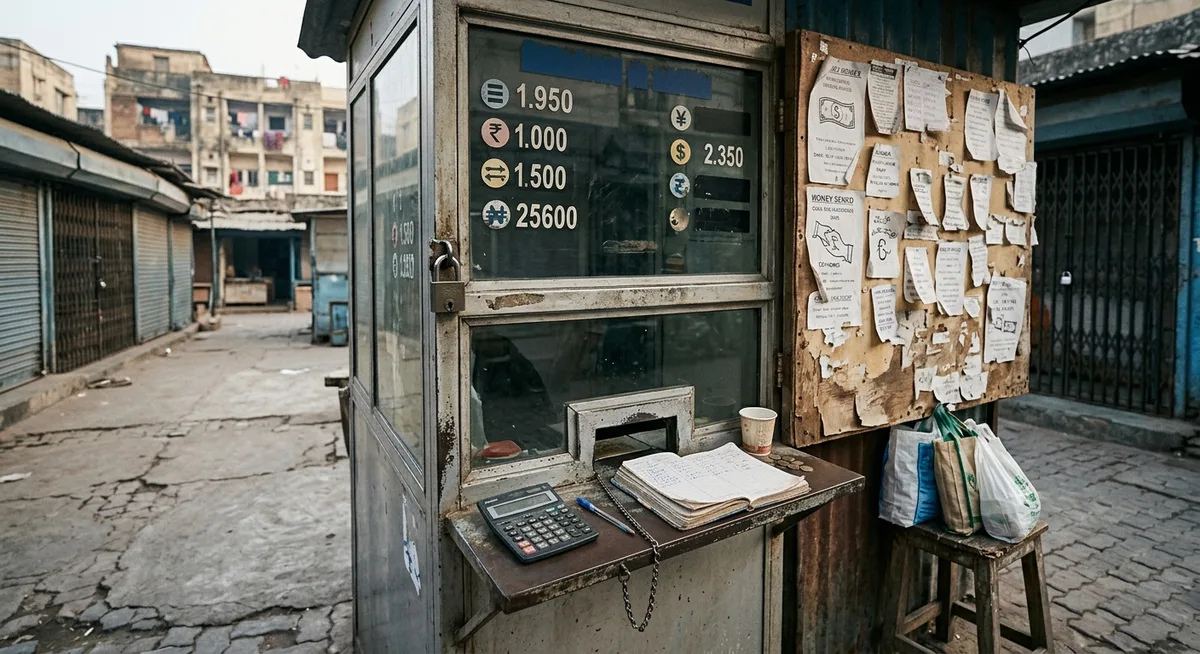
On any given Saturday in the Queens borough of New York or the suburbs of Dubai, the most significant movement of global capital isn’t happening on a trading floor. It is happening in the queues of storefront wire services and through the digital interfaces of smartphone apps.
These transactions represent a massive private transfer of wealth. In the Philippines, a significant portion of the $40 billion in annual remittance inflows is directed toward healthcare, including the purchase of life-sustaining medications like insulin. In India, the world’s largest recipient of these flows, migrant funds are a primary driver of rural consumption, paying for everything from primary school tuition to agricultural equipment. In El Salvador, these transfers cover the university costs for a generation of students whose families rely on income earned in North American service industries.
These individual acts of sacrifice have coalesced into a global economic juggernaut. According to data released by the International Fund for Agricultural Development (IFAD), migrant remittance inflows to low- and middle-income countries (LMICs) reached a record of $728.6 billion in 2025. This volume of capital is now more than four times larger than the combined official development budgets of every donor nation on Earth.
While world leaders debate foreign policy in summits, the 184 million international migrants driving this $729 billion flow have become the world’s de facto development agency. They are filling a void left by Western governments that are increasingly prioritizing domestic expenditures.
The Great Retraction
For decades, Official Development Assistance (ODA)—the technical term for government-to-government aid—was the primary yardstick for how the wealthy North supported the developing South. Earlier this year, the OECD reported a historic pivot in these flows. Total foreign aid from the 31 members of the Development Assistance Committee fell to $174.3 billion in 2025, a 23.1 percent decrease from the previous year. This represents the sharpest decline in the organization’s history.
The retreat was led by the world’s traditional heavyweight. The United States reduced its development assistance by 56.9 percent in 2025, bringing its contribution down to $29.0 billion. This contraction is attributed to a strategic redirection of federal funds toward domestic manufacturing subsidies and infrastructure projects under the 2024-2025 budgetary framework, alongside a legislative emphasis on border security and domestic industrial policy over international development obligations. For the first time in recent memory, the U.S. was unseated as the world’s top donor, falling behind Germany, which contributed $29.1 billion.
Source: IFAD / OECD, 2026
According to reports from the OECD’s Development Assistance Committee, the decrease in ODA follows five years of growth, with projections suggesting further significant decreases over the coming years as major donors pivot toward inward-looking fiscal policies. As official aid dries up, the financial stability of dozens of nations now rests on the volume of money sent home by their citizens working abroad.
Resilience in a Crisis
Government aid is often a discretionary budget item that can be reduced during election years or fiscal crises. Remittances, by contrast, are counter-cyclical. When economic conditions deteriorate in a recipient country, migrants typically increase the frequency and value of their transfers to compensate for local hardships.
This resilience was documented during the 2020 pandemic. While global Foreign Direct Investment (FDI)—the money corporations spend building factories and offices—crashed by 35 percent, remittance flows declined by only 1.1 percent, according to IMF data. World Bank indicators show that remittances have consistently outpaced other types of external financial flows to low- and middle-income countries for over a decade.
By 2025, the gap between corporate investment and migrant transfers had widened significantly. While FDI to developing nations has fallen by 41 percent over the last decade, remittance flows have nearly doubled. For many countries, these transfers represent the backbone of the national economy. In 2023, remittances accounted for 41 percent of Tonga’s GDP and 39 percent of Tajikistan’s. In Lebanon, a country facing a protracted banking and currency crisis, these private transfers provide nearly a third of the nation’s entire economic output.
Source: World Bank, 2024
World Bank analysis confirms that these flows are timely, stable, and tend to increase during domestic shocks, providing a critical buffer against economic volatility.
The Human Ledger
The scale of these flows is best measured not in billions, but in the specific items they purchase: a liter of insulin, a bag of seed, a semester of tuition. IFAD reports that approximately 75 percent of remittance income is used to cover immediate needs: food, medical expenses, and school fees.
Nearly half of all global remittances—about $233 billion in 2025—flowed into rural areas. In these regions, the money supports agrifood systems and builds climate resilience. When environmental shocks destroy harvests in South Asia or Central America, migrant transfers often provide the capital necessary for farmers to purchase new seeds and equipment, bypassing the bureaucratic delays of government relief programs.
One in six people worldwide—roughly 1.1 billion people—is now connected to remittances as either a sender or a recipient. According to the International Fund for Agricultural Development, the potential benefits of these flows are maximized when families have access to formal financial services that allow them to save and invest the capital rather than simply consuming it.
The Cost of Sending Hope
This private safety net is subject to a significant “tax” levied by the financial services industry. The United Nations has set a Sustainable Development Goal to reduce the cost of sending money to 3 percent, yet global progress toward this target has stalled. As of late 2023, the global average cost to send $200 remained at 6.4 percent.
Geography largely dictates the cost of these transfers. South Asia remains the most efficient corridor, with costs averaging 5.8 percent. Meanwhile, Sub-Saharan Africa remains the most expensive region to send money to, with fees averaging 7.9 percent per transfer.
There is a stark technological divide in transfer pricing. Sending money through a traditional bank costs an average of 12 percent. Digital transfers, by contrast, have dropped to an average of 5 percent. The digitization of these corridors is a primary focus for international development agencies, yet millions of migrants still rely on physical cash-out points because their families in rural areas often lack access to formal bank accounts or stable internet connectivity.
Most expensive region globally
Double the UN 3% target
Most competitive corridor
Source: World Bank / Migration Data Portal
The Dependency Risks
The growing reliance on migrant capital carries significant economic risks, including the “Dutch Disease” phenomenon common in commodity-rich nations. When a country receives massive amounts of foreign currency from its citizens abroad, the local currency can appreciate.
In Nepal, where remittances account for roughly a quarter of GDP, the high volume of foreign currency has contributed to a persistent appreciation of the real exchange rate. This has made Nepal’s agricultural and manufactured exports more expensive on the world market, leading to a decline in domestic industrial competitiveness and a growing reliance on imported goods. This can lead to a “brain drain” cycle, where the most productive citizens view migration as the only viable economic path, further hollowing out domestic industries.
In 2025, the IMF reported that high dependency on remittances can reduce long-term export competitiveness. When a nation’s primary export is its labor force, it risks undermining the development of its own internal markets. Furthermore, the sharp cuts to U.S. and U.K. aid budgets in 2025 have placed an unprecedented burden on these private flows. Analysis from the Center for Global Development suggests that aid suspensions could reduce the Gross National Income (GNI) of 23 countries by over 1 percent, leaving remittances as the primary safeguard against extreme poverty in those regions.
The Global Scorecard
The shift in official aid also reveals a change in the leadership of humanitarian efforts. While the U.S. and U.K. have reduced their commitments, a small group of nations has maintained the UN target of spending 0.7 percent of their GNI on aid.
In 2025, only four OECD members met or exceeded that target: Norway (1.03%), Luxembourg (0.99%), Sweden (0.85%), and Denmark (0.72%). These nations now represent the “old guard” of development assistance, even as their financial influence is surpassed by the sheer volume of migrant capital. The OECD secretariat has noted that the decline in official assistance necessitates a strategy to maximize the impact of the remaining available resources, particularly by lowering the barriers to private capital flows.
A New World Order
The global economy is entering an era where the individual migrant is a more significant economic actor than the government minister. The $729 billion flowing across borders this year is a testament to human resilience and familial loyalty. It is a decentralized, bottom-up form of globalization that operates independently of top-down bureaucracy.
However, relying on the workforce in wealthy countries to fund the development of the Global South is a vulnerable strategy. Migrant workers are often the first to experience job losses during global recessions and frequently lack the legal protections afforded to domestic citizens in their host countries.
As government aid programs contract, the world’s financial stability increasingly depends on the ability of migrants to maintain their monthly transfers. This global safety net is woven from millions of individual threads—resilient for the moment, but under more structural pressure than at any point in the last several decades.
Sources
- OECD — A historic decline in foreign aid: Preliminary 2025 ODA data, April 2026
- IFAD — Remittances nearly doubled in a decade to reach US$729 billion in 2025, September 2026
- World Bank — Migration and Development Brief 40, June 2024
- IMF — Resilient Remittances by Dilip Ratha, September 2023
- Migration Data Portal — Remittances Global Overview 2026, July 2026
- ReliefWeb — International aid fell sharply in 2025, says OECD, April 2026
- Center for Global Development — After Aid Cuts, Here's How to Make the Most Out of Remittances, May 2025
The information presented is for educational and informational purposes only and does not constitute investment advice. MainStreet uses AI to generate content — always verify with qualified financial professionals before making investment decisions. How MainStreet works →
Discussion