Most of the World’s Workers Aren't in the Official Records — Here is Why That Matters
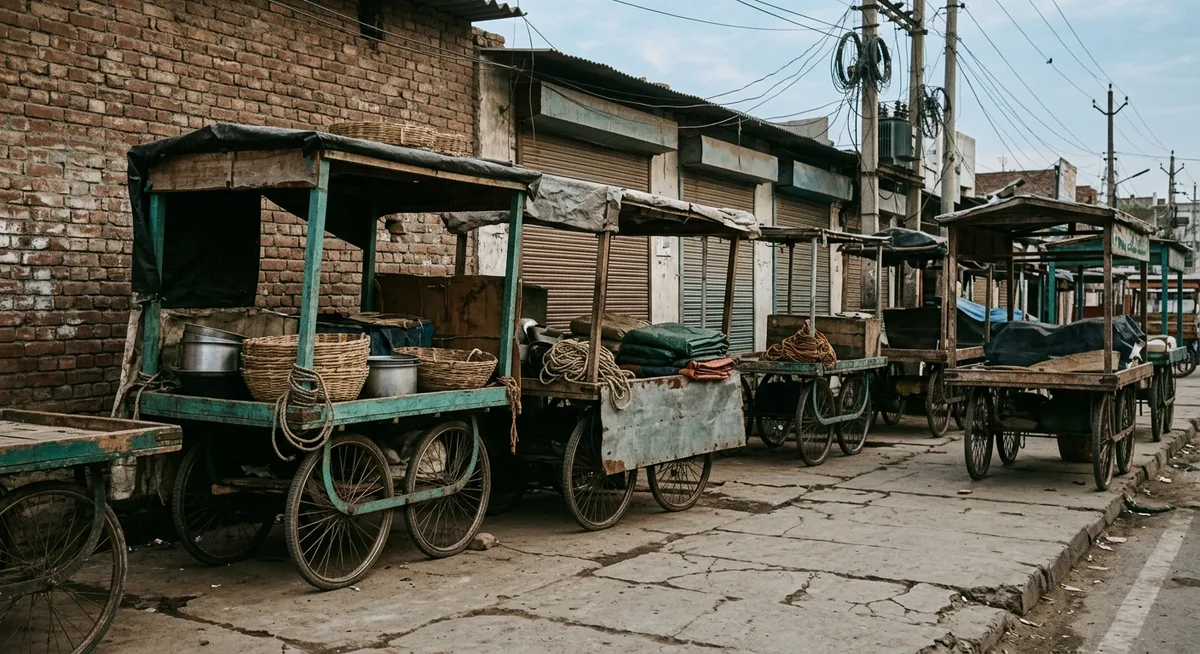
In 2026, the world’s largest employer is not a multinational corporation—it is an invisible economy of 2.1 billion people operating outside official legal and social protections. As of September 2026, the International Labour Organization (ILO) reports that more than 60 percent of the world’s 3.6 billion workers are engaged in the informal economy. These individuals lack legal rights, social protections, and the stability of a standard paycheck, forming a global labor force of street vendors, gig drivers, home-based producers, and day laborers who sustain commerce while remaining statistically marginalized.
The global economic system is currently divided into a two-tier reality: a shrinking group of formal employees with benefits and an expanding mass of informal workers who operate without a safety net. This disparity creates a significant challenge for government policy; because authorities cannot measure this sector with precision, they are frequently crafting national strategies based on data that excludes the labor of six out of ten people on the planet.
In the United States, the discrepancy between official economic data and worker reality is widening. Policymakers frequently cite the “headline” unemployment rate, which stood at 4.1 percent in July 2026. However, this figure fails to capture the growing precarity of the domestic workforce. Data from the Ludwig Institute for Shared Economic Prosperity (LISEP) tracks the “True Rate of Unemployment” (TRU), a metric that accounts for workers who are technically employed but are in precarious, part-time, or poverty-wage positions. In July 2026, the LISEP measured the TRU at 24.9 percent.
Source: BLS / LISEP, 2026
The gap between these two figures represents tens of millions of Americans who are functionally underemployed. Many of these individuals have turned to the informal economy as a coping mechanism. A 2025 report from Zety found that 88 percent of U.S. gig workers took on additional tasks or side jobs specifically to mitigate the impact of persistent inflation on household budgets. When the cost of essential goods and housing increases, the informal economy serves as a primary survival strategy for those whose formal wages have stagnated.
The scale of this “ghost economy” is massive. 2025 estimates from the IMF and EY value the global shadow economy between $12 trillion and $13 trillion annually—a figure roughly equivalent to the total annual economic output of China. In emerging markets, the informal sector contributes an estimated 35 percent to the total GDP. In low-income countries, ILO data from late 2025 and early 2026 indicates that informal employment accounts for 90 percent of all jobs.
Source: ILO / World Bank
Analysis from WIEGO (Women in Informal Employment: Globalizing and Organizing) indicates that informality is not a temporary transition phase but a permanent, structural feature of the global economy. This structural reality requires a shift toward a hybrid economic paradigm that recognizes both formal and informal contributions. However, the World Bank’s Informal Economy Database highlights the difficulty of this integration. Using “Multiple Indicators Multiple Causes” (MIMIC) models, researchers have found that direct surveys consistently underreport informality by 10 to 20 percent because workers often fear tax repercussions or the loss of social benefits if they disclose off-the-books income.
National data reflects varying concentrations of informality. In Thailand, 90 percent of the agricultural sector operates informally. In high-income OECD nations, the shadow economy typically averages between 10 and 15 percent of GDP, but recent trends show these figures are increasing. In Germany, the shadow economy is projected to trend upward through the end of 2026, driven by sluggish growth in the formal sector and rising unemployment, which pushes labor toward unregistered services and sub-contracting.
There are also significant levels of informality within the public sector. 2024 and 2025 data from Cambodia and Timor-Leste revealed that over 50 percent of public sector workers are technically in informal employment arrangements, lacking the standard civil service benefits traditionally associated with government employment.
Source: ILO / World Bank / IMF
The lack of coverage has measurable consequences. Approximately 2 billion people in low- and middle-income countries remained inadequately covered by social protection systems as of 2025. While the World Bank has set a target to reduce this figure by 500 million by 2030, progress in regions like sub-Saharan Africa remains slow, with informal employment rates stagnant at approximately 85 to 90 percent of the total workforce through 2026.
Technological shifts are further accelerating this trend toward precarity. The global gig economy market, valued at $674.13 billion in 2026, is projected to reach $2.52 trillion by 2035. By 2027, freelancers and independent contractors are expected to comprise over 50 percent of the total U.S. workforce. This shift moves gig work from the economic periphery to the mainstream while simultaneously dismantling the traditional 20th-century labor contract.
Generative AI is also a factor in this transformation. As of 2025, one-in-four U.S. workers utilized generative AI in their professional roles. Analysis from the Federal Reserve and the Peterson Institute for International Economics (PIIE) suggests that this technological shift may further “informalize” previously stable jobs by incentivizing task-based, automated contracting over long-term hiring. Research from Columbia University in 2026 indicates a direct link between public sector underinvestment and the expansion of shadow economies; as transparency and government quality decrease, the shadow economy expands to fill the void.
The invisibility of these workers leads to tangible policy failures. In the United States, Medicaid work reporting requirements introduced in 2026 (under H.R. 1) pose a significant risk to those earning near the poverty level—set at $22,025 a year for 2026. According to the Center on Budget and Policy Priorities, workers in cash-heavy or micro-transaction-based roles face high administrative barriers when documenting irregular hours. These bureaucratic hurdles often result in a loss of health coverage for workers who are functionally eligible but cannot provide standard employment verification.
Furthermore, the IMF’s 2026 World Economic Outlook notes that as formal job growth slows to a projected 3.0 percent, the informal sector becomes the primary escape valve for labor. Global energy prices and economic volatility have pushed more workers into informal “coping” strategies to maintain household stability. World Bank analysis suggests that rebuilding the global economy requires a full integration of the informal sector’s productive power into national planning.
The international community has begun to adjust its measurement standards to account for this reality. In late 2023, the 21st International Conference of Labour Statisticians (ICLS) adopted new global standards to refine the measurement of “informal productive activities.” These standards aim to capture the complexity of the digital and household economies that previous metrics overlooked.
This recalibration is essential because urbanization has not eliminated informality as previously predicted. In the Asia-Pacific region, over 65 percent of urban workers remained informally employed as of 2026. Research presented at the World Economic Forum by the University of Johannesburg highlights that informal entrepreneurs provide essential goods and services in these regions but are often blocked from the formal sector by regulatory hurdles.
As 2026 concludes, the profile of the global worker is evolving. The workforce is increasingly characterized by individuals managing multiple digital platforms and varied income streams. Institutional analysis from WIEGO warns that failing to overhaul how world leaders view and measure these two billion workers poses a significant threat to global economic stability. Accurate data remains the first requirement for ensuring that the 2.1 billion people working in the shadows are included in the future of global policy.
Sources
The information presented is for educational and informational purposes only and does not constitute investment advice. MainStreet uses AI to generate content — always verify with qualified financial professionals before making investment decisions. How MainStreet works →
Discussion