Why Batteries Made of Common Salt are Starting to Power the Grid
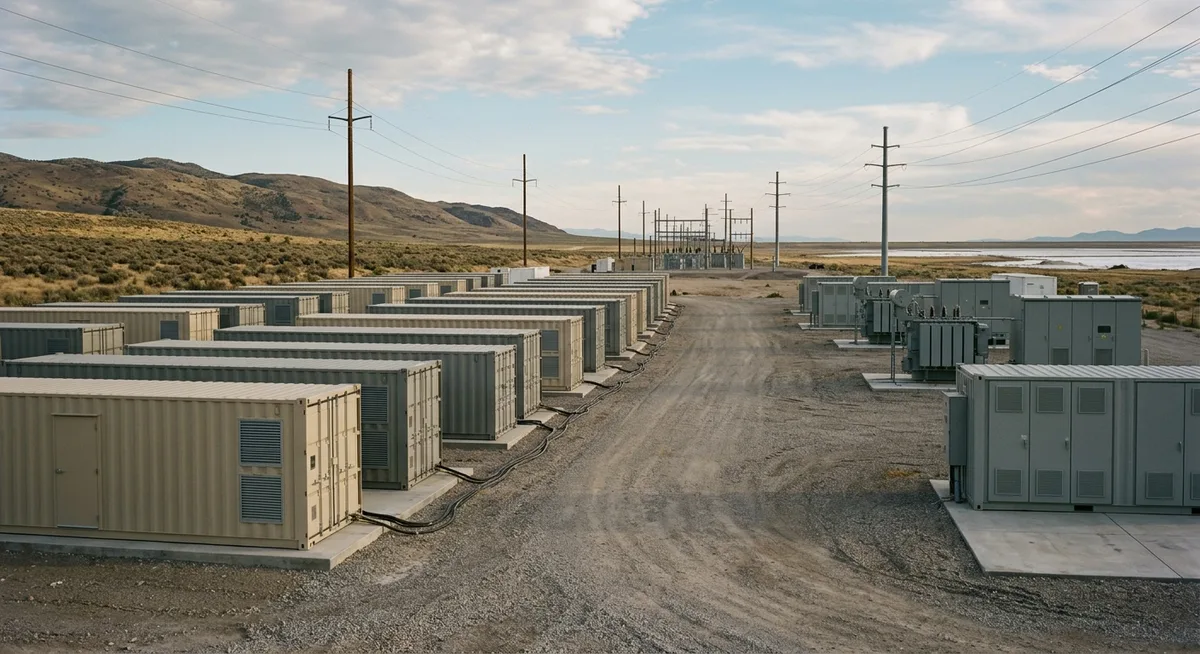
The global energy storage market is entering a period of significant chemical diversification as sodium-ion technology moves from laboratory prototypes to utility-scale deployment. After years of development, these systems are arriving as a solution to the growing pressures on the lithium-ion supply chain and the increasing demand for stationary storage that does not require the high energy density—or the volatile thermal profile—of electric vehicle batteries.
While lithium-ion remains the dominant chemistry for mobile applications, its limitations in stationary contexts are becoming more apparent. Industrial-scale projects are now testing whether sodium—an abundant, low-cost element—can provide the safety and economic stability required for the next generation of the power grid.
Source: IEA / Wood Mackenzie, 2026
The Manufacturing Gap
The current landscape of sodium-ion production is characterized by a significant concentration of manufacturing capacity. According to the International Energy Agency (IEA), as of 2024, the vast majority of the world’s sodium-ion manufacturing capability is located in China. This dominance is a result of rapid industrial scaling and the repurposing of existing lithium-ion production lines, which are approximately 90 percent compatible with sodium-ion chemistry.
In November 2024, industrial milestones underscored this shift. A 1-gigawatt-hour (GWh) sodium-ion project was brought online in China, marking one of the largest deployments of the technology to date. For large-scale grid operators, the primary appeal of sodium-ion is its use of widely available raw materials. Unlike lithium, which requires intensive mining and complex global logistics, sodium can be extracted from soda ash or processed from seawater, providing a potential hedge against the price volatility of rare earth minerals.
In the West, the transition has been more technical and capital-intensive. While several firms have attempted to scale, the path to commercialization remains difficult. Natron Energy, which had been a leader in the development of Prussian blue-based sodium-ion cells, ceased operations in September 2025. This closure highlighted the challenges of scaling new battery chemistries in a market where capital requirements are high and the certification process for new safety standards can be lengthy.
The Engineering Pivot
The engineering focus of sodium-ion development has shifted toward solving the durability and temperature issues that historically limited its use. A major technical hurdle for sodium-ion has been the “cycle life”—the number of times a battery can be charged and discharged before losing capacity.
Recent research has shown significant progress in this area. According to a study published in Nature Energy, researchers at the University of Texas at Austin have developed a sodium battery design that utilizes a solid diluent. By eliminating reactive liquid solvents, this design can match the cycle life of traditional lithium-ion batteries. This development addresses the chemical degradation that occurs during the movement of larger sodium ions through the battery’s internal structure.
Furthermore, sodium-ion batteries demonstrate superior performance in extreme environments. Unlike lithium-ion cells, which require energy-intensive liquid cooling systems to prevent thermal runaway, sodium-ion chemistries can operate safely across a broader temperature range. This allows for simpler, passive cooling designs in stationary storage containers, reducing the “parasitic load”—the energy the battery must spend to keep itself cool.
Source: IEA / Visual Capitalist
The Safety and Insurance Factor
The move toward sodium-ion is also being driven by the commercial realities of insurance and permitting. As battery storage projects grow in size and proximity to urban centers, the risk of “thermal runaway”—a self-sustaining chemical fire—has become a primary concern for insurers and local regulators.
The chemical structure of sodium-ion batteries makes them inherently more stable than their lithium-based counterparts. Because they do not use the same flammable liquid electrolytes or reactive cobalt-based cathodes found in many high-density lithium cells, the risk of a chain-reaction fire is significantly lower. In stationary applications where weight is not a primary constraint, this safety profile becomes a decisive economic advantage.
Reducing the fire risk simplifies the permitting process and lowers the cost of thermal management hardware. For grid-scale installations, removing the need for complex pumps, refrigerants, and specialized fire suppression systems can reduce both the initial capital expenditure and the long-term maintenance costs. This makes the “levelized cost of storage” (LCOS) for sodium increasingly competitive, even if the raw cell cost remains higher than the most mass-produced lithium-iron-phosphate (LFP) cells.
The Economic Landscape
The economic viability of sodium-ion is closely tied to the price of lithium-ion, which remains the industry benchmark. According to BloombergNEF, the volume-weighted average price for lithium-ion battery packs was $139/kWh in 2023. Sodium-ion must compete with this declining price curve while also scaling its own supply chains.
The cost advantage of sodium-ion is primarily found in its bill of materials. Sodium-ion batteries replace expensive lithium with sodium and can use aluminum foil for both the anode and cathode current collectors, whereas lithium-ion requires more expensive copper for the anode. These material swaps can lead to significant cost reductions once production volumes reach the tens of gigawatt-hours.
-
First US Production
Natron Energy begins 600 MW annual production in Holland, Michigan.
-
World's Largest System
100 MW / 200 MWh Datang Hubei station connects to the grid in China.
-
Natron Setback
Natron Energy ceases operations due to capital and certification hurdles.
-
GM Strategic Bet
General Motors partners with Peak Energy for grid-scale sodium storage.
Source: Business Wire / Power Progress / IEA
However, the industry faces a “chicken and egg” problem: sodium cells will be cheaper than lithium only once they are produced at a similar scale, but achieving that scale requires significant upfront investment during a period when lithium prices have stabilized. The current strategy for many manufacturers is to target specific “niches” where sodium’s unique properties—such as the ability to be shipped at zero volts for increased safety—provide an immediate advantage over lithium.
Supply Chain Dynamics
Nations with limited domestic lithium reserves are increasingly viewing sodium as a pillar of energy independence. Because sodium is ubiquitous, found in salt deposits and oceans worldwide, it offers a path to a “sovereign supply chain.” This reduces the geopolitical risk associated with the “Lithium Triangle” in South America or the processing hubs in East Asia.
As stationary storage becomes a larger portion of the global battery market, the demand for “low-density, high-durability” cells is expected to rise. Sodium-ion is positioned to fill this gap, particularly for long-duration storage and backup power for critical infrastructure. In these roles, the battery’s weight is irrelevant; what matters is the cost per cycle and the safety of the installation.
Source: ZVEPOW / Wood Mackenzie
A Diversified Grid
The evolution of the power grid will likely depend on a mosaic of technologies rather than a single chemistry. High-performance lithium-ion will continue to serve the automotive sector where energy density and weight are the primary metrics. For the stationary systems that balance solar and wind power, however, the requirements are different.
The shift toward sodium-ion represents a fundamental transition in energy thinking: moving from a focus on maximum energy density to a focus on maximum energy security and safety. As technical breakthroughs in solid diluents and manufacturing efficiencies continue to emerge, the role of sodium in the global energy mix is transitioning from a laboratory curiosity to an industrial necessity. The era of salt-based storage is no longer a speculative future; it is a developing component of the modern grid.
Sources
- IEA — Sodium-ion battery momentum grows, but challenges remain, 2024
- Energy-Storage.news — Global BESS installs hit 14GWh; 1GWh sodium-ion project online, Nov 2024
- Nature Energy — Fire-Resistant Sodium Battery Breakthrough, Aug 2026
- Business Wire — Natron Energy Achieves First Commercial-Scale Production, Apr 2024
- Power Progress — Battery manufacturer Natron Energy ceases operations, Sept 2025
- https://about.bnef.com/blog/lithium-ion-battery-pack-prices-hit-record-low-of-139-kwh/
The information presented is for educational and informational purposes only and does not constitute investment advice. MainStreet uses AI to generate content — always verify with qualified financial professionals before making investment decisions. How MainStreet works →
Discussion