Two Billion People Are Working in the Shadows — and the Numbers Are Only Getting Harder to Track
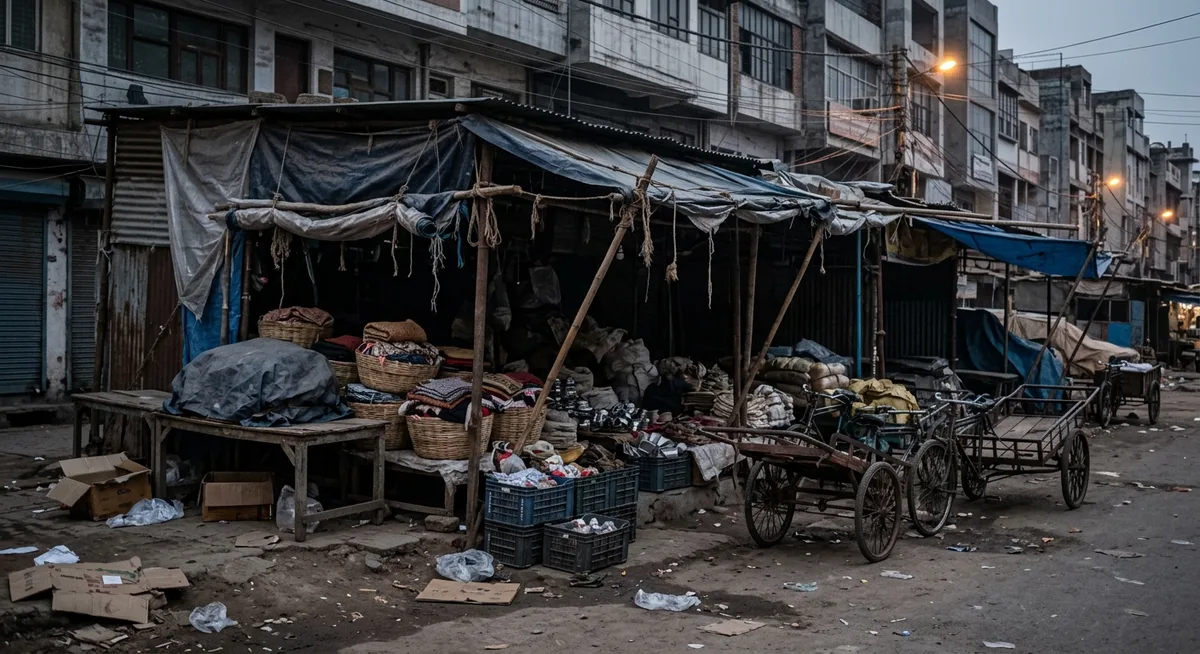
The smell of diesel from small portable generators hangs over the stalls of the Oshodi market in Lagos, where a single transaction for a 500-naira bag of purified water or a repurposed smartphone charger occurs entirely outside the digital ledger. In this environment, the economy moves through physical bills that have been folded and exchanged thousands of times, never once appearing on a formal tax return. These participants represent the informal economy—a global workforce that remains largely invisible to the traditional tools of statecraft. Far from being a fringe phenomenon, this “shadow economy” is the worldwide standard for employment.
Approximately 60.1 percent of the world’s employed population, or roughly 2 billion people, work in the informal economy as of 2023, according to the International Labour Organization (ILO). To understand the global economy today, one must first accept that the majority of the world’s work is conducted outside the boundaries of formal legal and regulatory frameworks.
Research from Women in Informal Employment: Globalizing and Organizing (WIEGO) characterizes informality as a broad spectrum of economic activities that lack state regulation. This is not a marginal segment of the population; rather, it is the primary means of survival for the majority of the global workforce.
The challenge for policymakers is that this vast workforce is highly resistant to standard accounting. Because these activities exist in the blind spots of national statistics, governments often operate with incomplete information, attempting to manage national budgets while more than half of the actual economic activity remains unrecorded.
The Measurement Challenge
Economists have spent decades attempting to quantify labor that, by its nature, leaves few footprints. They utilize indirect proxies: the demand for physical cash, fluctuations in electricity consumption, or the discrepancy between reported national income and aggregate expenditures.
Research from Johannes Kepler University indicates that because these activities are hidden, economists must rely on these indicators to produce estimates that remain approximations rather than exact counts. One of the primary tools used in this field is the “MIMIC” model—Multiple Indicators Multiple Causes. While it is a standard methodology, its accuracy is debated. A 2021 review in the Journal of Economic Literature noted that the model risks double-counting economic activity, which can lead to inconsistent figures across different regions.
Despite these quantification hurdles, current data indicates a pronounced disparity between developed and developing nations. The International Monetary Fund (IMF) estimated that the shadow economy represents an average of 31.9 percent of GDP across 158 countries. However, this average masks two very different economic realities.
Source: ILO / World Bank
In emerging and developing countries, informal employment accounted for 66.8 percent and 89.7 percent of total employment, respectively, according to the 2023 ILO report, “Women and men in the informal economy: A statistical picture.” In Sub-Saharan Africa, the figure reached 89.2 percent as of 2022. By comparison, data from the Federal Reserve Bank of St. Louis estimated the informal economy in the United States at approximately 7 to 8 percent of GDP in 2021.
A Survival Strategy, Not a Tax Dodge
There is a common misconception in high-income nations that the informal economy is primarily a vehicle for tax evasion. However, research from the Peterson Institute for International Economics (PIIE) suggests that for the vast majority of participants, informality is a survival strategy.
In many developing nations, the administrative costs of entering the formal sector—including licensing fees, registration requirements, and bureaucratic delays—can exceed a worker’s total annual income. When the barrier to formalization is higher than the floor of subsistence, workers remain in the shadows to maintain their immediate livelihood.
Agriculture remains the most informal sector globally. According to 2023 ILO data, 94 percent of agricultural workers worldwide are informal. In rural areas, the global informality rate stands at 80 percent, compared to 44 percent in urban centers. This is largely driven by subsistence farming, where families consume their own produce and sell only the surplus in unregulated local markets.
The ILO has documented that for most informal workers, the issue is not a deliberate attempt to evade the law, but rather a legal framework that does not account for their specific economic conditions. These workers frequently operate without social protections, legal standing, or a formal safety net.
This lack of protection has severe consequences during global shocks. During the COVID-19 pandemic, informal workers globally saw an estimated 60 percent drop in income in the first month of the crisis, according to 2020 ILO figures. Without official employment records, these workers were largely ineligible for the government stimulus and unemployment benefits that supported the formal workforce.
The Digital Bridge to the Domestic Shadow Economy
While the scale of informality in India—where 90 percent of the workforce is informal and contributes nearly 50 percent of the national GDP—is vastly different from the U.S. market, the underlying economic incentives are beginning to converge through the concept of “digital formality.”
In the U.S., informality often manifests as “under-the-table” labor in the construction sector or unreported income in the gig economy. The U.S. Department of Labor reported in 2023 that the misclassification of employees as independent contractors in construction results in billions of dollars in lost social security and unemployment tax revenue annually.
The shift extends beyond physical labor. In 2023, the ILO updated its standards to include digital platform workers who lack traditional social protections. These individuals—including delivery drivers and freelance designers—often exist in a hybrid state. They are managed by high-tech, formal platforms, yet they lack the benefits associated with formal employment.
This “informalization” of formal markets means that even in advanced economies like Germany or Japan, the 20th-century model of a lifetime career with a single employer and a predictable pension is declining. The shadow economy is no longer a localized feature of developing markets; it is an integrated component of the modern digital landscape.
Source: IMF / ILO / Ministry of Labour India
The Cost of Invisibility
For governments, a large informal sector creates a recursive fiscal trap. When a significant portion of economic activity is unrecorded, the tax base remains limited.
The World Bank, in its 2021 report “The Long Shadow of Informality,” estimated that tax revenue losses due to the informal economy range from 5 percent to 10 percent of GDP in many developing nations. This limits the ability of the state to fund the infrastructure, healthcare, and education systems that would facilitate the transition into the formal sector.
Education is a primary predictor of informal labor. According to the ILO Statistical Database, workers with no formal education are seven times more likely to work in the informal sector than those with a tertiary degree. Youth are also disproportionately affected; 77 percent of workers aged 15-24 globally are in informal employment, according to the ILO’s “Global Employment Trends for Youth” 2022 report.
The most informal sector globally
Informal rate for young workers
Informal workers are twice as likely to be poor
Source: World Bank / ILO, 2023
Gender dynamics further complicate the issue. In low-income countries, 92 percent of working women are in informal employment compared to 87 percent of men, according to 2023 figures from UN Women and the ILO. In 55 percent of countries worldwide, women’s informal employment rates exceed those of men. Women in the informal sector are frequently concentrated in the most precarious positions, such as domestic work and home-based production.
Strategies for Integration
If the informal economy is a survival mechanism, the policy solution involves making the formal sector more accessible rather than increasing penalties for informal trade.
The OECD suggests that transitioning to formality requires a modernization of the social contract. This includes simplifying business registration processes, extending basic social protections to all workers regardless of contract type, and investing in human capital for vulnerable populations.
In Europe, the trend is shifting toward “digital formality.” The European Central Bank (ECB) observed in 2022 that while traditional cash-based shadow transactions are declining, they are being replaced by peer-to-peer digital services. The challenge for the coming decade is to ensure that these digital transitions lead to enhanced worker protections rather than providing a more efficient way to bypass social safety nets.
As of late 2024, the global economy remains an environment defined by informality. From street-side commerce in West Africa to independent courier services in London, billions of people navigate a system that does not officially recognize their contributions. Until global metrics can more accurately capture this labor, our understanding of the foundations of the global economy will remain incomplete.
For the worker in the Oshodi market, the technical debate over GDP and MIMIC models remains a secondary concern compared to daily survival. Their focus is on the next transaction and the hope that the systems of tomorrow will finally provide the protections that the current formal economy does not.
Sources
- ILO — Women and men in the informal economy: A statistical picture, 2023
- IMF — Shadow Economies Around the World: What Did We Learn Over the Last 20 Years?, 2018
- World Bank — The Long Shadow of Informality: Challenges and Policies, 2021
- WIEGO — Statistics on the Informal Economy, 2023
- OECD — Informality and the Transition to Formality, 2023
- Reuters — Informal workers hit hardest by pandemic income loss, 2020
The information presented is for educational and informational purposes only and does not constitute investment advice. MainStreet uses AI to generate content — always verify with qualified financial professionals before making investment decisions. How MainStreet works →
Discussion