South Korea Just Hit a Historic Population Low—and Now the Military Is Running Out of Men
In the windows of high-end boutiques and along the aisles of major South Korean e-commerce platforms, a measurable transition occurred in 2023. For the first time in the nation’s history, sales of strollers for pets surpassed those for human infants. This market data served as a precursor to a more significant demographic reality.
In early 2024, Statistics Korea released figures indicating that the nation’s total fertility rate—the average number of children a woman will have in her lifetime—fell to 0.72 for the full year, dropping to 0.65 in the final quarter. It was the first time any country had recorded a quarterly rate below the 0.7 threshold. For a population to remain stable without immigration, a replacement rate of 2.1 is required. At 0.65, the demographic trajectory suggests a rapid and sustained contraction of the national population.
According to the Population Census Division at Statistics Korea, the number of newborns in 2023 reached an all-time low. Officials noted in a briefing that the quarterly decline represents a level of demographic contraction without global precedent.
While projections suggest the birth rate could see a slight, temporary stabilization in the coming years due to a backlog of weddings delayed during the COVID-19 pandemic, the structural impact on the South Korean economy and national security is already established. The country has officially transitioned into a “super-aged society,” where the effects are moving from schools and nurseries to the labor market and military barracks.
Source: Statistics Korea / Arirang News
The ‘Echo’ Effect and Market Projections
Demographers suggest the birth rate may move closer to 1.0 in the near term, though this would not necessarily indicate a permanent reversal of the downward trend. Instead, analysts at the Ministry of Data and Statistics point to the “echo boomers”—the children of the original baby boomers who are currently in their peak childbearing years.
Data from the Ministry of Data and Statistics indicates that a modest increase in births in the mid-2020s would reflect this unique demographic window rather than a change in the underlying social preference for smaller families. The ministry notes that while marriage rates showed growth as pandemic-era delays unwound, South Korea remains the only member of the Organization for Economic Cooperation and Development (OECD) with a fertility rate below 1.0. While global averages continue to decline, Korea represents a case study in how rapidly demographic shifts can accelerate.
The $270 Billion Expenditure
The government’s response has involved significant capital. Between 2006 and 2024, the South Korean government allocated approximately 360 trillion won ($270 billion USD) toward pro-natalist policies. This includes the 2024 expansion of the “First Encounter Voucher,” a maternity package designed to provide 1 million won ($750 USD) or more to cover medical and initial childcare expenses for every pregnancy.
Despite this expenditure, the impact on birth rates has been minimal. Data from the Korea Institute for Health and Social Affairs indicates that the crisis is rooted in structural and cultural factors rather than just immediate liquidity. The rapid economic development that transformed the country into a global technology leader also produced a competitive educational and professional environment.
According to a 2023 survey by the Federation of Korean Industries, young professionals cite the high cost of housing and private tutoring as primary barriers to family formation. For a typical 29-year-old employee in Seoul—where the fertility rate dropped to 0.55 in late 2023—the cost of “hagwons” (private academies) can consume a significant portion of a household’s disposable income. This has contributed to the growth of the “4B Movement,” a social phenomenon where women choose to opt out of traditional dating, marriage, and childbirth in response to social pressures and career risks.
Source: The Korea Herald / OECD
Military Sustainability and Automation
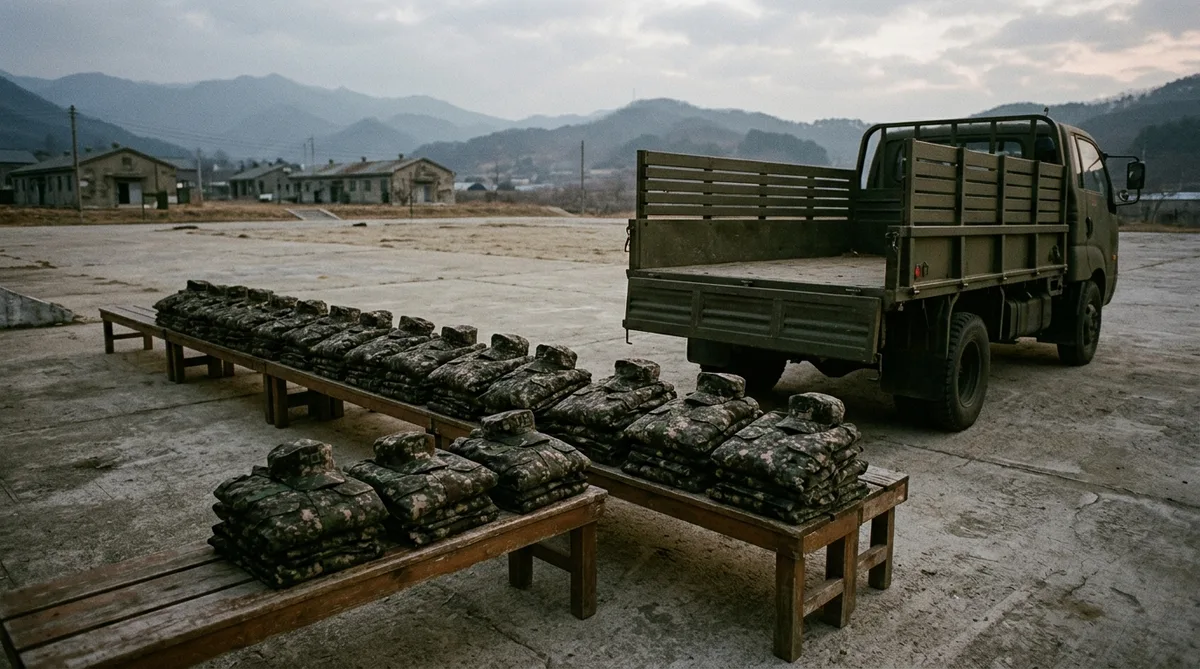
A pressing consequence of this demographic contraction is being felt within the national defense sector. South Korea maintains a mandatory conscription system for men to counter regional security threats, but the pool of eligible 20-year-olds is shrinking.
In 2020, approximately 334,000 men reached conscription age. By 2025, that number is estimated to fall to 236,000, with projections suggesting a further drop to 138,000 by 2040. The active-duty military force has already contracted significantly, falling from 690,000 in the early 2000s to approximately 450,000 today.
In response, the administration of President Yoon Suk Yeol has emphasized a shift toward a “smart military” that prioritizes technology over personnel. This involves integrating automation, drones, and artificial intelligence to maintain defensive capabilities with fewer soldiers. Government defense white papers suggest that the current labor-intensive model is no longer sustainable under current population trends.
The shrinking labor force also complicates the care of the elderly. According to the Center for Global Reproductive Health at Duke University, an aging population may lack the domestic resources to provide care as the active working population diminishes. In South Korea, this labor shortage extends directly to national security and infrastructure maintenance.
The Global Context of Aging
South Korea is currently the most prominent example of a broader global shift. Japan, which has long dealt with an aging population, recorded a fertility rate of approximately 1.2 in 2024—significantly higher than Korea’s, but still well below the replacement level. Taiwan and Hong Kong are experiencing similar trajectories, with rates between 0.75 and 0.9.
Source: OECD / World Bank
Western nations face similar declines, but many utilize immigration to mitigate the impact. The United States maintains a fertility rate of roughly 1.6, but its population growth is bolstered by an immigrant population that makes up over 15 percent of its inhabitants. In contrast, South Korea remains a highly homogeneous society where large-scale immigration has historically faced cultural and political hurdles.
Without a shift in net migration, the economic projections for South Korea are stark. By 2050, the old-age dependency ratio—the number of retirees for every 100 working-age citizens—is expected to reach 77.3. This would mean that fewer than two workers would be supporting every individual over the age of 65. By 2075, that ratio is projected to be the highest in the OECD at 79 percent.
Strategic Adaptation
Some experts suggest that a shrinking population should not be viewed exclusively as a catastrophe. Youngtae Cho, Director of the Population Policy Research Center at Seoul National University, argues that the situation provides an opportunity to build a more sustainable and resilient future through strategic management. A smaller population could lead to reduced competition for finite resources and a lower environmental footprint, provided that the economy can successfully pivot to higher individual productivity.
However, this transition requires maintaining economic growth with a smaller workforce. The International Monetary Fund (IMF) noted in 2024 that the shrinking labor pool is the most significant threat to South Korea’s potential GDP, which has already seen growth rates slow toward 2 percent annually.
-
First Natural Decline
Deaths exceed births for the first time in history.
-
The 0.65 Low
Quarterly fertility rate hits global historic low.
-
Super-Aged Society
Over 20% of the population is aged 65 or older.
-
'Smart Military' Shift
President Lee calls for selective conscription amid soldier shortage.
Source: Ministry of Interior / Statistics Korea
Future Projections
In Seoul’s newer residential districts, the reduction in the number of children is visible in the quietude of local playgrounds. While a potential “echo” rebound in 2025 or 2026 might provide a temporary statistical lift, the long-term trend remains downward. The United Nations projects that South Korea’s population, currently at approximately 51 million, could decline significantly by the end of the century.
According to Nicholas Eberstadt, the Henry Wendt Chair in Political Economy at the American Enterprise Institute, South Korea’s birth rate is roughly one-third of the replacement rate. This creates a geometric decline that will radically reshape the nation’s social and economic structure within three generations.
The success of South Korea’s future depends on whether technological integration and “smart” economic policies can compensate for the diminishing human capital. For now, the country serves as a primary example for the rest of the world of the challenges inherent in a post-growth demographic era.
Sources
- Statistics Korea (KOSTAT) — Official Vital Statistics, 2024
- Arirang News — S. Korea's fertility rate at almost 0.99 as of Jan. 2026
- OECD — Economic Surveys: Korea 2024
- Anadolu Agency — South Korean president calls for smart military, August 2026
- National Institutes of Health (PMC) — Tackling South Korea's total fertility rate crisis, June 2024
The information presented is for educational and informational purposes only and does not constitute investment advice. MainStreet uses AI to generate content — always verify with qualified financial professionals before making investment decisions. How MainStreet works →
Discussion