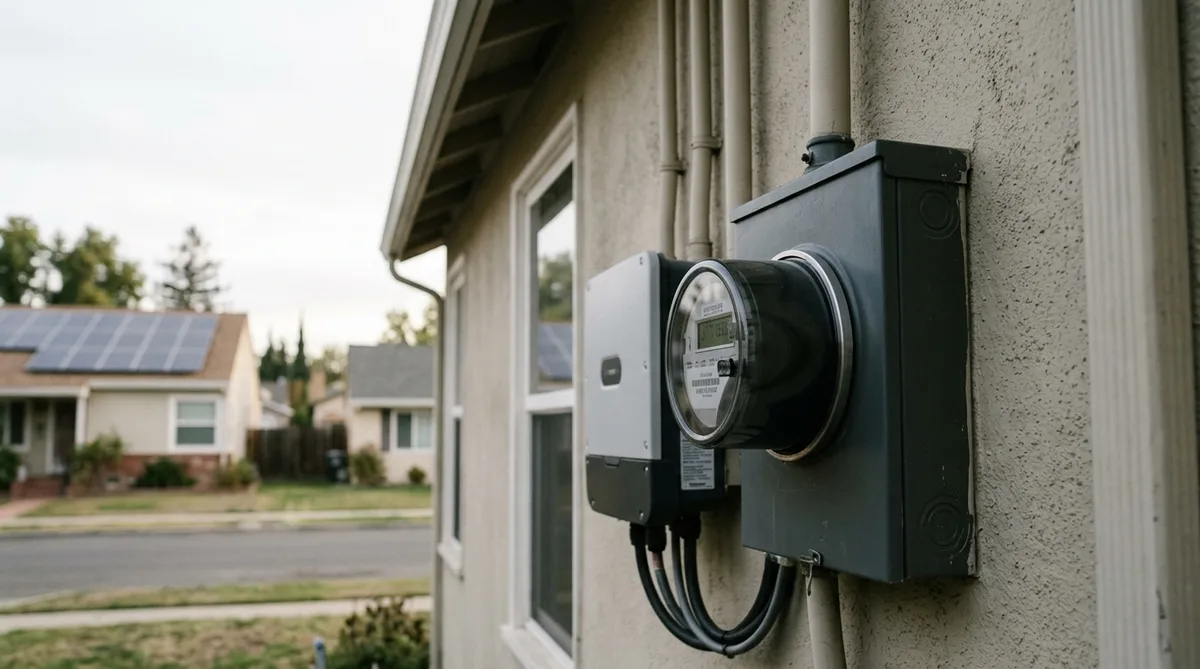
Millions of People Are Now Their Own Power Company—and Big Utilities Are Getting Worried
In the arid expanses of Australia, the power grid has reached a fundamental tipping point. For nearly a century, the system functioned as a centralized network, with large coal-fired generators transmitting electricity to millions of passive consumers. That flow is now increasingly bidirectional.
By the end of 2025, Australia’s rooftop solar capacity reached 28.3 gigawatts, according to the Clean Energy Council. This milestone indicates that the combined power of panels on suburban homes and commercial rooftops now exceeds the total capacity of the country’s coal-fired generation fleet. This shift marks a transition from utility monopolies to a decentralized model where households act as both producers and consumers.
This is a preview of a global structural change. As of August 2026, the energy market has entered the era of the “prosumer.” From the “Whole County” solar initiatives in rural China to the battery-integrated suburbs in the United States, the architecture of the 20th-century energy economy is being replaced. The primary question is no longer the viability of the transition, but the ownership and management of the distributed hardware powering modern life.
The Global Expansion
The scale of solar deployment has reached unprecedented levels. According to the IEA-PVPS Snapshot 2026 report, global solar photovoltaic (PV) capacity reached nearly 3 terawatts by early this year. In 2025 alone, the world added 698 gigawatts of new solar capacity, representing a significant acceleration in deployment.
Solar functions as a disruptor due to its modularity. Unlike nuclear or coal-fired plants, which require massive centralized investment and infrastructure, solar can be deployed at the individual household level.
“Solar is the cheapest source of power in many countries, and is proving the easiest and fastest to deploy,” said Jenny Chase, clean power specialist at BloombergNEF. “Its role in the global energy mix will be substantial, ushering in a new age where power is cheap whenever the sun shines.”
Source: IEA-PVPS / Ember 2026
In 2025, solar PV became the largest source of new electricity generation worldwide, meeting 75% of global electricity demand growth, according to the Ember Global Electricity Review 2026. This surge creates a challenge for traditional utilities. For decades, the utility business model relied on building large-scale plants and charging for volume. As more individuals generate their own electricity, the pool of customers paying for the maintenance of the centralized grid is changing.
Economic Drivers in the U.S. Market
In the United States, the shift toward rooftop solar is driven by rising residential electricity costs. While wages have shown growth, the increasing cost of basic infrastructure—including power and water—has placed significant pressure on household budgets.
For many American households, energy expenditures have become a primary focus of financial planning. Analysis of utility data suggests that double-digit price increases in some regions are leading families to seek alternatives to traditional grid reliance. Consequently, solar and battery storage together accounted for 91% of all new electricity-generating capacity additions in the first quarter of 2026, as reported by Wood Mackenzie and the SEIA. These installations are increasingly viewed by homeowners as a hedge against energy price volatility.
However, the residential sector remains sensitive to policy shifts. The U.S. residential segment saw a 2% decline in 2025 following the expiration of certain tax credit timelines. This indicates that while technology costs continue to fall, the speed of adoption remains tied to the regulatory environment.
The Utility Feedback Loop
As rooftop solar adoption increases, utilities face a fiscal challenge often described as a “death spiral.” When a homeowner installs a solar system, they reduce their purchases from the local utility. This leaves the utility with the same fixed costs for grid maintenance but a smaller volume of sales to cover them.
According to reports from BloombergNEF, this dynamic often forces utilities to increase rates to cover overhead, which in turn incentivizes more customers to install solar and storage. In Australia, this has resulted in a massive pivot toward storage. The Clean Energy Council reported a record year for home battery sales in 2025, significantly outpacing the total installations of the previous several years combined. These households are moving toward greater energy independence, using storage to manage their own consumption patterns rather than relying on the grid for balancing.
Source: Clean Energy Council, 2026
China’s Strategic Decentralization
While the Western market is driven largely by consumer choice, China is approaching rooftop solar as a strategic industrial imperative. China remained the dominant force in solar ownership in 2025, installing 315 GW of new capacity—more than half of all new additions globally that year, according to Carbon Brief.
Through its “Whole County Solar” model, the Chinese government has streamlined solar installations across government buildings, factories, and rural residential rooftops. According to the Ember Global Electricity Review, this decentralization helps reduce reliance on energy imports, allowing more capital to remain within the domestic economy.
“PV has entered a new era,” said Melodie de l’Epine, lead author at IEA-PVPS. “Market growth remains strong, but system integration, flexibility and storage are now becoming the defining factors for the next stage of global deployment.”
Energy Equity and Data Demands
The transition to distributed energy is also introducing new complexities regarding equity. In the 20th century, the centralized grid provided a uniform service model across different income levels.
In 2026, the cost of entry for distributed energy remains a barrier. Solar and battery systems require significant upfront capital or access to financing. Wood Mackenzie data suggests that solar installations continue to be more prevalent in higher-income communities. Renters and lower-income families, who often have the least flexibility in their budgets, remain more exposed to the rising rates of the traditional utility system.
This disparity is further complicated by the energy needs of emerging technologies. While households seek to reduce their grid footprint, data centers are expanding theirs. Wood Mackenzie projects that AI-driven data centers will account for nearly half of all U.S. electricity demand growth through 2030. This creates a competitive environment for energy resources: while individuals focus on “behind-the-meter” rooftop solutions, technology companies are securing massive “in-front-of-the-meter” renewable contracts, impacting the availability of land and infrastructure for public use.
The Resilience of Distributed Networks
The 20th-century grid was built as a hub-and-spoke system, making it vulnerable to single points of failure. The 21st-century grid is evolving toward a distributed mesh network. In this model, the failure of a single node does not necessarily compromise the entire system.
In the Middle East and Africa, the rooftop solar market is seeing rapid expansion. In regions where central grid infrastructure is often underdeveloped or unreliable, distributed solar provides the first consistent access to electricity for many communities. This resilience is a primary factor driving the market, which Grand View Research identifies as a key growth sector through 2030.
As the decade progresses, the global rooftop market is expected to see continued steady growth in valuation. The more significant change, however, is the shift in operational control.
Source: Grand View Research / US Dept of Energy
For a century, the management of the power supply was the exclusive domain of utility executives. Today, in over 4.4 million Australian homes and millions more across China, Europe, and the Americas, that responsibility is shared with the individual owner. The grid is being transformed from a centralized utility into a distributed network of millions of producers. This transition is capital-intensive and poses a significant challenge to the traditional utility business model, but the momentum of 3 terawatts of global capacity represents a permanent shift in energy economics.
As Jenny Chase of BloombergNEF noted, “Solar and batteries will transform world power markets in the next 10 years.” The era of the centralized monopoly is giving way to a more complex, distributed, and participant-driven energy landscape.
Sources
- IEA-PVPS — Snapshot of Global PV Markets 2026
- Ember — Global Electricity Review 2026
- Carbon Brief — Why China's solar boom is slowing down
- Wood Mackenzie/SEIA — U.S. Solar Market Insight Q2 2026
- Grand View Research — Rooftop Solar PV Market Size & Share Report 2025-2030
- https://about.bnef.com/new-energy-outlook/
The information presented is for educational and informational purposes only and does not constitute investment advice. MainStreet uses AI to generate content — always verify with qualified financial professionals before making investment decisions. How MainStreet works →
Discussion