Climate Change Is Already Reshaping Where the World Works—and It’s Happening Faster Than You Think
The physical limits of outdoor labor are being reached in some of the world’s most vulnerable agricultural regions. In the coastal districts of Southern Bangladesh, the increasing frequency of extreme heat events and saltwater intrusion is fundamentally altering the viability of traditional livelihoods. According to the World Bank’s Groundswell report, Bangladesh is projected to have 19.9 million internal climate migrants by 2050, representing nearly half of the projected climate migrants for the entire South Asia region. For millions of agricultural workers, the environmental shift is a present driver of economic relocation toward urban centers or international labor markets.
This movement of people, catalyzed by environmental degradation and uninsurable risks, is currently restructuring the global workforce. Data indicates that the shift is already underway, connecting the agricultural pressures in the Bay of Bengal to the infrastructure demands of the American Gulf Coast through a shared necessity for economic survival and adaptation.
Internal climate migration is increasingly recognized as a core development issue. According to World Bank analysis, this migration does not have to result in a crisis if urban planning and labor policies are adapted to facilitate the movement of people from high-risk zones to areas of greater opportunity.
Source: AGC, Urban Institute, World Bank, 2026
Workforce Vulnerability and Displacement in the American Gulf
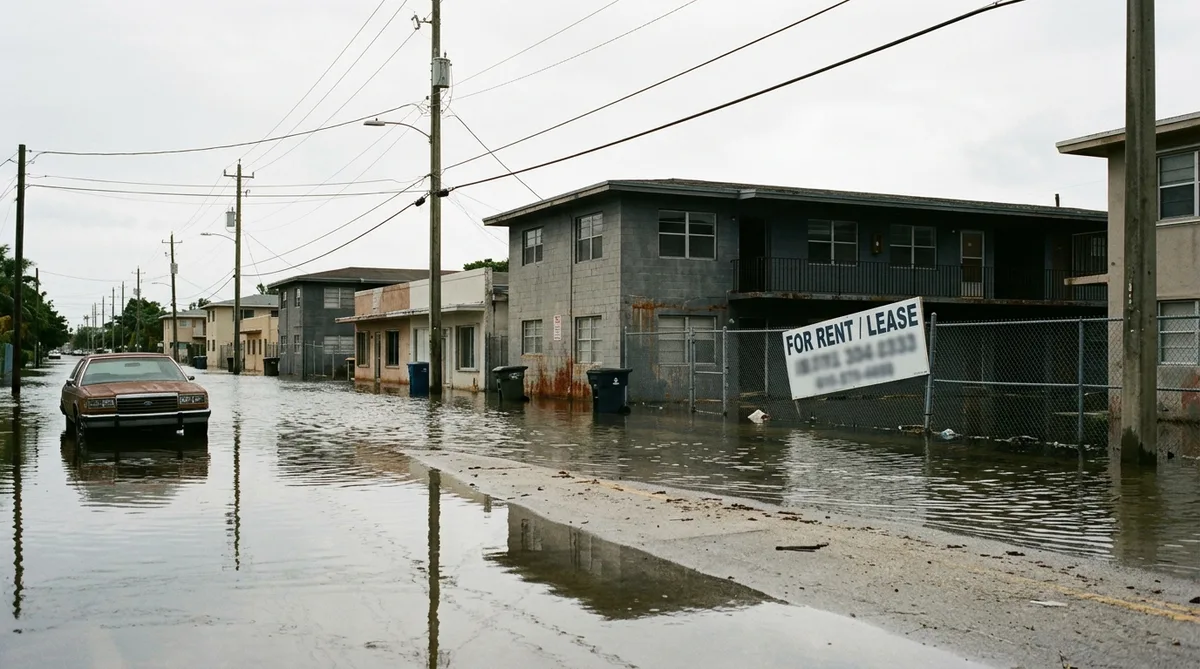
The American Gulf Coast serves as a significant example of how environmental risk influences labor availability. In the Northern Gulf of Mexico, the labor market is increasingly characterized by its exposure to extreme weather. Research from the Urban Institute suggests that the economic stability of these regions depends heavily on institutional capacity—the ability of local governments and markets to maintain essential services during and after disasters. Smaller municipalities, in particular, often lack the resources to manage the long-term workforce displacement that follows major storm events.
Cities like Houston have become major “receiving communities” for those leaving more vulnerable areas of the Gulf. This migration is often precipitated by the rising cost of living in high-risk zones. The Brookings Institution has highlighted a growing trend where rising homeowners’ insurance premiums significantly undermine the affordability of housing in catastrophe-prone regions. When insurance costs outpace wage growth, middle-income households are often forced to relocate to inland hubs.
This outward migration of the local workforce creates a persistent labor vacuum. The Associated General Contractors of America (AGC) has noted record-high worker shortages in the construction industry, a problem intensified by the dual demand for new climate-resilient infrastructure and the reconstruction of existing assets. This creates an economic tension: the areas that most require labor to build defenses against rising sea levels are becoming the same areas where the workforce can no longer afford to reside.
The Scale of Internal Displacement in Bangladesh
While the United States manages economic shifts through insurance and real estate markets, Bangladesh faces the physical loss of land. Projections suggest that rising sea levels could impact up to 19 percent of the nation’s land area by 2050. The movement is already extensive; in 2023, approximately 1.3 million people migrated within or from Bangladesh as climate pressures intersected with economic necessity.
Dhaka is the primary destination for these migrants, absorbing an estimated 400,000 new residents annually. Many of these individuals transition from rural livelihoods such as agriculture and fishing into the urban informal labor market. According to the Harvard Humanitarian Initiative, this rapid influx is a significant driver of urban poverty, as the city’s infrastructure and job market struggle to keep pace with the arrival of people whose previous livelihoods have been rendered impossible by salinity and heat.
The International Institute for Environment and Development (IIED) found that in highly vulnerable districts, as many as 70 percent of households have at least one member who has migrated for work. This migration often occurs without legal protections, increasing the likelihood of workers entering exploitative labor situations. When environmental shocks destroy local assets, the resulting economic pressure can drive labor into unregulated and high-risk international markets, including the construction and service sectors of the Gulf Cooperation Council nations.
Source: ILO / World Bank, 2025 Update
Quantifying Productivity Losses from Rising Temperatures
Beyond the relocation of workers, rising temperatures are imposing a measurable cost on global productivity. A recent report from the National Bureau of Economic Research (NBER) indicates that the economic consequences of heat stress are substantial and unequal, leading to a net negative impact on economic value and potentially destabilizing regional labor markets.
In tropical and sub-tropical regions, this impact is most acute in the agricultural and construction sectors. In Bangladesh, tropical cyclones and extreme weather events already result in significant annual GDP losses, estimated at approximately 0.7 percent by the World Bank. These losses reduce the ability of the agricultural sector to retain labor, pushing workers toward urban areas. The destabilization is not limited to where people work; it also affects their earning potential and their ability to keep pace with the cost of living in receiving cities.
The Socioeconomic Divide in Managed Retreat
There is a widening gap in how different segments of the workforce adapt to climate risk. Research from the Urban Institute suggests that higher-income groups often possess the adaptive capacity to engage in planned relocation—moving to inland hubs such as San Antonio or Atlanta well before a disaster occurs.
Conversely, low-income workers are often less mobile. These individuals may lack the capital necessary to sell a devalued property or the savings required to move to a safer, more expensive metropolitan area. This dynamic creates a geography of risk where the most economically vulnerable populations remain in the path of environmental hazards to maintain essential services, while the more mobile workforce moves toward safer ground.
This disparity is also reflected in international migration trends. The OECD’s International Migration Outlook highlights that wealthier nations are increasingly focusing their migration policies on talent attraction for the green economy, seeking skilled workers for renewable energy and electric vehicle manufacturing. Meanwhile, low-skilled workers displaced by climate shocks in regions like the Pacific Islands face a lack of legal pathways for migration, often resulting in unregulated and precarious movement.
-
IIED Field Report
70% of households in Sylhet, Bangladesh report climate-driven migration.
-
U.S. Insurance Reform
18 states introduce bills to combat 'insurance-driven migration'.
-
Florida Workforce Initiative
Launch of state-funded training for emergency management roles.
Source: NCEL, Brookings, Florida Governor’s Office
Integrating Labor Mobility into Climate Adaptation Policy
Some policy frameworks are beginning to treat labor mobility as a tool for climate adaptation. The goal is to stabilize labor markets by ensuring that residents are trained and incentivized to participate in the sectors focused on emergency management, resilient reconstruction, and environmental defense.
In the Pacific, where nations like Kiribati and Tuvalu face existential threats from sea-level rise, a high percentage of households have expressed an intent to migrate if environmental conditions continue to deteriorate. For these regions, the potential collapse of local labor markets is a central concern of national planning. Current policy discussions, as noted in recent OECD and World Bank reports, emphasize the need for migration mechanisms that allow workers to move with legal standing, rather than through desperate and unregulated channels.
As recent insurance industry data from Allianz notes, economic losses from climate events are being amplified by population growth in hazard-prone areas. While markets are attempting to correct this through insurance pricing and property valuation, the human cost is increasingly borne by the global workforce.
The Evolving Distribution of Global Labor
The coming decades will be characterized by the movement of the global workforce in response to a changing climate. The global economy is witnessing a transition from rural, agriculturally-based labor in the Global South toward urbanized, industrial roles, a shift necessitated by environmental change. In the Global North, the retreat from vulnerable coastlines is beginning to reshape the economic centers that have historically driven growth.
The challenges faced by an agricultural worker in the Bay of Bengal and an essential worker on the American Gulf Coast are increasingly similar: both are seeking locations where labor remains physically possible and housing remains affordable. The labor markets of the mid-2020s are no longer static; they are shifting away from rising waters and extreme heat toward a future defined by adaptation and the need for resilient economic environments.
Sources
- World Bank — Groundswell: Preparing for Internal Climate Migration, Sept 2021
- IIED — Exposed and Exploited: Climate Change, Migration and Modern Slavery in Bangladesh, 2025
- OECD — International Migration Outlook 2025, Nov 2025
- Brookings Institution — Where Rising Climate Risks and Insurance Costs Will Hit Hardest, April 2026
- Urban Institute — Climate Migration and Receiving Community Institutional Capacity in the US Gulf Coast, 2023/2026 Update
- NBER — The Global Economic Impact of Climate Change: An Empirical Perspective, Oct 2025
- Allianz — Global Insurance Report 2026, May 2026
- Harvard Humanitarian Initiative — Disaster and Climate-Induced Migration in Bangladesh, Sept 2025
- https://comptroller.texas.gov/economy/economic-data/regions/2025/gulf-coast.php
The information presented is for educational and informational purposes only and does not constitute investment advice. MainStreet uses AI to generate content — always verify with qualified financial professionals before making investment decisions. How MainStreet works →
Discussion