How India’s Digital Payment Revolution Is Changing the Way a Billion People Spend Money
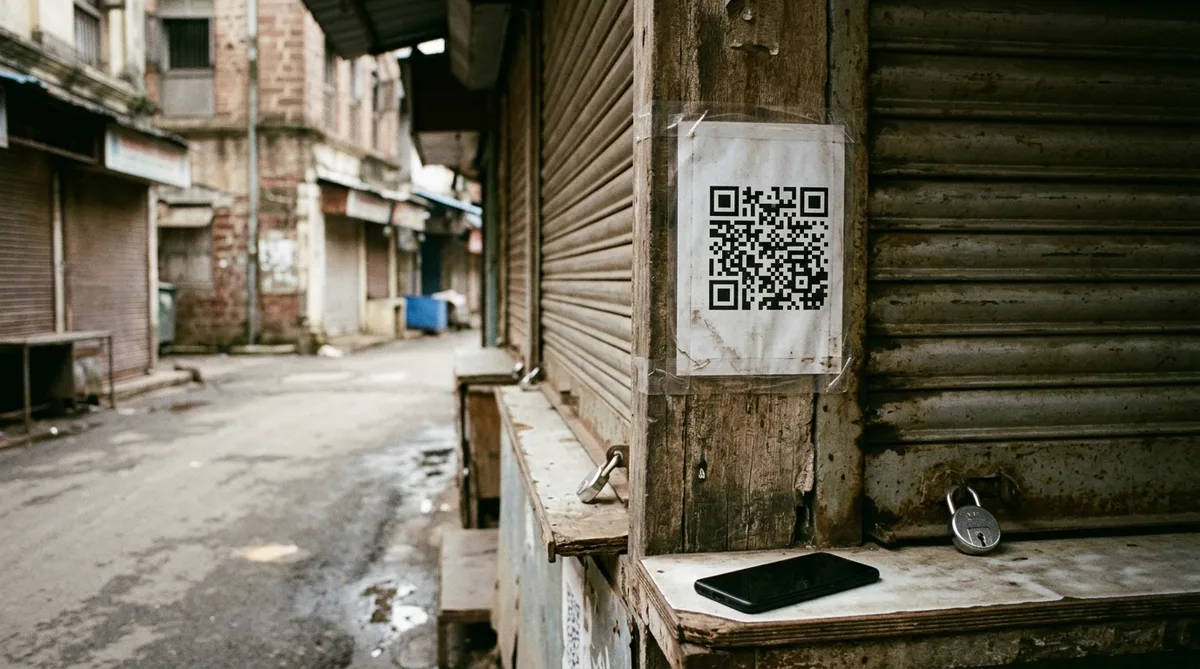
Across India’s retail landscape, the physical exchange of banknotes is increasingly being replaced by a digital infrastructure that facilitates even the smallest transactions. For items as minor as a 15-rupee cup of tea (approximately $0.18), vendors now routinely utilize QR codes linked to real-time settlement systems. This transition is supported by audio-confirmation devices that announce successful payments instantly, providing a functional digital equivalent to the traditional cash box.
This shift in consumer behavior is reflected in national data. As of July 2026, India’s Unified Payments Interface (UPI) processed 15.04 billion transactions in a single month. This volume indicates that the system is now handling more than 485 million transactions every 24 hours.
The platform serves as the primary retail payment framework in India, providing a high-efficiency alternative to physical currency for daily commerce. It remains accessible without direct transaction fees for the average user. However, as the economy moves closer to a digital-first model, it faces challenges including sophisticated financial fraud and a persistent “cash paradox” where the volume of physical currency in circulation continues to reach new highs alongside digital growth.
Source: NPCI / PIB Delhi, August 2026
The Gravity of the Shift
The footprint of digital payments in India has expanded to include a broad cross-section of the population. According to data from the Press Information Bureau (PIB), as of mid-2026, the platform has onboarded 554.9 million users. This user base exceeds the total population of the European Union, with all participants operating on a single, interoperable network.
In the 2025-26 financial year, the system processed over 241.6 billion transactions (24,162 crore; 1 crore equals 10 million). The total value of these transactions exceeded ₹314 lakh crore (approximately $3.73 trillion; 1 lakh equals 100,000). While early adoption was concentrated in major metropolitan areas, data from 2026 indicates significant penetration into Tier-2 and Tier-3 cities and rural districts.
This geographic expansion is accompanied by a decrease in the average transaction size. Worldline reporting shows that the average UPI ticket size fell from ₹1,437 ($17.11) in 2024 to ₹1,314 ($15.64) by late 2025. This trend suggests the technology is increasingly used for low-value, everyday purchases rather than just larger electronic or service payments. Currently, more than 80 percent of merchant transactions are for amounts less than ₹500 ($5.95).
A Global Outlier
Unlike the United States and Europe, which rely heavily on private credit card networks or proprietary “walled garden” applications, the Indian model is built on an open-protocol public good. This structure allows any participating bank or licensed application to communicate instantly across the network.
This interoperability addresses a friction point common in Western financial systems, where disparate private networks often require complex settlement layers that increase both time and cost for the end user. While systems like the U.S. Federal Reserve’s FedNow have sought to modernize real-time payments, the rate of adoption in India remains a distinct global benchmark.
The International Monetary Fund (IMF) has identified India’s digital public infrastructure as a model for financial inclusion, noting its efficiency compared to the closed-loop systems prevalent in other large economies.
Source: ACI Worldwide / PIB, 2025
Data from the National Payments Corporation of India (NPCI) indicates that India now accounts for approximately 49 percent of all global real-time digital payments. This domestic success has led to international expansion, with India entering into technical cooperation agreements with several nations to allow UPI-based merchant payments in foreign markets.
The Cash Paradox
Despite the dominance of digital payments, physical currency has not disappeared from the economy. In June 2026, India’s currency in circulation (CIC) reached ₹42.97 lakh crore (approximately $511.5 billion).
This creates a “cash-digital paradox.” While digital platforms are used for high-frequency daily transactions, physical cash is increasingly being held as a store of value. Economic indicators suggest that as the overall economy grows, the absolute demand for cash remains high, serving as a psychological and practical hedge against digital system downtime.
The reliance on digital systems also introduces new risks. Technical disruptions, though infrequent, can effectively halt retail activity in areas where consumers no longer carry physical wallets. For many, the physical rupee remains a necessary insurance policy against the possibility of network instability.
The Costs of a “Free” System
A central component of the Indian payment model is the “Zero MDR” (Merchant Discount Rate) policy. While standard international card networks typically charge merchants a percentage of every sale, the Indian government has mandated that UPI transactions remain free for both merchants and consumers.
This policy has facilitated the widespread adoption of QR code payment points across the country. However, it creates a financial challenge for the banks and payment providers who must maintain the infrastructure required to process nearly half a billion transactions daily.
To manage these operational costs, financial institutions have pivoted toward alternative revenue streams. This includes leveraging payment data to offer targeted financial products—such as insurance and personal loans—and utilizing government-funded incentives designed to support the maintenance of the digital payment architecture. Banking analysts note that the sustainability of the system depends on these secondary revenue models and the continued reliability of the underlying server infrastructure during peak volume periods.
Source: RBI / PIB / Worldline, 2026
The Next Frontier: Fraud and AI
As the volume of digital transactions grows, so does the risk of financial crime. Fraudulent activity in the digital payment sector increasingly utilizes social engineering. A common tactic involves “request money” links that are designed to look like payment confirmations, tricking users into authorizing a withdrawal from their own account.
In response to these threats, the Reserve Bank of India (RBI) has focused on strengthening security frameworks and enhancing user awareness. The National Payments Corporation of India (NPCI) is increasingly deploying machine learning algorithms to monitor transaction patterns in real-time. These AI-driven systems are designed to identify “mule” accounts and flag suspicious activity before funds can be moved out of the banking system.
Looking forward, the digital payment ecosystem is expanding into offline capabilities. The Reserve Bank is currently testing versions of a Central Bank Digital Currency (CBDC) that utilize Near-Field Communication (NFC). This would allow for digital settlements in areas with poor internet connectivity, addressing one of the final barriers to full digital integration.
As digital payments become more deeply integrated into the national economy, the focus has shifted from simple adoption to the long-term resilience of the network. For hundreds of millions of people, the digital wallet has moved from a convenience to a fundamental utility, supported by a massive, cloud-based infrastructure that continues to redefine the nature of retail commerce.
Sources
- Press Information Bureau (PIB) - UPI Statistics June 2026
- International Monetary Fund (IMF) - India's Frictionless Payments
- Reserve Bank of India (RBI) - Payment Systems Data
- Worldline - India Digital Payment Report 2025 in Review
- Business Standard - India's Cash-UPI Paradox
- https://www.npci.org.in/what-we-do/upi/product-statistics
The information presented is for educational and informational purposes only and does not constitute investment advice. MainStreet uses AI to generate content — always verify with qualified financial professionals before making investment decisions. How MainStreet works →
Discussion