The Invisible Clock in the Sky That Keeps Your Bank Account and Power Grid Running
Imagine a light bulb, just 100 watts, burning 12,000 miles above the Earth. Now imagine trying to see that faint glow from your backyard.
That is essentially the strength of a Global Positioning System (GPS) signal by the time it reaches your smartphone. It is a faint transmission from space, yet it provides the rhythmic synchronization that keeps modern civilization in step. While the “P” and “N” in PNT—Positioning and Navigation—help direct everything from delivery drones to container ships, it is the “T,” or Timing, that underpins the global financial system and critical national infrastructure.
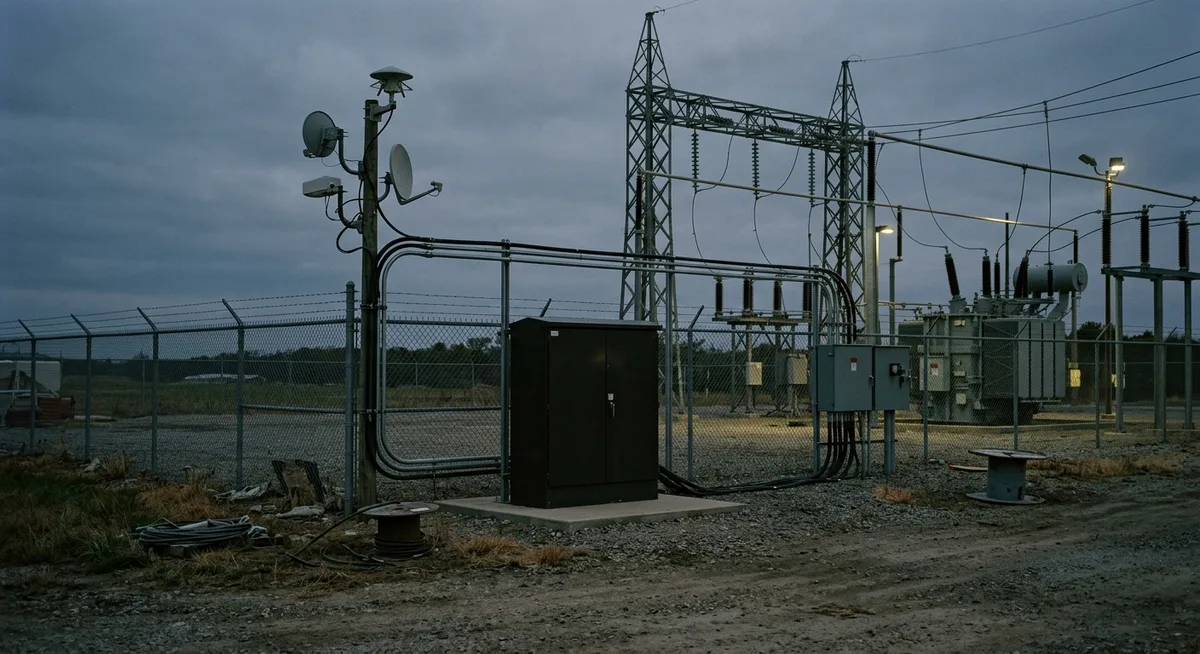
On any given day, this silent utility facilitates trillions of dollars in transactions and ensures that electricity flows steadily into homes. But because the signal is transmitted with such low power, it is susceptible to disruption. In 2024, a growing number of government agencies and private enterprises are recognizing that critical infrastructure has developed a profound dependency on this faint signal, prompting a coordinated effort to establish terrestrial and low-orbit backups.
According to a study by RTI International and the National Institute of Standards and Technology (NIST), a complete GPS outage could cost the U.S. economy an estimated $1 billion per day. The study highlights that while the benefits of GPS are ubiquitous, the economic consequences of a prolonged outage would be substantial across multiple sectors.
Source: NIST / RTI International
The Heartbeat of the Market
To understand why a satellite matters to a bank account, one must look at the speed of modern finance. In the time it takes to blink, high-frequency trading platforms can execute thousands of transactions. These platforms require microsecond-level accuracy to maintain what is known as the “Sequence of Events.”
When multiple trades for the same asset occur in rapid succession, the exchange must determine the exact order of arrival to ensure market integrity. To do this, every trade is time-stamped using a signal synchronized to atomic clocks. This is a fundamental regulatory requirement for maintaining a fair and orderly market. If the clocks at different trading venues begin to drift apart, the ability to reconstruct a reliable audit trail vanishes, potentially allowing for market manipulation and processing errors.
In the United States, financial institutions are required to synchronize their business clocks to within a strict offset of the NIST atomic clock. Most electronic firms aim for even higher precision to stay competitive, as a lag of even a few milliseconds can result in significant financial slippage during high-volume trading periods.
Maintaining the Grid
The dependence on precise timing extends to the electrical grid, which relies on synchronized data to monitor the stability of power flow across vast distances. Utility companies use timing signals to maintain the alignment of the electrical current as it moves through the network.
Think of the electrical grid like a massive, multi-state jump rope. If the people turning the rope on one end fall out of sync with the people on the other, the rope tangles. In the context of the grid, a loss of synchronization can lead to inefficiencies or, in extreme cases, cascading failures that damage infrastructure and leave large populations without power.
The Department of Homeland Security (DHS) and the Cybersecurity and Infrastructure Security Agency (CISA) have identified that a majority of the 16 sectors defined as critical national infrastructure—including energy, communications, and financial services—now rely on Global Navigation Satellite Systems (GNSS) for precise timing.
Transaction time-stamping and HFT sequence
Base station synchronization (1.5μs tolerance)
Synchrophasor phase alignment
Aviation, maritime, and rail traffic control
Source: CISA PNT Strategy Report
Signal Vulnerability in a Complex Environment
The challenge of GPS is its ubiquity versus its signal strength. Because the satellites are in medium Earth orbit, the signals arriving on the ground are extremely weak, making them susceptible to both natural and man-made interference.
Solar activity can degrade the signal, but increasingly, the threat is localized and human-driven. Jamming—the act of drowning out the GPS signal with noise—and spoofing—sending a deceptive signal to trick a receiver—have become more common in civilian environments.
In early 2024, reports of widespread GPS interference in the Baltic region highlighted the real-world impact on civilian aviation. Pilots navigating the area reported disruptions to their cockpit navigation displays, requiring a transition to secondary systems and increased reliance on air traffic control. Such interference demonstrates how easily civilian safety and commercial efficiency can be compromised by the lack of a redundant signal.
Even without intentional interference, the signal often fails to penetrate buildings or dense urban environments. This creates challenges for 5G cellular networks, which require precise synchronization between base stations to manage the hand-offs of data as users move through a city. Without a reliable timing source, the high-speed data transfers that define 5G performance can suffer from significant degradation.
The Search for a Resilient Backup
Recognizing these vulnerabilities, there is a global effort to build terrestrial systems that do not rely on space. The goal is to create a “system of systems” where ground-based and low-orbit technologies can provide a layer of resilience if the primary satellite signals are unavailable.
The United Kingdom’s National Timing Centre program is currently working on a terrestrial timing backbone delivered via fiber optics. This infrastructure is designed to decouple high-value sectors like finance and telecommunications from a total reliance on satellite-based timing, providing a physical link to atomic clocks located on the ground.
Other solutions involve terrestrial radio technology like eLoran (Enhanced Long Range Navigation). These systems use high-power, low-frequency towers to broadcast timing signals. Because these signals are transmitted from the ground at high power, they are significantly more difficult to jam than the faint signals coming from space.
Source: US DOT / UK NPL / EU EUSPA
Securing the American Pulse
In the United States, federal efforts to address timing resilience have centered on Executive Order 13905, which directs agencies to provide profiles for the responsible use of PNT services. This order encourages critical infrastructure owners to develop plans that include the use of multiple timing sources to mitigate the risk of GNSS disruptions.
The U.S. Department of Transportation (DOT) has explored various technological alternatives. In a 2021 demonstration report, the DOT evaluated several terrestrial and satellite-based systems, including Satellite Time and Location (STL) technology. STL utilizes constellations in Low Earth Orbit (LEO). Because these satellites are much closer to Earth than the GPS constellation, their signal strength is roughly 1,000 times greater, allowing the timing data to penetrate deep into buildings and urban canyons where GPS signals typically fail.
As the global GNSS market continues to see robust growth in consumer and industrial sectors, the integration of timing into autonomous systems and smart infrastructure will only deepen this reliance. The “invisible clock” is becoming more deeply embedded in every automated logistics network and factory floor.
The move toward ground-based backups—including fiber optic networks, eLoran towers, and LEO satellites—reflects a maturing view of critical infrastructure. The focus is shifting away from reliance on a single, distant signal and toward a model that builds redundancy into the ground we walk on.
The cost of inaction is not merely a technical inconvenience; it is a direct risk to the stability of the financial system and the safety of the power grid. If these redundant systems are not prioritized, the next significant signal disruption could result in more than just a lost map on a smartphone—it could lead to a localized collapse of the systems that power and fund modern life. Ensuring the reliability of this timing signal is a fundamental requirement for the security of a 21st-century economy.
Sources
- RTI International — GPS: A $1.4 Trillion Economic Engine
- U.S. Department of Transportation — Complementary PNT Demonstration Report, 2021
- European Space Agency (EUSPA) — GNSS Market Report, 2023
- Financial Industry Regulatory Authority (FINRA) — Rule 4590 Clock Synchronization
- UK National Physical Laboratory (NPL) — National Timing Centre Program
- Reuters — GPS Jamming in Baltics Highlights Civilian Vulnerability, 2024
- https://www.nist.gov/news-events/news/2019/10/economic-benefits-global-positioning-system-us-private-sector-study
- https://www.nist.gov/system/files/documents/2020/02/06/gps_finalreport618.pdf
- https://www.euspa.europa.eu/european-space/galileo/what-galileo
- https://www.dhs.gov/science-and-technology/pnt-program
- https://www.cisa.gov/pnt
The information presented is for educational and informational purposes only and does not constitute investment advice. MainStreet uses AI to generate content — always verify with qualified financial professionals before making investment decisions. How MainStreet works →
Discussion