Once a Crisis Economy, Spain Now Outpaces Germany and Most of the Eurozone
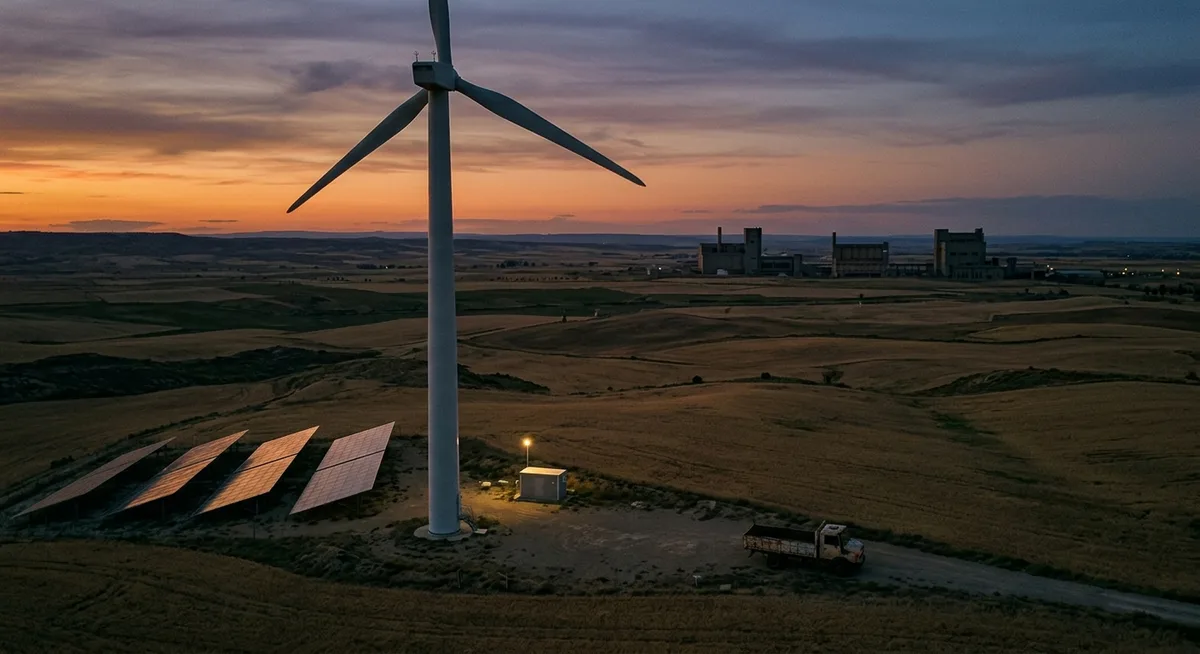
In the arid plains of Aragón, wind turbines and solar arrays now power a burgeoning network of data centers, marking a shift in Europe’s industrial center of gravity. While the traditional manufacturing heartlands of Germany’s Ruhr valley face high energy costs and a cooling global market that has left industrial output struggling, Spain’s energy-rich regions are attracting the type of heavy digital infrastructure that once gravitated toward the north.
Spain has transitioned from a laggard to a primary growth engine for the Eurozone. While Germany’s export-led manufacturing model faces headwinds from demographic decline and the loss of low-cost energy imports, Spain is capitalizing on a modern economic triad: an abundance of renewable energy, a significant influx of foreign labor, and a services sector that has expanded into high-value digital and professional fields.
This reversal of fortunes highlights a significant change from the era of the sovereign debt crisis. In 2012, the economic narrative surrounding Spain was one of impending collapse, with the country viewed as a central risk to the Eurozone’s stability due to a bursting real estate bubble and a banking sector in need of a multi-billion euro bailout. At that time, Germany was hailed as the continent’s “locomotive,” a manufacturing titan seemingly immune to the structural issues affecting its southern neighbors.
Economic indicators now point to two different Europes. In 2024, Spain’s economy expanded by 2.5 percent, according to Goldman Sachs Research—a figure that stood significantly above the Eurozone average of 0.9 percent. The most recent data from the European Commission suggests this gap is likely to persist. Spain is forecast to grow by 2.1 percent in 2024 and 1.9 percent in 2025, while Germany’s recovery remains subdued. The International Monetary Fund (IMF) has described Germany’s current economic state as one hampered by “structural headwinds,” projecting only marginal growth as the country retools its industrial base.
Source: IMF / State Department, 2025
The Green Energy Arbitrage
One of the most profound shifts in the European hierarchy is the changing geography of energy. For decades, Germany’s industrial might was built on a foundation of inexpensive natural gas and efficient coal. That foundation was disrupted by the geopolitical pivot away from Russian energy. Spain, long an “energy island” with few domestic fossil fuels, has spent two decades building the infrastructure that the current economy demands.
Renewable energy accounted for a record 56 percent of Spain’s total electricity generation in 2024, up from approximately 50 percent the previous year, according to Red Eléctrica. This abundance of wind and solar has created a price advantage that is reshaping industrial competition. Between 2021 and 2024, the surge in renewable generation helped stabilize Spanish wholesale electricity prices, providing a buffer against the volatility seen in other European markets.
IMF research indicates that this high proportion of renewable energies has contributed significantly to Spain’s economic resilience. This strength is increasingly visible in industrial costs. By 2024, Spanish industrial electricity prices—historically some of the highest in the region—fell below the Eurozone average.
This “green arbitrage” is attracting the digital infrastructure that requires massive, consistent power supplies. The U.S. State Department’s 2025 Investment Climate Statement highlights Spain’s position as a burgeoning hub for data centers, particularly in regions like Aragón and Castilla-La Mancha. These energy-intensive facilities are following the availability of renewable power, marking a departure from the previous trend of locating such infrastructure exclusively in the “FLAP” markets (Frankfurt, London, Amsterdam, and Paris).
The Labor Engine: Immigration as a Growth Strategy
While much of Europe views migration through a lens of political challenge, Spain has utilized it as a primary economic driver. The country’s population recently surpassed 50 million, a milestone driven almost entirely by new arrivals. Data from the Elcano Royal Institute indicates that between 2019 and 2024, a vast majority of the new jobs created in Spain were filled by foreign-born workers.
This influx has helped mitigate the labor shortages that are currently impacting the German economy. The IMF reports that Germany faces a substantial demographic cliff, with a large segment of its workforce expected to retire over the next decade. In contrast, Spain has seen its foreign-born population expand to fill essential roles across the economic spectrum.
Source: World Bank / Elcano Royal Institute, 2025
According to BBVA Research, immigration has played a significant role in the recent improvement of GDP per capita in Spain by driving increases in both employment levels and overall productivity. This labor supply has allowed Spain’s service sector to expand without triggering the intense wage-price spirals seen in other OECD nations.
However, this reliance on labor expansion exists alongside a delicate domestic balance. The unemployment rate, while reaching a near 20-year low of approximately 11.5 percent in 2024, remains high compared to the European Union average. This suggests a persistent mismatch between available jobs and the domestic skill sets, even as the country successfully integrates international labor.
The Stagnation of the German Model
To understand Spain’s rise, one must look at the structural challenges facing the traditional European leader. Germany’s manufacturing-heavy model—centered on high-end automobiles and chemicals—is facing what the IMF described in 2025 as a “chronic illness.”
The German manufacturing sector has struggled with a combination of high energy prices and increased competition in the global electric vehicle (EV) market. Reports from the German Federal Statistical Office (Destatis) indicate that the country is finding it difficult to pivot its automotive industry toward EVs fast enough to compete with lower-cost imports.
The global context is shifting toward services and digital infrastructure, areas where Germany has historically faced a “digital gap.” In 2024, Spain was recognized in U.S. State Department reports for its high level of fiber-optic penetration and digital readiness. Meanwhile, traditional manufacturing leaders have seen their shares of certain types of foreign direct investment flatten as investors prioritize regions with lower energy costs and higher demographic flexibility.
As noted by Goldman Sachs Research, Spain’s macro-outperformance is visible not only in economic activity but also in sovereign debt pricing. This market confidence is reflected in Spanish bond spreads, which have remained stable compared to northern peers, suggesting that investors are increasingly viewing Spain as a stable destination for capital.
Modernizing Tourism and the Digital Transition
While tourism remains a pillar of the Spanish economy, accounting for approximately 13 percent of GDP, the sector has undergone a qualitative shift. Recent trends show that growth is increasingly driven by higher per-capita spending and a rise in “digital nomads” who utilize Spain’s infrastructure for long-term stays rather than short-term visits.
This influx of capital has been bolstered by the European Union’s recovery funds. Spain was allocated a significant portion of the “NextGenerationEU” program, which the government has channeled into digitalization and green energy projects. As of 2025, these funds have been instrumental in modernizing the Spanish industrial base. Data from the OECD suggests that Spain’s labor productivity has shown signs of resilience, whereas Germany has struggled with stagnant productivity levels as its manufacturing core faces rising operational costs.
Source: OECD, 2025
However, the success of the service-led model has brought its own set of challenges. Economic reports highlight that for many residents, the macro-economic boom feels disconnected from the reality of rising costs. In major urban centers, housing prices and rents have increased significantly, leading to public concern over “touristification” and the affordability of city living. This suggests that while the “Spanish model” is currently leading in growth metrics, its long-term durability depends on addressing the supply of housing and domestic wage growth.
A New European Hierarchy
The divergence between Spain and Germany signals which economic models are most viable in a post-carbon, service-oriented world. The German model of the 20th century—heavy industry and reliance on imported fossil fuels—is being tested by a world that prizes energy autonomy and demographic flexibility.
Spain’s transition from a “crisis economy” to a growth leader is a reminder that structural shifts and geographic positioning can converge. By investing in renewables and maintaining a flexible labor market, Madrid has positioned itself to navigate the shocks that have slowed Berlin.
As the Eurozone moves toward the end of the decade, the question is no longer when Germany will pull the rest of the continent forward, but how effectively other nations can adapt to the Southern European blueprint of energy independence and digital integration. For a country that faced severe austerity a decade ago, the shift to becoming a primary driver of European growth is the most significant metric of its transformation.
Source: Red Eléctrica / Amazon / State Dept (2024-2026)
Sources
- IMF — Spain: Staff Concluding Statement of the 2026 Article IV Mission
- Goldman Sachs — Why Spain's Economy Is Growing Three Times Faster Than the Euro Area
- OECD — Productivity Indicators 2026
- European Commission — Economic forecast for Spain
- BBVA Research — Spain | The contribution of immigration to economic growth
- IMF — Making Germany Grow Again
- https://economy-finance.ec.europa.eu/economic-surveillance-eu-member-states/country-pages/spain/economic-forecast-spain_en
- https://oecdecoscope.blog/2025/12/18/leveraging-spains-momentum-to-sustain-growth-and-income-convergence/
- https://www.realinstitutoelcano.org/en/commentaries/upsides-and-downsides-as-spains-population-reaches-50-million/
- https://www.euronews.com/business/2026/01/30/why-are-spain-and-portugal-growing-twice-as-fast-as-the-eurozone
- https://www.imf.org/en/Publications/WEO/Issues/2024/10/22/world-economic-outlook-october-2024
- https://www.state.gov/reports/2025-investment-climate-statements/spain/
The information presented is for educational and informational purposes only and does not constitute investment advice. MainStreet uses AI to generate content — always verify with qualified financial professionals before making investment decisions. How MainStreet works →
Discussion