How New Repair Laws in the U.S. and Europe Are Putting an End to the 'Throwaway Economy'
In the middle of a harvest window narrowed by approaching storms, a combine harvester in the American Grain Belt ceases to function. The culprit is not a shattered belt or a seized engine, but a software error triggered by a faulty sensor. Under restrictive manufacturer agreements, owners have historically been barred from accessing the diagnostic code required to bypass such locks, leaving machinery dormant until an authorized technician can travel to the site. This friction between physical ownership and software licensing has become the primary battleground for the global “Right to Repair” movement.
Regulatory pressure reached a significant milestone in July 2024, as the Federal Trade Commission (FTC) intensified enforcement of antitrust measures regarding repair restrictions. This follows a series of landmark agreements and memorandum of understandings with major manufacturers like John Deere, which are now being held to requirements to provide farmers with the same diagnostic software and tools previously reserved for authorized dealers. According to FTC filings, these measures are intended to restore the ability of equipment owners to conduct their own repairs, a practice that has been standard for generations but was recently curtailed by digital barriers.
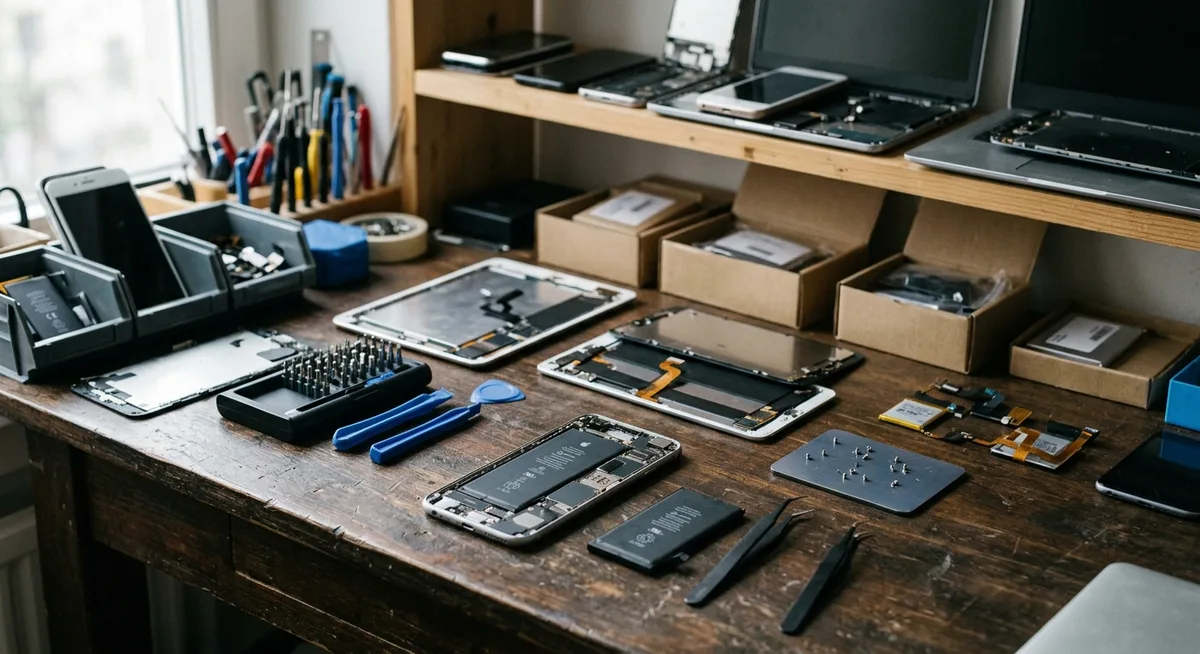
For decades, the lifecycle of a modern gadget has followed a pattern where manufacturers held the only keys to the hardware, often leading to situations where minor faults resulted in the disposal of the entire unit. However, a structural change to the electronics market is currently underway, driven by a wave of legislative mandates. From the statehouses of California and Minnesota to the halls of the European Commission, new laws are stripping away the digital and physical barriers that have long made independent repair nearly impossible. The result is a shift away from a “throwaway economy” toward one where longevity is a legal requirement.
Source: UNITAR / PIRG, 2026
The Decline of the Digital Lock
The difficulty of modern repair is often rooted in “parts pairing,” a practice where software is used to lock a specific component—such as a battery or a display—to a specific device’s logic board. If a technician attempts to install a functional part from a salvaged device, the software may detect the change and disable features, effectively preventing the repair from being completed.
California’s SB 244, which went into full effect on July 1, 2024, addresses this by mandating that manufacturers of electronics and appliances provide the necessary parts, tools, and documentation to both owners and independent shops. For products costing $100 or more, this support must be maintained for seven years after the product was last manufactured. This ensures that a laptop purchased today remains viable well into the late 2020s, even if a specific proprietary port is no longer in active production.
According to data from Consumer Reports, such mandates are expected to reduce consumer costs by providing more competitive repair options. By prohibiting certain software locks on hardware, the legislation allows third-party shops and DIY enthusiasts to use high-quality parts without the risk of software-induced malfunctions. Similar protections were codified in Minnesota’s Digital Fair Repair Act, which also took effect in July 2024, providing one of the broadest sets of repair rights in the United States by including a wide array of consumer electronics and home appliances.
U.S. State Initiatives vs. European Union Mandates
While the U.S. approach currently relies on a state-by-state framework led by California, Minnesota, and New York, the European Union has implemented a unified market strategy. The EU’s Right to Repair Directive (2024/1799) was recently adopted to shift the financial incentive for both manufacturers and consumers toward maintenance over replacement.
One of the most significant provisions of the EU directive involves warranty extensions. If a consumer chooses to repair a product instead of replacing it during the legal warranty period, that warranty must be extended by an additional 12 months. Furthermore, the EU’s Ecodesign for Sustainable Products Regulation now requires that smartphones and tablets meet specific durability and repairability standards, ensuring that batteries and screens are accessible and replaceable with common tools.
This regulatory environment forces manufacturers to compete on the durability of their goods rather than just aesthetic appeal. When products are required to display repairability information, it directly influences purchasing decisions at the point of sale.
Source: OECD / UN Global E-waste Monitor
The Economics of Electronic Waste
The drive for these laws is supported by data regarding environmental impact and resource management. According to the United Nations Global E-waste Monitor 2024, the world generated 62 million tonnes of electronic waste in 2022. This volume of discarded electronics is growing five times faster than documented recycling efforts can manage.
The UN report highlights that global e-waste contains an estimated $62 billion worth of recoverable natural resources, including gold, copper, and rare earth elements. However, as of 2024, only 22.3 percent of this waste was documented as properly collected and recycled. By expanding repair choices, regulators aim to reduce the volume of new electronics produced and the amount of material sent to landfills.
Data from the OECD indicates that while wealthy regions like Europe have high per-capita e-waste generation—averaging 17.6 kg per person as of 2024—they also maintain the highest formal recycling rates at approximately 42.8 percent. The expansion of repair rights is seen as a necessary tool to bridge the gap between consumption and sustainable resource recovery.
Household Savings and Subsidies
For the average household, the right to repair serves as a buffer against the rising cost of living. While the prices of many consumer goods have fluctuated due to inflation, the ability to extend the life of an existing appliance or smartphone provides direct economic relief.
In some regions, governments have moved beyond regulation to provide direct financial support for maintenance. Austria’s “Repair Bonus” scheme, for example, provides subsidies covering 50 percent of repair costs for electrical goods. According to OECD reports, this initiative has revitalized the local repair sector, increasing the volume of business for independent shops that had previously seen a decline in demand.
In the United States, the focus remains on legislative access. By requiring manufacturers to release repair manuals and diagnostic software, these laws lower the “knowledge barrier” that previously forced consumers back to authorized dealers where repair prices are typically higher.
Corporate Shifts and Lingering Skepticism
Faced with this legal landscape, several major technology firms have begun to adjust their business models. Apple, which historically opposed repair mandates, announced support for California’s Right to Repair Act in late 2023. This was followed by the expansion of “Self Service Repair” programs that provide manuals and genuine parts to the public.
However, industry analysts and repair advocates maintain a level of skepticism regarding these corporate reversals. While parts are more available, the “Self Service Repair” programs often involve high costs for tool rentals and require “parts validation” processes where a user must contact the manufacturer to “unlock” a replacement component. Furthermore, manufacturers continue to lobby for carve-outs in new legislation, seeking to exempt specific product categories like enterprise servers or specialized medical equipment.
Manufacturers often cite concerns over consumer safety—particularly regarding high-density lithium-ion batteries—and the protection of intellectual property as reasons to limit repair access. They argue that unauthorized repairs could compromise data security or create fire risks.
-
NY Fair Repair Act
First-in-nation electronics repair law takes full effect.
-
California SB 244
Mandates 7-year part availability for products over $100.
-
Canada Bill C-244
Legalizes bypassing digital locks for repairs.
-
John Deere Settlement
FTC secures diagnostic access for farmers nationwide.
-
EU Directive Deadline
All 27 EU states must enforce unified repair rules.
Source: FTC / European Commission / State Records
The Regulatory Path Forward
The momentum for repair access shows no signs of slowing. The FTC has identified repair restrictions as potential violations of the Magnuson-Moss Warranty Act, signaling that federal enforcement will continue to support state-level mandates. The commission’s “Nixing the Fix” report concluded that many of the justifications used by manufacturers to limit repair access lack empirical support, particularly regarding security and safety risks.
As the EU Directive is transposed into national laws across Europe and more U.S. states implement their own mandates, the electronics industry is reaching a tipping point. The assumption of a compliant consumer base willing to replace functional hardware due to minor software locks is no longer valid in 2024.
The shift is perhaps most visible in the agricultural sector. A modern tractor is a complex mobile computing platform, but the successful push for repair rights demonstrates that ownership must include the right to maintain the machine’s software as well as its hardware. According to industry data from iFixit, providing repair access helps keep equipment in the field and reduces the downtime associated with dealership backlogs.
For consumers, these changes mean that a smartphone or a household appliance is increasingly viewed as an investment to be maintained. In an era of economic and environmental volatility, the legal right to fix what we already own is becoming a standard feature of the global marketplace.
Sources
- European Commission — Directive on repair of goods, July 2026
- iFixit — California passes electronics right to repair, October 2023
- Federal Trade Commission — FTC Settlement Secures Right to Repair for Farmers, July 8, 2026
- UNITAR — Global E-waste Monitor 2024, March 2024
- OECD — Environmental Performance Reviews: Austria 2026, May 2026
- Consumer Reports — California Governor signs landmark digital right to repair bill, October 2023
- https://www.agriculturedive.com/news/deere-sued-by-ftc-over-farmers-right-to-repair-equipment/737582/
- https://ewastemonitor.info/the-global-e-waste-monitor-2024/
The information presented is for educational and informational purposes only and does not constitute investment advice. MainStreet uses AI to generate content — always verify with qualified financial professionals before making investment decisions. How MainStreet works →
Discussion