India Turned Digital Payments Into a Public Service—Now the Rest of the World Is Following
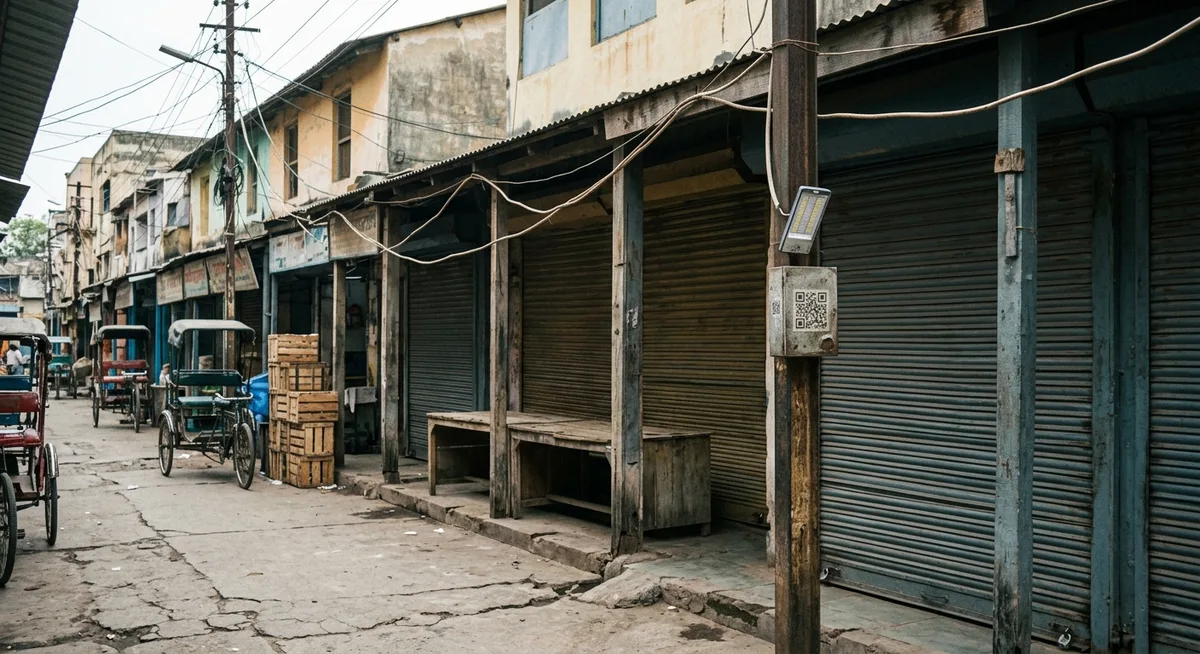
Along the storefronts of Commercial Street in Bangalore, the sound of cash transactions has increasingly been replaced by a digital notification. From high-end apparel retailers to the individual vendors selling roasted peanuts, the presence of a small QR code sticker has become a standard requirement for conducting business in India.
A user scans the code with a smartphone, enters an amount, and money moves directly from their bank account to the merchant’s. There is no credit card to swipe, no 3 percent fee for the shopkeeper, and no multi-day wait for the funds to clear.
This is the Unified Payments Interface, or UPI. Launched in 2016 with 21 participating banks, it has grown into the world’s most active retail payment system. According to data from the National Payments Corporation of India (NPCI), UPI processed 131 billion transactions during the 2023-24 fiscal year. This represents a massive increase since its inception, reflecting a fundamental shift in the movement of capital within the Indian economy.
Source: NPCI / PIB Delhi, April 2026
The scale of this shift is significant. India accounts for approximately 46 percent of all global real-time transactions, according to 2023 data from ACI Worldwide. This volume far outpaces other major economies such as Brazil (15 percent), China (9 percent), and Thailand (7 percent).
What distinguishes UPI is its underlying architecture. In many developed economies, digital payments function as a private network. When a consumer in the United States uses a traditional credit card, the merchant typically incurs a “swipe fee” or Merchant Discount Rate (MDR) that averages between 1.5 percent and 3.5 percent. In India, the government has categorized payments as digital public infrastructure, making the system available without direct transaction fees for users or merchants.
The Removal of Transaction Barriers
For decades, the global financial system operated on the premise that digital transfers required intermediaries who collected a percentage of every transaction. Over time, these fees have become a substantial cost for retailers.
American merchants pay approximately $160 billion annually in credit and debit card fees, according to data from the Nilson Report. For a small business owner, these costs can represent a significant portion of their monthly operating margin.
India adopted a different model. On January 1, 2020, the Indian Ministry of Finance implemented a “Zero MDR” policy, ensuring that merchants pay no fees for accepting UPI payments. To maintain the infrastructure, the government provides financial incentives to banks. In January 2024, the government approved an incentive scheme of ₹2,600 crore (approximately $312 million) for the 2023-24 fiscal year to compensate banks and fintech providers for processing these transactions.
“The widespread adoption of UPI has demonstrated how digital public infrastructure can drive financial inclusion at scale,” stated Kristalina Georgieva, Managing Director of the IMF, during a 2023 visit to India.
The practical result has been the widespread accessibility of digital payments. Because the system incurs no fees, even micro-transactions—such as the purchase of a single piece of fruit—are economically viable for digital processing. Praveen Khandelwal, Secretary General of the Confederation of All India Traders (CAIT), has noted that this lack of fees has been the primary driver for small merchants to move away from cash dependency, as it protects their narrow profit margins.
Building the ‘India Stack’
UPI is a central pillar of a broader digital framework known as the “India Stack.” This set of digital building blocks includes Aadhaar (a national biometric ID system) and DigiLocker (a digital document storage system).
By layering a payment system on top of these verified identities, India addressed the primary challenges of digital banking: identity verification and transactional friction. Because the system is interoperable, a sender can use a government-backed app while the receiver uses a private application like Google Pay or PhonePe. The funds move across the same public infrastructure.
“India has shifted from being data-poor to data-rich,” said Nandan Nilekani, Co-founder of Infosys and the founding chairman of the Unique Identification Authority of India. He has described UPI as a digital public rail designed for inclusive growth that is now being exported to other nations.
Source: Ministry of Finance (India) / Nilson Report, 2025
This interoperability is a technical feature that many Western markets have not yet fully implemented. While applications like Venmo or Zelle exist in the U.S., they often operate as closed systems. Moving funds between different applications or disparate banking institutions can still involve delays.
The U.S. Federal Reserve launched FedNow, a real-time payment system, in July 2023. However, FedNow currently serves as an institutional settlement rail rather than a mandatory, consumer-facing interface that connects every bank through a universal QR code system. In 2023 industry discussions, analysts noted that while FedNow provides the plumbing for instant payments, it lacks the unified consumer adoption layer seen in the Indian market.
A Global Export Model
India’s payment architecture is now being integrated into international markets. As of mid-2024, UPI’s footprint has expanded to several countries, including France, the UAE, Singapore, Sri Lanka, Mauritius, Bhutan, and Nepal.
These international links are specifically targeting the market for cross-border remittances. In 2024, a link between India and Nepal became operational, allowing migrant workers to transfer funds instantly via smartphone. This bypasses traditional wire services, which the World Bank notes can charge global average fees of over 6 percent.
Other nations are observing this model. Brazil’s Pix system, launched in late 2020, followed a similar government-led trajectory. By 2023, Pix was used by more than 150 million people, significantly reducing bank transfer costs and increasing the number of citizens participating in the formal economy, according to data from the Central Bank of Brazil.
“The improvement in physical and digital infrastructure in India is a significant factor for long-term growth,” said Gita Gopinath, First Deputy Managing Director of the IMF. She noted that the efficiency of the payment system has measurably reduced the cost of doing business.
Technical and Economic Tensions
While the system is efficient, it faces ongoing commercial pressures. The “Zero MDR” policy is popular among merchants, but it limits the revenue potential for the banks and fintech companies that manage the back-end technology.
“The sheer volume of transactions means we have to solve for concurrency and reliability at a level few other systems in the world face,” said Rahul Chari, CTO of PhonePe, in a 2023 interview regarding the technical demands of the platform.
There is a persistent debate in New Delhi regarding whether the government should permit a nominal fee on transactions to ensure the long-term commercial sustainability of the system. However, public sentiment remains a barrier. An April 2024 survey by LocalCircles found that 73 percent of Indian users would likely reduce their usage of UPI if transaction fees were introduced.
There are also concerns regarding market concentration. Although the underlying infrastructure is public, the majority of consumer-facing transactions are processed by two entities: PhonePe (majority-owned by Walmart) and Google Pay. Regulators at the NPCI have discussed implementing market share caps to prevent a duopoly and encourage competition among smaller fintech players.
Furthermore, the transition to a digital-first economy raises questions about data privacy. While a digital paper trail helps reduce the shadow economy and corruption, it also provides the state and private corporations with extensive data on the spending habits of hundreds of millions of citizens.
Future Developments
India is currently expanding the system’s reach through new technical iterations. The Reserve Bank of India (RBI) has introduced “UPI Lite” for small-value offline payments and “UPI123Pay,” which is designed to enable digital transactions for the roughly 400 million Indians who use basic feature phones rather than smartphones.
The system is also expanding into credit markets. A 2023 initiative now allows users to link pre-sanctioned credit lines to their UPI accounts, a move that could potentially reduce the reliance on physical credit cards in the Indian market.
“The future of money includes Central Bank Digital Currencies (CBDC), and it is not in competition with UPI,” stated Shaktikanta Das, Governor of the Reserve Bank of India, in 2023. “They will coexist and be interoperable, ensuring a more robust digital ecosystem.”
Source: IMF Report, June 2025
For international observers, the trajectory of UPI suggests that high transaction fees are a variable of policy rather than an inherent cost of digital commerce. In the U.S., payments remain a high-margin industry; in India, they have been repositioned as a public utility.
As global policymakers evaluate ways to lower costs for small businesses, the Indian model provides a specific alternative. It demonstrates that when a government establishes standardized digital “rails,” the private sector can build services on top of them that prioritize volume and accessibility over individual transaction tolls.
For now, the system’s success depends on balancing its rapid growth with the financial requirements of the institutions that keep the digital chime ringing across millions of storefronts.
Sources
- PIB Delhi — UPI Completes 10 Glorious Years, April 2026
- IMF — Growing Retail Digital Payments Report, June 2025
- Fortune India — US Lawmakers Eye India's UPI Model, June 2026
- Silicon Canals — India's UPI Processes More Daily Transactions Than Visa/Mastercard
- NPCI — Product Statistics
- https://asialink.unimelb.edu.au/diplomacy/insights/indias-game-changing-digital-money-model/
- https://en.wikipedia.org/wiki/Unified_Payments_Interface
- https://www.electronicpaymentsinternational.com/analyst-comment/upi-highlights-transformative-potential-instant-payment-systems/
- https://www.imf.org/en/Publications/WP/Issues/2023/03/31/Stacking-up-the-Benefits-Lessons-from-Indias-Digital-Journey-531692
- https://www.rbi.org.in/Scripts/BS_ViewBulletin.aspx?Id=21685
- https://www.bcg.com/publications/2025/upi-global-benchmark-digital-payments
- https://www.kansascityfed.org/research/payments-system-research-briefings/role-nonbanks-fintechs-india-upi/
- https://documents.worldbank.org/en/publication/documents-reports/documentdetail/099091723145524854/p178716075e7a206a0998305737887e35b0
- https://pib.gov.in/PressReleaseIframePage.aspx?PRID=2003314
The information presented is for educational and informational purposes only and does not constitute investment advice. MainStreet uses AI to generate content — always verify with qualified financial professionals before making investment decisions. How MainStreet works →
Discussion