Why Your Flood Insurance Bill is Tripling Even If You Live Nowhere Near the Coast
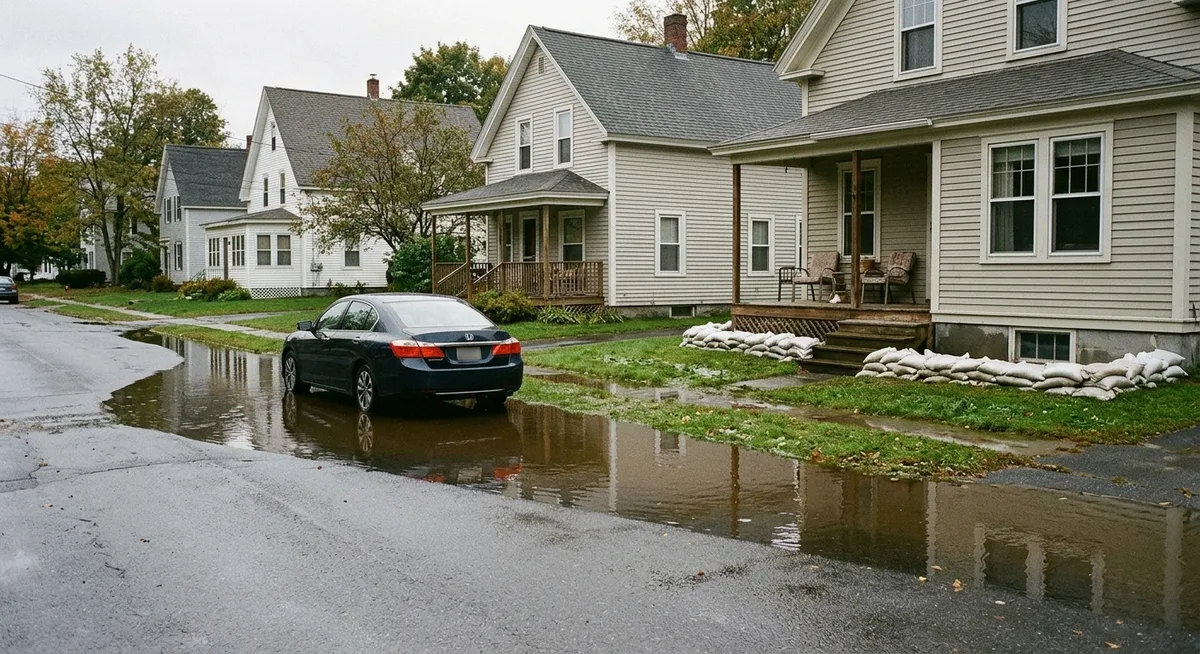
For decades, homeowners in the American heartland operated under a consistent assumption: flood insurance was a necessity primarily for those with coastal views. In regions like the Green Mountains of Vermont or the river valleys of the Midwest, catastrophic flooding was often viewed as a rare anomaly rather than a recurring budgetary consideration.
That assumption is being tested by a significant shift in how financial risk is calculated across the United States. By 2024, the geography of risk has been redefined by the implementation of Risk Rating 2.0, the first major overhaul of the National Flood Insurance Program’s (NFIP) pricing methodology since the 1970s. While coastal states like Florida and Louisiana continue to see the highest average premiums according to the Insurance Information Institute, landlocked states are experiencing a period of rapid adjustment as the federal government moves toward actuarial rates that reflect property-specific vulnerabilities.
This transition is the result of a data-driven move away from broad “flood zones.” Under the new methodology, the Federal Emergency Management Agency (FEMA) prices individual homes based on specific factors, including the frequency of various flood types—such as heavy rainfall and river overflow—as well as the distance to a water source and the cost to rebuild the structure.
The financial adjustment for many households is significant. Federal law currently caps annual premium increases at 18 percent for most primary residences. However, the cumulative effect of these increases is substantial. According to FEMA’s “Equity in Action” data, while 23 percent of policyholders saw immediate premium decreases under the new system, the majority are seeing staggered increases. Roughly 4 percent of policyholders nationwide are facing increases of $20 or more per month—totaling $240 or more annually—every year until they reach their full risk-based rate.
Source: FEMA NFIP Statutory Limits
The Transition from Binary Flood Zones
For nearly fifty years, the NFIP relied on a binary system: a property was either inside a Special Flood Hazard Area (SFHA) or it was not. This legacy methodology, established in the 1970s, was often unable to account for the nuances of modern hydrology. It primarily focused on “fluvial” flooding—rivers overtopping their banks—while frequently overlooking “pluvial” flooding, which occurs when intense rainfall overwhelms local drainage systems regardless of proximity to a river.
The updated pricing approach allows for a more granular assessment of risk. According to FEMA documentation, the previous system often resulted in owners of lower-value homes paying more than their actual risk suggested, effectively subsidizing the premiums of higher-value properties. The current methodology attempts to correct this by incorporating “Replacement Cost Value” (RCV) into the calculation. This means that as the cost of labor and materials rises, the premium required to insure a high-value home increases accordingly.
Inland states like Kentucky and Missouri are now seeing the implications of this shift. These regions often lack the extensive sea walls or sophisticated levee systems found in coastal hubs. When intense precipitation events occur, the resulting damage is costly. According to the Insurance Information Institute, the average NFIP claim payout reached approximately $44,000 in recent years, a figure driven by the rising costs of construction and remediation.
The $237 Billion Valuation Gap
The rising cost of insurance is beginning to influence the valuation of American residential real estate. Research published in Nature Communications in February 2023, and supported by the First Street Foundation, suggests that residential properties exposed to flood risk are overvalued by between $121 billion and $237 billion.
This valuation gap exists because the true cost of flood risk has historically not been fully transparent to the real estate market. As premiums move toward their full actuarial rates, the cost of ownership for high-risk properties increases, which can place downward pressure on home equity. For a buyer in 2024, the long-term cost of a flood policy is becoming as critical a factor as property taxes or mortgage rates.
According to First Street Foundation research, the risk of significant flooding is expanding northward and further inland. This geographic expansion means that properties in the Mid-Atlantic and Midwest, which may not have required insurance in previous decades, are now being identified as high-risk by modern catastrophe models. For a household at the median income level, a consistent 18 percent annual increase in a fixed cost like insurance represents a meaningful budgetary strain, potentially matching or exceeding other monthly utility or transportation expenses.
Most expensive flood state in 2025
Despite high disaster aid dependency
Premiums reaching true risk for high RCV homes
Source: FEMA (2025) / MoneyGeek (2026)
A Global Shift Toward Risk-Based Pricing
The United States is part of a broader global trend where governments are reconsidering how to manage the financial impact of natural disasters. As climate volatility increases, the era of heavily subsidized risk is being replaced by models that prioritize fiscal sustainability and private market participation.
In France, the government announced a significant adjustment to its “CatNat” natural disaster insurance scheme. In January 2025, the mandatory surcharge on property insurance policies is set to rise from 12 percent to 20 percent to address a deficit driven by increasing cycles of floods and droughts. This move is designed to ensure the long-term viability of the state-backed compensation fund.
Similarly, the United Kingdom utilizes a public-private partnership known as “Flood Re” to maintain affordable insurance for high-risk households. However, the program is designed to be temporary. According to the OECD, Flood Re is scheduled to phase out by 2039, at which point the UK market will transition to fully risk-based pricing. This transition period is intended to give homeowners time to invest in property-level flood defenses, though it presents a significant long-term financial deadline for those in flood-prone areas.
| Country | Key Mechanism | Recent Policy Change | Pricing Philosophy |
|---|---|---|---|
| United States | NFIP | Risk Rating 2.0 (Full Implementation) | Property-Specific Risk |
| Canada | Nat'l Flood Program | Program Launch April 2026 | Targeted High-Risk Subsidy |
| France | CatNat | Surcharge hike 12% to 20% (Jan 2025) | National Solidarity Fund |
| United Kingdom | Flood Re | Scheduled phase-out by 2039 | Transition to Full Risk |
Source: OECD / Govt of Canada / France Ministry of Economy
The Expanding Protection Gap
One of the most significant challenges facing the NFIP is the “protection gap”—the difference between total economic losses and the portion covered by insurance. As premiums rise to reflect actual risk, there is a measurable impact on policy uptake. Research from the Environmental Defense Fund (EDF) suggests that rising costs are likely to lead to a decrease in the number of households opting into the program, particularly in lower-income brackets.
Fitch Ratings has noted that while the private flood insurance market in the U.S. is growing, it still represents a small fraction of the total market, leaving the NFIP as the primary insurer of last resort. In many inland counties in states like Tennessee and Kentucky, insurance penetration remains below 1 percent, even in areas that have recently experienced significant flood events.
This lack of coverage creates a cycle of dependency on federal disaster aid. When uninsured homes are destroyed, the cost of recovery often falls on the taxpayer through FEMA’s Individual Assistance and Public Assistance programs. For example, following major flooding events in Vermont, federal disaster aid has reached into the tens of millions of dollars—part of a $42.9 billion total in FEMA aid identified across several states in recent data. Without private or NFIP coverage, these funds are often the only resource available for rebuilding, though they typically cover only a fraction of the total loss.
Mitigation and the Community Rating System
The NFIP currently manages a significant fiscal deficit, with approximately $20.5 billion in debt to the U.S. Treasury. To achieve long-term stability, the program must balance the need for actuarial soundness with the reality of housing affordability.
One potential solution being emphasized by the Government Accountability Office (GAO) is the prioritization of mitigation over premium subsidies. Rather than artificially lowering rates, the focus is shifting toward reducing the underlying risk. The “Community Rating System” (CRS) is a voluntary incentive program that recognizes and encourages community floodplain management practices that exceed the minimum NFIP requirements.
Under the CRS, flood insurance premium rates are discounted to reflect the reduced flood risk resulting from community actions. These actions can include preserving open space, improving storm drainage systems, and implementing stricter building codes. In communities that achieve high CRS rankings, residents can see premium discounts ranging from 5 percent to as much as 45 percent.
Additionally, addressing “repetitive loss properties” remains a priority for the program’s solvency. According to GAO reports, these properties, which have been flooded and repaired multiple times, account for a disproportionate share of NFIP claim payments. Targeted mitigation strategies, such as property buyouts or elevating structures, are viewed as more sustainable methods for lowering program costs than broad-based rate freezes.
As the 2024 storm season progresses, the financial landscape for the American interior continues to evolve. For millions of residents in regions once considered distant from flood threats, the cost of risk is being made tangible through revised premiums and modern risk modeling. The goal of these adjustments is a more transparent and sustainable system, though the path to reaching that equilibrium remains a significant financial challenge for many communities.
Sources
- FEMA — Risk Rating 2.0: Equity in Action
- GAO — Flood Risk Mitigation: Reducing Fiscal Exposure and Improving Affordability
- Environmental Defense Fund — Study Finds FEMA’s New Flood Insurance Pricing Reducing Coverage
- First Street Foundation — The Precipitation Problem: National Risk Assessment
- OECD — The design of flood risk insurance programmes
- Insurance Information Institute (III) — Facts + Statistics: Flood Insurance
- Fitch Ratings — U.S. Private Flood Insurance Exposure Limited, but Growth Accelerates
The information presented is for educational and informational purposes only and does not constitute investment advice. MainStreet uses AI to generate content — always verify with qualified financial professionals before making investment decisions. How MainStreet works →
Discussion