Why Countries Everywhere Are Changing Their Minds About Nuclear Energy
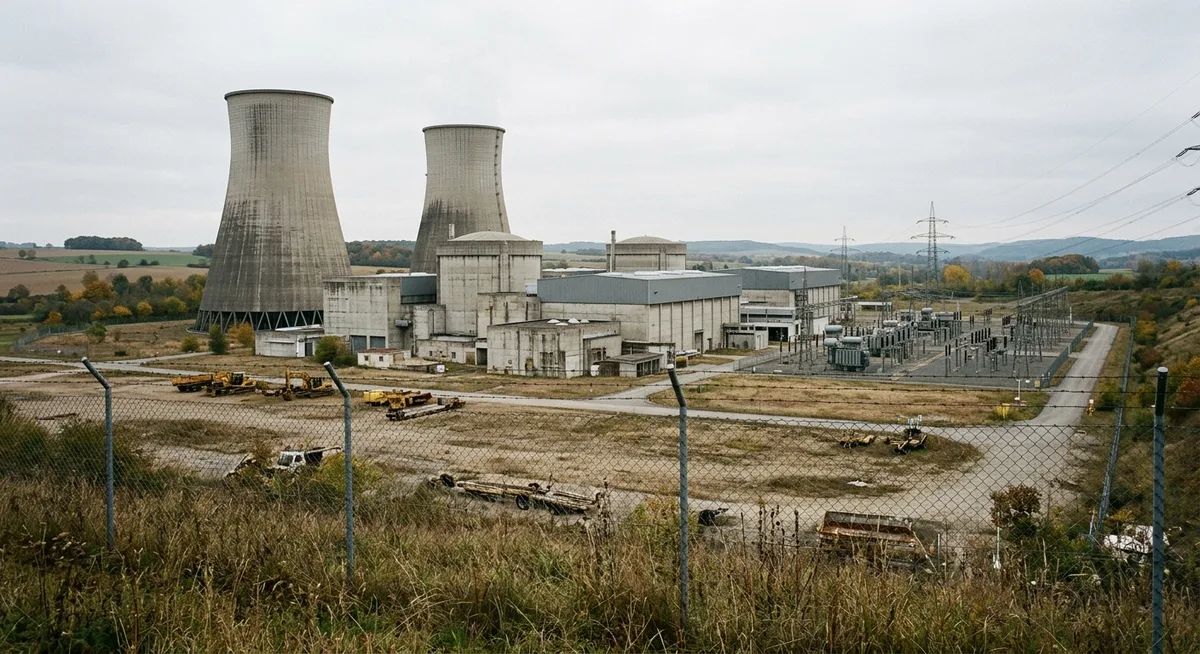
For decades, the Three Mile Island nuclear plant in Pennsylvania stood as a silent monument to the anxieties of the atomic age. After a partial meltdown in 1979, the site became a global shorthand for the risks of nuclear power, eventually leading to the decommissioning of Unit 1 in 2019. But in a move that signals a significant shift in the American energy landscape, the cooling towers are preparing to return to service.
In September 2024, Microsoft signed a landmark 20-year power purchase agreement with Constellation Energy to restart the facility, now rechristened the Crane Clean Energy Center. The deal is a multibillion-dollar commitment to a power source capable of meeting the unprecedented thermal load of artificial intelligence. It marks a broader, global shift where the historical fear of radiation is being weighed against the immediate risks of an energy-starved grid.
Data from the PJM Interconnection, the regional grid operator for Pennsylvania and 12 other states, highlights the scale of this demand. In its 2024 load forecast, PJM doubled its 15-year annual growth projection for electricity demand, driven largely by the proliferation of server farms. For the local economy in Middletown, Pennsylvania, the restart is projected to support 3,400 direct and indirect jobs and contribute $16 billion to the state’s GDP, according to a report by the Brattle Group. The project reflects a hard choice for regional planners: either bring retired assets back online or face potential reliability deficits by the end of the decade.
The Power Demand of AI
The primary engine of this reversal is the data center. As technology firms scale more complex AI models, the electricity required to cool and run these server farms has reached levels that threaten to outpace existing grid capacity. In the United States, data centers are projected to consume 9 percent of total electricity by 2030, according to data from the Electric Power Research Institute.
For tech giants like Microsoft, Amazon, and Google, variable sources like wind and solar require massive over-provisioning or battery storage that is not yet available at scale. They require “baseload” power—electricity that remains constant regardless of weather conditions. Nuclear energy is the only carbon-free source that provides this level of consistency.
Source: U.S. Dept. of Energy / Constellation, 2026
The U.S. federal government is facilitating this momentum through significant financial backing. In late 2024, the Department of Energy finalized a $1.52 billion loan guarantee to restart the Palisades Nuclear Plant in Michigan. This represents the first time a decommissioned plant has been returned to service in U.S. history. While the move has been welcomed by labor unions, it underscores the difficulty of the transition; the government is choosing to fund the revival of 20th-century infrastructure because building 21st-century replacements has proven prohibitively slow.
A Global Policy Reversal
This shift is not confined to American borders. Across Europe and Asia, countries that once vowed to shutter their reactors are extending their operating lives or drafting legislation to build new ones. In July 2024, Italy’s government announced it would draft a legal framework to allow for the use of small modular reactors, signaling a move to reverse the national ban on nuclear power that has been in place since a 1987 referendum.
Italy’s target involves integrating modular reactors into its energy mix by 2040 to reduce its reliance on energy imports. This follows a similar pivot in Sweden. In late 2023, the Swedish parliament officially changed its energy target from “100 percent renewable” to “100 percent fossil-free.” This legislative shift allowed the government to move forward with plans for new large-scale reactors. By early 2024, Sweden’s Ministry of Climate and Environment announced a roadmap for the construction of the equivalent of two new large-scale reactors by 2035, with a massive expansion to follow by 2045.
These decisions are often driven by economic necessity rather than political preference. In Sweden, the government noted that doubling electricity production by 2045 is required to power the electrification of the country’s heavy industry, such as steel and mining.
-
EU Taxonomy Update
Nuclear officially included as a 'sustainable' transition activity.
-
Japan's 7th Energy Plan
Targeting 20% nuclear power share by 2040.
-
Sweden Policy Reversal
Legislation passed for at least 10 new reactors by 2045.
-
Italy Return to Atomic
Parliament approves bill to end 36-year nuclear ban.
Source: IAEA / Government Reports
Even Japan has fundamentally altered its course. Japan’s revised Strategic Energy Plan, moving through 2024 and 2025, aims to maximize nuclear power’s share of the energy mix to approximately 20-22 percent. This is a reversal of the post-Fukushima phase-out goals, prompted by rising liquid natural gas prices and the realization that Japan’s industrial base requires a stable, domestic power supply.
The Eastern Dominance
While Western nations focus on restarting older plants, China is expanding its nuclear fleet at an unprecedented pace. As of late 2024, China has more than 30 reactors under construction, representing nearly half of all nuclear construction activity worldwide.
China’s advantage is rooted in a standardized industrial model. According to the International Atomic Energy Agency (IAEA), it takes China approximately six to seven years to build a reactor, compared to a decade or more for recent projects in the United States and Europe. This speed has allowed China to reach 56 operational reactors by mid-2024, with its capacity nearly doubling since 2016.
Nearly half of all current global construction
Led by India, Russia, and South Korea
Source: U.S. EIA / IEA
The geopolitical implications of this speed are significant. According to the International Energy Agency (IEA), Russia and China have provided the technology for the vast majority of nuclear reactors that have started construction globally over the last decade. This creates a long-term dependency; a nuclear reactor purchase typically initiates a 60-year relationship for fuel supply, maintenance, and specialized technical expertise. In response, the U.S. and its allies have begun coordinating through the “Sappers” and “FIRST” programs to provide technical assistance and financing to countries looking for alternatives to state-backed Russian and Chinese firms.
The High Cost of the Renaissance
Despite the renewed interest, the return to nuclear power faces significant economic friction. Building new reactors remains one of the most expensive engineering tasks in existence. The completion of Vogtle Units 3 and 4 in Georgia—the first new U.S. reactors in decades—serves as a cautionary tale for the industry. The project faced $17 billion in cost overruns and years of delays.
The “friction” at Vogtle was largely administrative and supply-chain related. Because the U.S. had not built a new reactor in thirty years, the workforce lacked experience with the specific requirements of nuclear-grade construction. For example, the Nuclear Regulatory Commission required more than 150,000 specific “inspections, tests, analyses, and acceptance criteria” (ITAAC) for Unit 3 alone. Thousands of pages of documentation had to be reworked due to minor deviations in component placement, highlighting how a lack of recent experience can cause costs to balloon.
France is facing similar challenges. President Emmanuel Macron’s “Plan France 2030” involves building at least six new EPR2 reactors at an estimated cost of €67 billion to €73 billion. While the EU Taxonomy officially labeled nuclear energy as a “sustainable” activity in 2023, attracting private investment remains difficult given the long-term capital commitment required.
Furthermore, legacy costs remain a burden. A report from the Government Accountability Office (GAO) indicates that U.S. cleanup costs for legacy nuclear sites continue to rise, with liabilities already in the hundreds of billions. For the nuclear renaissance to be sustainable, the industry must demonstrate that new designs can be built on time and that decommissioning costs can be managed without significant taxpayer intervention.
The Rise of the Mini-Reactor
To mitigate the issues of massive costs and decade-long timelines, the industry is shifting its focus toward Small Modular Reactors (SMRs). Unlike traditional plants, SMRs are designed to be manufactured in a factory setting and shipped to a site, which is intended to reduce construction risk and capital requirements. The IAEA projects that SMRs could account for a significant portion of new nuclear capacity by 2050, particularly in regions with smaller grids or specific industrial needs.
In 2024, South Korea announced plans to incorporate SMR technology into its long-term energy strategy to meet the power requirements of its semiconductor hubs. Similarly, the United Arab Emirates recently completed the Barakah Nuclear Energy Plant, which provides 25 percent of the country’s electricity. The success of the Barakah project, which was built largely on schedule, suggests that a “repeatable” construction model can control costs, even for nations new to nuclear power.
According to data from the International Atomic Energy Agency, nuclear electricity generation is expected to reach a record high by the end of 2025, surpassing previous peaks as more reactors are returned to service or connected to the grid for the first time.
The New Energy Map
As of late 2024, global investment in nuclear power has reached approximately $80 billion annually, a 78 percent increase over the last decade. This surge is driven by the convergence of climate targets and the energy requirements of the digital economy. In this environment, the reactor is increasingly viewed as a primary asset for national security and grid stability.
Source: IEA World Energy Investment 2026
At Three Mile Island, engineers are currently conducting inspections of the turbines and steam generators at Unit 1. The restart of the Crane Center represents a functional shift in how the industry operates. For the tech sector and the regional grid, the focus has moved toward ensuring that the power supply can meet the requirements of modern computing. The ongoing work at the site reflects a broader reality: for many nations and corporations, the priority has become keeping the lights on through a reliable, high-capacity, carbon-free source.
Sources
- IEA — Technology: Nuclear Global Energy Review 2026
- IAEA — IAEA Raises Nuclear Power Projections for Fifth Consecutive Year
- U.S. EIA — China's nuclear power capacity nearly doubled since 2016
- NucNet — Italy's Lower House Backs Legislation To Revive Nuclear Power
- Government of Sweden — Long-term investments in nuclear power
- GAO — Nuclear Cleanup Costs Continue to Spiral
The information presented is for educational and informational purposes only and does not constitute investment advice. MainStreet uses AI to generate content — always verify with qualified financial professionals before making investment decisions. How MainStreet works →
Discussion