Your Commute and Your Grocery Bill are Rising Because America’s Bridges Are Aging Out
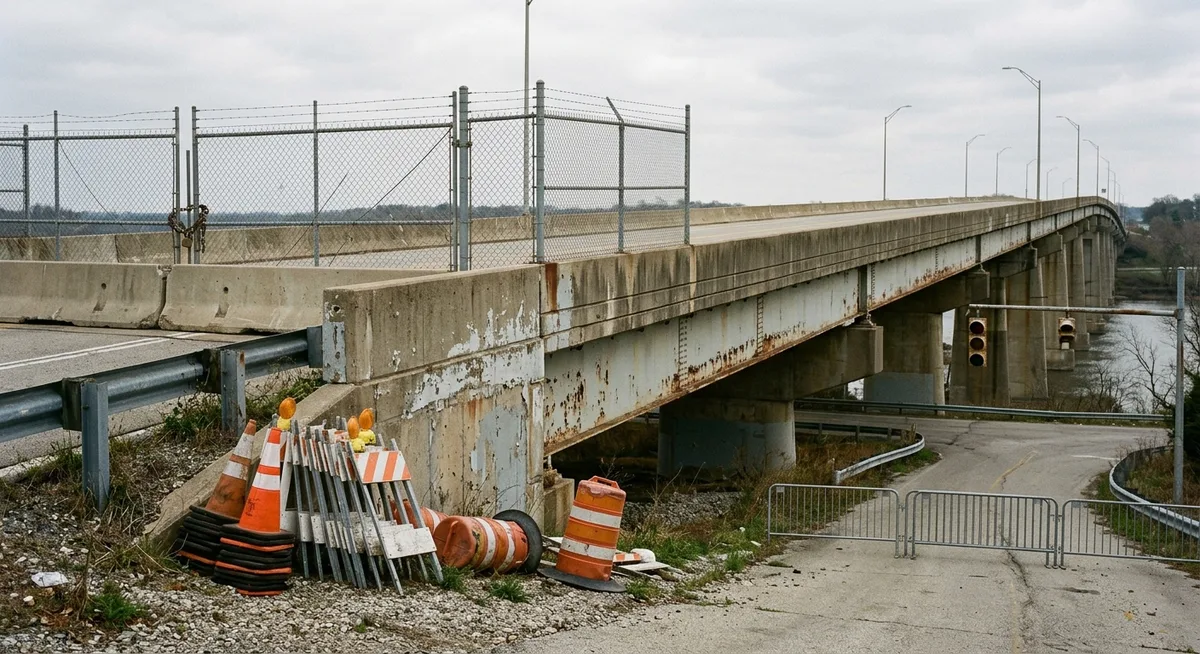
The condition of the nation’s infrastructure remains a central challenge for American logistics and economic stability. According to the 2024 analysis of the National Bridge Inventory by the American Road & Transportation Builders Association (ARTBA), approximately 36 percent of all U.S. bridges—roughly 221,800 structures—require major repair work or total replacement. While high-profile emergency closures often dominate public attention, the more pervasive issue is the gradual deterioration of hundreds of thousands of smaller spans that serve as the backbone of the domestic supply chain.
As of 2024, the American bridge system is navigating a period of intensive federal investment. However, the scale of the challenge is dictated by the logistical reality of aging structures. Current data suggests that despite recent funding increases, the rate of structural decline in many regions continues to keep pace with repair efforts.
The Lifecycle of Concrete and Steel
The American bridge inventory is reaching a significant milestone in its engineered lifespan. According to the American Society of Civil Engineers (ASCE), the average age of a bridge in the United States is 42 years. This figure is notable because most of these structures were designed with an intended service life of approximately 50 years.
The concentration of bridge construction in the mid-20th century has created a period where a significant portion of the nation’s infrastructure is approaching retirement simultaneously. ARTBA data indicates that if all currently identified bridge needs were addressed immediately, the cost would reach into the hundreds of billions of dollars. The challenge is not merely one of repair, but of managing the systemic transition of an aging inventory into a modern, more resilient framework.
Source: ARTBA / FHWA, 2024
Investment and the Challenge of Deterioration
Federal efforts to address these needs have intensified under the Infrastructure Investment and Jobs Act (IIJA), which established the Bridge Investment Program with a $40 billion commitment. This represents the largest dedicated federal bridge investment since the expansion of the interstate highway system.
The Federal Highway Administration (FHWA) reported progress in reducing the number of structures in the most critical condition. The number of bridges classified as “poor” fell from approximately 46,000 in 2020 to 42,400 by late 2023. However, ARTBA’s 2024 economic analysis highlights a growing concern regarding bridges in “fair” condition. These structures, while currently safe for travel, show signs of advanced wear. Data suggests that bridges are transitioning from “fair” to “poor” condition at a rate that threatens to offset the gains made by repairing the most critically deficient spans.
The Economic Impact of Structural Deficiencies
For the commercial transport sector and the average motorist, the condition of a bridge is often reflected in weight restrictions and detours. The FHWA notes that more than 167 million trips are made across structurally deficient bridges every day.
When a bridge is categorized as structurally deficient, it often requires weight limits that prevent fully loaded tractor-trailers or heavy emergency vehicles from crossing. This necessitates detours that increase fuel consumption and labor costs. A 2023 study by TRIP, a national transportation research nonprofit, found that the inefficiencies caused by deficient roads and bridges result in significant annual costs for drivers due to wasted time and increased vehicle operating expenses.
In the logistics sector, these detours represent a systemic increase in overhead. For a freight company, a 10-mile detour around a weight-restricted bridge can add significant costs when multiplied across a fleet over a fiscal year. These costs are ultimately absorbed into the price of goods, acting as a persistent inflationary pressure on the supply chain.
Global Investment Trends
The United States faces infrastructure challenges that are common among industrialized nations, yet investment levels vary significantly. According to data from the OECD, U.S. spending on inland transport infrastructure as a percentage of GDP has historically remained lower than that of several peer nations.
While the IIJA has increased the U.S. investment trajectory, the OECD’s Infrastructure Outlook suggests that sustained, long-term funding is required to match the maintenance cycles of other major economies. Many European nations maintain a higher percentage of GDP spending on infrastructure maintenance to avoid the higher costs associated with emergency replacements and long-term closures.
Source: OECD / PIIE, 2023
The Burden of Local Maintenance
A critical factor in the speed of bridge repairs is the distribution of ownership. ASCE reports show that while federal funding is essential, the responsibility for maintaining the majority of the nation’s bridges falls on state and local governments. Local authorities, including counties and municipalities, are responsible for roughly half of the bridge inventory.
Many of these local jurisdictions face budget constraints that make the replacement of even a single mid-sized bridge a significant fiscal event. In states with high percentages of deficient bridges, such as West Virginia and Iowa, the backlog of needs often exceeds the immediate capacity of local tax bases.
The FHWA’s current goals include the repair or replacement of 15,000 bridges, specifically targeting those that serve as critical nodes in the national supply chain. However, the ASCE estimates the total investment backlog for bridge repair stands at approximately $125 billion. Addressing the full scope of the nation’s structural needs over the next decade would require a significant and sustained increase in total investment.
Highest rate of deficiency in the nation
Major agricultural transit concerns
Represents 42,400 structures
Source: ARTBA / State DOT Data, 2023
Long-Term Economic Resilience
As of 2024, the push to modernize American infrastructure is a race against time and the natural degradation of materials. The Bridge Investment Program is making measurable progress on high-priority freight corridors, but the broader inventory requires a long-term strategy that moves beyond one-time funding bills.
Economic projections suggest that the health of regional supply chains is inextricably linked to the reliability of these crossings. If the rate of repair does not keep pace with the rate of deterioration, the resulting increase in transportation costs could create a measurable drag on regional economic growth.
The choice facing policymakers and the public is between proactive, scheduled maintenance or the higher costs associated with reactive repairs and the logistical disruptions caused by weight restrictions. For the American economy, the stability of the bridge system is a fundamental component of maintaining competitive efficiency in a global market.
Sources
- Federal Highway Administration — National Bridge Inventory Data
- ASCE — 2021 Infrastructure Report Card: Bridges
- U.S. Department of Transportation — Bridge Investment Program Fact Sheet
- OECD — Infrastructure Investment Data
- TRIP — National Transportation Research Nonprofit
- Congressional Budget Office — Public Spending on Transportation and Water Infrastructure
The information presented is for educational and informational purposes only and does not constitute investment advice. MainStreet uses AI to generate content — always verify with qualified financial professionals before making investment decisions. How MainStreet works →
Discussion