Your Digital Life Still Depends on a Single Island in the Pacific
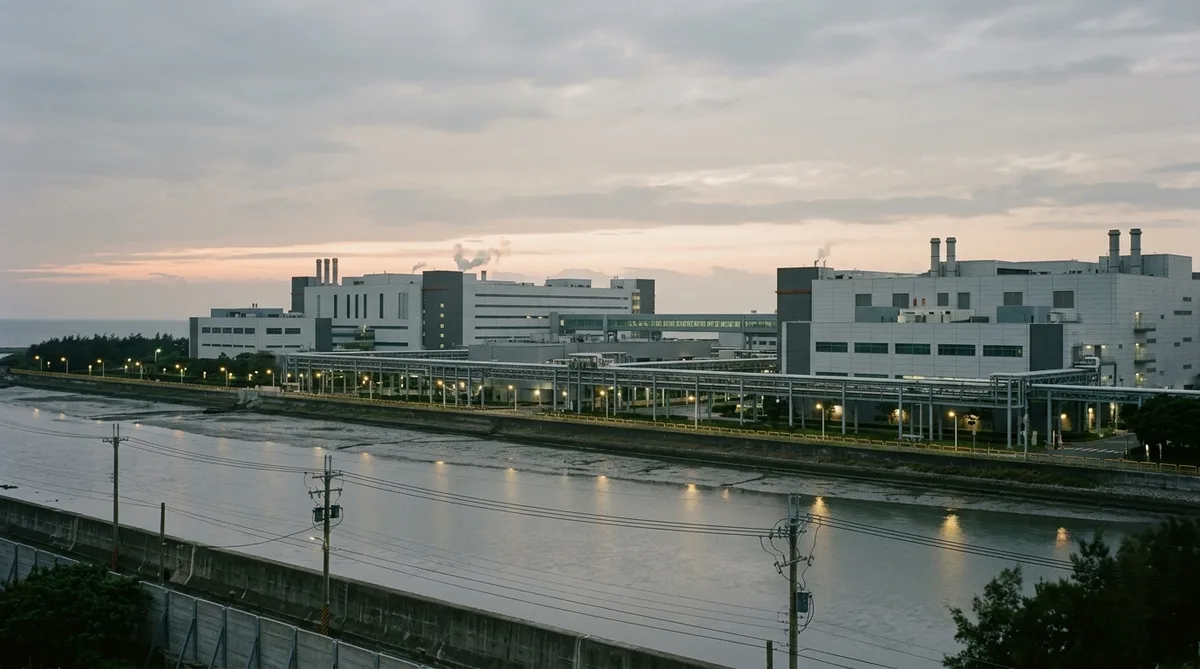
Deep within the industrial parks of Hsinchu and Kaohsiung, Taiwan, machines the size of double-decker buses use extreme ultraviolet light to etch patterns onto silicon that are so small they are measured in the width of a few atoms.
These factories—owned by Taiwan Semiconductor Manufacturing Co., or TSMC—have become a critical node in the global economy. If these facilities face disruption, the stability of international commerce is immediately compromised. Despite a multi-year, trillion-dollar global effort by the United States, the European Union, and China to diversify their supply chains, the world’s reliance on this geographic center has intensified. This is largely due to the massive computing requirements of high-performance computing (HPC) and the rapid adoption of sophisticated artificial intelligence systems.
These advanced digital systems require immense amounts of processing power, far exceeding the capacity of previous-generation hardware. TSMC reported in its April 2026 earnings call that it expects significant revenue growth this year, fueled by this technological transition. To meet the demand, TSMC initiated mass production of its 2-nanometer (2nm) chips late last year, utilizing a new technology called nanosheet transistors. These transistors allow for greater power efficiency and transistor density, which are essential for the massive data processing required by modern data centers.
Taiwan remains the producer of over 90 percent of the world’s most advanced semiconductors. While domestic production initiatives in the United States have begun to break ground, analysts suggest the industry is still in the early stages of a long-term process to achieve true geographic diversification.
Source: Counterpoint Research, March 2026
The $10 Trillion Shadow
The economic stakes of this geographic concentration represent a significant single point of failure for the global market. While most economic data points represent localized headwinds, the semiconductor bottleneck has the potential to stall entire industrial sectors.
A full-scale conflict over Taiwan would cost the global economy an estimated $10.6 trillion in its first year, according to a report from Bloomberg Economics. That figure represents roughly 9.6 percent of global GDP, a shock that would surpass the economic impact of the COVID-19 pandemic and the 2008 financial crisis.
The disruption would be felt across specific downstream industries that rely on high-end logic controllers. For instance, manufacturers of advanced medical imaging equipment, such as GE Healthcare and Siemens, would face immediate production halts for MRI and CT scanners. Similarly, the aerospace industry would struggle to maintain production lines for avionics systems, which are increasingly dependent on the precision found only in leading-edge nodes.
The pain would not be felt equally. Because of their physical proximity and deep supply chain integration, neighboring economies would suffer most: South Korea’s GDP would shrink by an estimated 23.3 percent, while Japan’s would fall by 13.5 percent. Even a localized disruption that restricts the export of wafers would lead to immediate price spikes in consumer electronics and industrial automation tools globally.
In 2025, Taiwanese foundries manufactured 92 percent of the world’s leading-edge logic semiconductors—the primary processors for high-end electronics. By the end of 2026, TSMC expects its 2nm facilities to reach a monthly capacity of 100,000 wafers, further consolidating the hardware supply for the next generation of global infrastructure.
Source: Bloomberg Economics, February 2026
The Subsidy Race: America’s Industrial Strategy
Washington’s response to this vulnerability has been an aggressive industrial policy. The U.S. Department of Commerce has worked to allocate the $52.7 billion in direct federal funding provided by the CHIPS Act. As of early 2024, the CHIPS Program Office had already begun signaling significant awards to revitalize domestic manufacturing.
The results are visible in the expansion of facilities in Arizona and Ohio. According to the U.S. Department of Commerce, semiconductor manufacturing has become a central focus of U.S. manufacturing investment, spurred by hundreds of billions in announced private sector commitments from companies including Intel, Samsung, and TSMC. In a February 2024 address, the Secretary of Commerce noted that while the U.S. does not aim for total self-sufficiency, it must secure the production of strategic, cutting-edge technologies.
However, constructing the physical shells of factories is only the initial hurdle. Filling them with the specialized workforce required to run 2nm and 3nm production lines remains a generational challenge. The complexity of operating extreme ultraviolet (EUV) lithography machines requires a level of engineering expertise that is currently concentrated in Taiwan. While the U.S. is making progress in workforce development, the sheer scale of global demand for high-performance computing means that for the foreseeable future, American-made chips will supplement, rather than replace, the output from Taiwan.
Source: MVPro Media / Commerce Dept
Europe’s Challenges and China’s Advance
While the U.S. has seen a surge in investment, the European Union is navigating a more difficult transition. The EU’s share of the global semiconductor market has remained near 10 percent, well below its stated goal of 20 percent by 2030.
The implementation of the EU Chips Act has faced structural challenges, including high energy costs and a complex regulatory environment that requires consensus across multiple member states. Unlike the centralized approach seen in other regions, the European model must balance the industrial priorities of 27 different nations, often leading to slower deployment of capital for “mega-fab” projects.
Meanwhile, China is pursuing a strategy of total self-sufficiency. Despite extensive U.S. export controls designed to limit access to advanced chip-making tools, SMIC (Semiconductor Manufacturing International Corp.) has successfully produced 7nm-class chips and is moving toward 5nm capabilities.
China’s “Big Fund” Phase III, launched in 2025, is focused on building domestic versions of the highly specialized tools used in the fabrication process. China’s share of global 12-inch wafer capacity reached 28 percent last year and is projected to climb to 32 percent by the end of 2026. While these chips are not yet at the absolute leading edge of 2nm technology, they are sufficient for the vast majority of automotive, industrial, and consumer applications, allowing China to build a resilient foundation for its domestic tech ecosystem.
The Capital Moat
The current focus on semiconductors represents a shift in the foundation of global wealth. According to the OECD, semiconductor value-added now accounts for roughly 8 percent of the final demand for all ICT and electronics. This reflects the reality that the transistor has become the most critical component of the modern industrial stack.
The primary barrier to entry in this market is an extreme level of capital intensity. Unlike other commodities where production can be increased by tapping new raw material sources, semiconductor capacity is protected by a massive “moat.” A single leading-edge fabrication plant now costs upwards of $20 billion and takes approximately five years to become fully operational. This means that even with massive government subsidies, the global map of silicon production cannot be redrawn quickly.
This concentration creates a unique vulnerability for global corporations. When a hospital’s diagnostic equipment cannot be serviced because of a component shortage in Kaohsiung, or when an automotive manufacturer must pause production because a data center cannot source the latest logic chips, the bottleneck becomes a tangible business risk.
“There are no shortcuts in the foundry industry,” said C.C. Wei, Chairman and CEO of TSMC, during a 2026 earnings call. “Technology leadership, manufacturing excellence, and customer trust are fundamental.”
As we look toward the end of 2026, the global map of silicon is being incrementally redrawn. Japan has committed JPY 330 billion to its “Rapidus” venture, with the goal of starting domestic 2nm production by 2027. South Korea continues to expand its “K-Semiconductor Belt” with extensive tax breaks to maintain its competitive edge in memory and logic.
Yet, for all the billions spent and the rhetoric of “reshoring,” the world remains tethered to Taiwan. The global economy is like a high-performance engine that requires a specific, rare component to run. For now, and for the foreseeable future, that component is produced in a few square miles in the Western Pacific. The infrastructure of modern life still finds its home on a factory floor in Hsinchu, where the tolerances are measured in atoms.
Sources
- Bloomberg Economics — The $10 Trillion Fight: Modeling a US-China War Over Taiwan, February 2026
- Counterpoint Research — Global Pure Foundry Market Share: Quarterly, March 2026
- OECD — Special focus: Semiconductor value chains, September 2025
- Department of Commerce — Remarks by U.S. Secretary of Commerce Gina Raimondo on CHIPS Implementation, February 2024
- https://www.tsia.org.tw/
- https://www.csis.org/analysis/world-chips-acts-future-us-eu-semiconductor-collaboration
The information presented is for educational and informational purposes only and does not constitute investment advice. MainStreet uses AI to generate content — always verify with qualified financial professionals before making investment decisions. How MainStreet works →
Discussion