The Price of Precedent: Examining the Strategic and Legal Costs of Targeting Iran’s Infrastructure
On the evening of April 7, 2026, the digital landscape flickered with a message that appeared to signal the end of a decades-old global consensus. Writing on Truth Social, President Donald Trump issued a stark ultimatum to Tehran as a deadline over the Strait of Hormuz expired: “A whole civilization will die tonight, never to be brought back again.”
The post was not mere hyperbole. It followed a week in which the president had increasingly focused on the gears that keep 85 million Iranians alive—the bridges, the power plants, and the desalination facilities. According to reporting from NPR on April 6, the administration has doubled down on threats to dismantle this civilian infrastructure unless a comprehensive new deal is reached immediately.
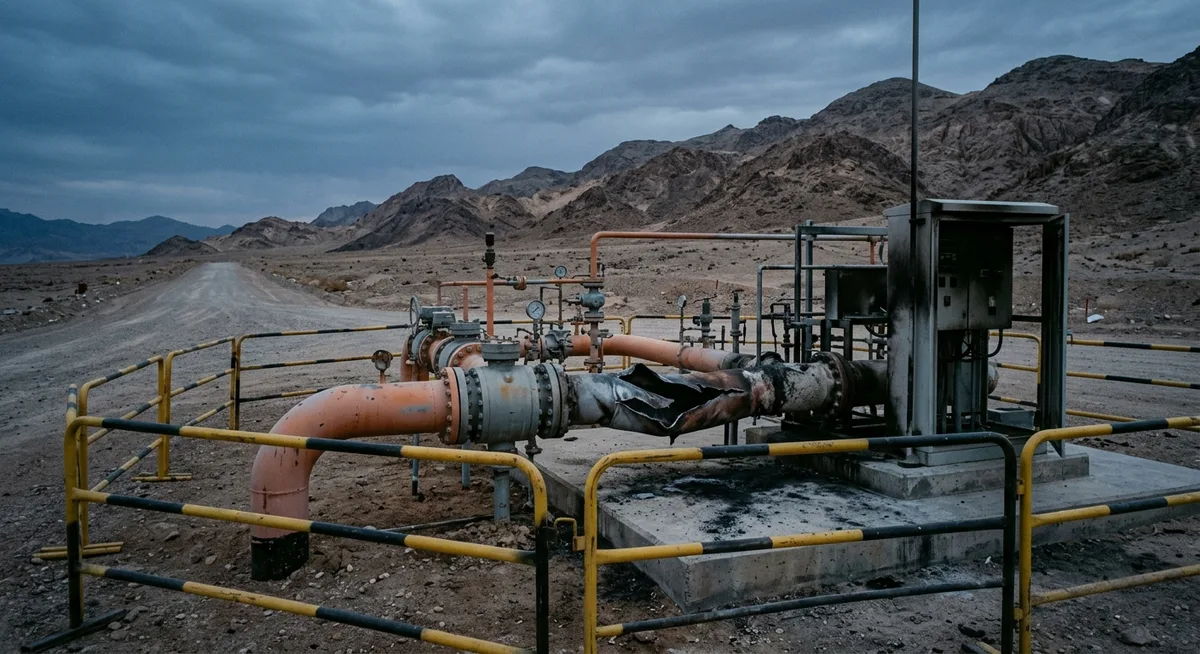
This is no longer a theoretical debate among scholars. In early April 2026, the U.S. military targeted and partially collapsed the B1 bridge in Karaj, Iran, an act the president later celebrated by sharing a video of the strike on social media. For the first time since the aftermath of World War II, a major world power is openly contemplating—and in some cases, executing—a strategy that views a modern nation’s civilian life-support systems as legitimate military targets.
The thesis of this shifting American posture is that total economic and physical leverage will force a capitulation. However, an analysis of international humanitarian law, geopolitical reality, and the intricate web of global commerce suggests that these threats carry a heavy cost. The rhetoric not only clashes with the laws of war but risks a “boomerang effect” that could leave ordinary Americans more vulnerable to high energy costs, cyberattacks on domestic grids, and the erosion of the very legal protections that keep the global order stable.
The Rhetorical Pivot: From Sanctions to ‘Demolition’
The current crisis reached a fever pitch this week, but the fuse has been burning since February. On February 28, 2026, U.S. and Israeli forces launched “Operation Epic Fury,” a campaign that initially focused on steel factories and petrochemical facilities. Since then, the conflict has narrowed to a choke point: the Strait of Hormuz.
By April 2026, roughly 20 percent of the world’s oil and gas supply—approximately 15 to 20 million barrels per day—had been halted due to the closure of the Strait, according to Energy Digital. In response, the president has moved beyond the targeted strikes of the past. He has pledged a “demolition” of Iranian infrastructure, threatening to “obliterate” every power plant and “possibly all desalinization plants” within hours if Iranian compliance is not secured.
Experts have reacted with a mix of disbelief and alarm. To the administration, these threats are necessary leverage in a high-stakes poker game. To international law scholars, they are “clear threats of unlawful action.” The UN Secretary-General’s spokesperson, Stephane Dujarric, noted recently that even if specific infrastructure were to qualify as a military objective, any attack is prohibited if it risks “excessive incidental civilian harm.”
“What Trump is saying is, 'We don’t care about precision, we don’t care about impact on civilians, we’re just going to take out all of Iranian power generating capacity.'”
The Legal Threshold: Distinction and Proportionality
To understand why these threats have caused such a stir in the Pentagon and the UN, one must look to the bedrock of modern warfare: International Humanitarian Law (IHL). The Geneva Conventions of 1949 and their 1977 Additional Protocols were not written for the benefit of dictators; they were written to prevent a return to the “total war” strategies of the 1940s that saw entire cities leveled to break the will of populations.
At the heart of IHL is the principle of distinction. This requires combatants to distinguish at all times between civilian objects and military objectives. A bridge or a power plant is, by default, a civilian object. It only becomes a military objective if it makes an “effective contribution to military action” and its destruction offers a “definite military advantage.”
When President Trump threatens “every bridge,” he removes the requirement for individualized assessment. As legal scholars noted in the Small Wars Journal this month, targeting desalination plants specifically violates Article 54 of Additional Protocol I, which protects objects “indispensable to the survival of the civilian population.” While only 3 percent of Iran’s water is currently desalinated, that 3 percent represents the primary source of life for millions of people in coastal villages.
There is also the matter of proportionality. This rule prohibits attacks where the expected civilian harm—including what are known as “reverberating effects”—outweighs the direct military advantage. If a strike on a power grid shuts down a hospital’s life-support systems or causes a mass outbreak of waterborne illness, the law views that not as “collateral damage,” but as a potential war crime.
The Global Precedent of Infrastructure Warfare
The U.S. is not the first nation to be accused of weaponizing infrastructure. Recent years have seen similar allegations leveled against Russia in its campaign against the Ukrainian power grid and Israel’s operations in Gaza. However, the current U.S. posture is unique in its explicit, public rejection of these constraints as a matter of policy.
On March 13, 2026, Secretary of Defense Pete Hegseth stated during a Pentagon briefing, “We will keep pushing… no quarter, no mercy.” As noted by Just Security, the phrase “no quarter”—a declaration that no prisoners will be taken and no mercy shown—is specifically forbidden under the Hague Convention.
This shift in language has a corrosive effect on global norms. When the world’s leading military power signals that the rules of war are optional, it provides a blueprint for adversaries. If the U.S. claims the right to destroy Iranian power plants to gain diplomatic leverage, it becomes difficult to argue that other nations cannot do the same to American allies or, eventually, to the U.S. itself.
Source: Energy Digital & American Progress, April 2026
Origins and the Limits of Enforcement
The laws protecting civilians were forged in the shadow of the Holocaust and the firebombing of Dresden. The international community, led by the U.S. in 1945, sought to create a system where individual leaders could be held accountable for the conduct of their troops.
Today, enforcement is a complex, often flawed machinery. The International Criminal Court (ICC) can prosecute individuals for war crimes, but its reach is limited by geography and politics. The U.S. has a long-standing history of resisting external jurisdiction, a stance that was hardened in February 2025 when the White House imposed sanctions on ICC officials to shield U.S. personnel from scrutiny.
However, there is another layer of enforcement: domestic military law. Rule 154 of customary international humanitarian law mandates that military personnel must refuse orders to commit war crimes. This puts American service members in an impossible position. As Sarah Yager, Washington Director of Human Rights Watch, observed, the U.S. military has protocols to minimize civilian harm, but when a commander-in-chief speaks of “demolishing” civilizations, he risks signaling that those protocols are “optional.”
The Boomerang: How Violations Reach Main Street
For most Americans, the debate over the Geneva Conventions feels like a distant legal abstraction. However, the consequences of this conflict are already showing up in utility bills and grocery aisles.
The economic fallout is driven by the fact that global energy markets are a closed-loop system. Even though the U.S. is a major energy producer, its infrastructure is inextricably linked to the Middle East. Roughly 43 percent of U.S. electricity is generated from natural gas, and global supply disruptions have sent natural gas futures soaring 77 percent in the first nine days of the current conflict—a sharper rise than that seen during the 2022 invasion of Ukraine.
Furthermore, while the U.S. produces record amounts of crude oil, its refineries are 70 percent configured for the “heavy, sour” crude typically imported from the Middle East. When the Strait of Hormuz closes, the cost of the fuel that runs American trucks and tractors rises instantly. As of April 1, 2026, the average U.S. gasoline price reached $4.06 per gallon, a spike of over $1.00 since the conflict began.
Source: American Progress / Integrity Energy
The Asymmetric Threat: Cyber and Retaliation
The danger to Americans isn’t just financial; it is physical. In an era of interconnected systems, “infrastructure” is no longer just concrete and steel. It is code.
On March 12, 2026, CISA, the FBI, and the NSA issued a joint warning that Iranian state-linked actors were actively targeting U.S. critical infrastructure. The message was clear: if the U.S. targets the physical grid in Tehran, the retaliation will likely be a digital assault on the grids in Texas, the water systems in Florida, or the financial networks in New York.
By normalizing the targeting of essential services, the U.S. effectively lowers the barrier for adversaries to justify “reciprocal” attacks on American soil. This is the new reality of 21st-century warfare—a strike on a bridge in Iran may be answered by a ransomware attack on an American hospital network. The “distinction” between a front line and a family’s kitchen is being erased.
Global Ripple Effects: The Divergent Impact
While the U.S. feels the pinch, the rest of the world is facing a much deeper crisis. The global response has been one of desperation. In April 2026, the International Energy Agency (IEA), representing 32 nations, authorized the release of 400 million barrels of emergency oil reserves—the largest in its history—to prevent a total collapse of global markets.
The pain is not distributed equally. In March 2026, the South Korean stock market plunged 20 percent, compared to a 2 percent drop for the S&P 500. This disparity highlights a dangerous truth: while the U.S. might be able to weather the initial storm, its allies in Europe and Asia are far more vulnerable. A strategy that devastates the global economy to achieve a narrow policy goal in Tehran may leave America standing alone in a fractured world.
Source: Washington Post / Bloomberg
Possible Futures: Restraint or Escalation?
As we look ahead, the path forward remains obscured by the fog of war. There are three primary scenarios that experts are weighing.
The first is that the current rhetoric is largely a tool of “coercive diplomacy”—a psychological operation meant to force Iran to the table without a massive strike. In this scenario, back-channel talks eventually lead to a de-escalation, though the damage to America’s international reputation and the precedent set by the rhetoric would remain.
The second scenario involves limited, surgical strikes on “dual-use” targets—facilities that provide power to both the military and civilians. While legally precarious, these could be framed as meeting the threshold of military necessity. However, as we have seen with the B1 bridge strike, the definition of “limited” is highly subjective.
The third, and most alarming, scenario is a broad campaign against Iranian infrastructure. This would likely trigger a massive humanitarian catastrophe. Physicians for Human Rights have already reported “black rain” and acute respiratory distress among civilians following strikes on fuel depots in early April. A total loss of power and water for millions would almost certainly lead to a mass migration crisis and a permanent breakdown of international law.
The Strategic Gamble
The choice facing the United States is not just about how to handle Iran. It is about what kind of world the U.S. wants to lead. For eighty years, the U.S. has been the architect of a system that—while often violated—at least held the ideal of civilian protection as a sacred line.
Dismantling that line to win a regional conflict is a gamble of historic proportions. If the U.S. successfully “decimates” Iranian infrastructure to secure a deal, it may find that it has won the battle but lost the architecture of the global order.
The norms that protect the bridge in Karaj are the same norms that protect the bridge in St. Louis. The laws that safeguard a desalination plant in the Persian Gulf are the same ones that defend a water treatment facility in the Great Lakes. In the end, the most dangerous part of targeting “every bridge” in a foreign land is the risk that we eventually find we have burned the ones that lead back to our own security.
As the sun sets on this April 8, the world waits to see if the rhetoric of “total demolition” becomes the policy of a new age, or if the gravity of the legal and economic consequences forces a return to the constraints that have, however imperfectly, kept the peace for generations.
Sources
- NPR — Trump doubles down on threats to Iran's civilian infrastructure unless there's a deal, April 6, 2026
- BBC — Iran crisis: The legal limits of targeting infrastructure, April 8, 2026
- CFR — Trump pledges demolition of Iranian infrastructure as deadline looms, April 7, 2026
- Amnesty International — Trump warning to attack Iran power plants is threat to commit war crimes, March 2026
- Washington Post — Trump threats against civilian targets put military in legal, moral quandary, April 8, 2026
- Small Wars Journal — Trump's threat against Iran desalination plants would be a war crime, April 2026
- https://www.pbs.org/newshour/politics/watch-live-hegseth-and-caine-hold-pentagon-briefing-as-trump-threatens-irans-infrastructure
- https://www.upr.org/2026-04-06/trump-doubles-down-on-threats-to-irans-civilian-infrastructure-unless-theres-a-deal
- https://www.ctpublic.org/2026-04-07/could-trumps-threats-to-irans-civilian-infrastructure-be-considered-a-war-crime
- https://legal.un.org/avl/ha/pagc/pagc.html
- https://ihl-databases.icrc.org/en/ihl-treaties/api-1977
- https://www.politifact.com/factchecks/2026/apr/02/seth-moulton/trump-bomb-civilian-infrastructure-war-crime/
- https://www.whitehouse.gov/presidential-actions/2025/02/imposing-sanctions-on-the-international-criminal-court/
- https://www.forbes.com/sites/digital-strategy/2026/04/03/us-strikes-on-iran-could-be-war-crimes-experts-warn/
- https://www.amnesty.org/en/latest/news/2026/04/iran-president-trumps-apocalyptic-threats-of-large-scale-civilian-devastation-demand-urgent-global-action-to-prevent-atrocity-crimes/
- https://iranhumanrights.org/2026/04/attacks-on-essential-infrastructure-will-have-catastrophic-consequences-for-millions-of-civilians-across-the-region/
The information presented is for educational and informational purposes only and does not constitute investment advice. MainStreet uses AI to generate content — always verify with qualified financial professionals before making investment decisions. How MainStreet works →
Discussion