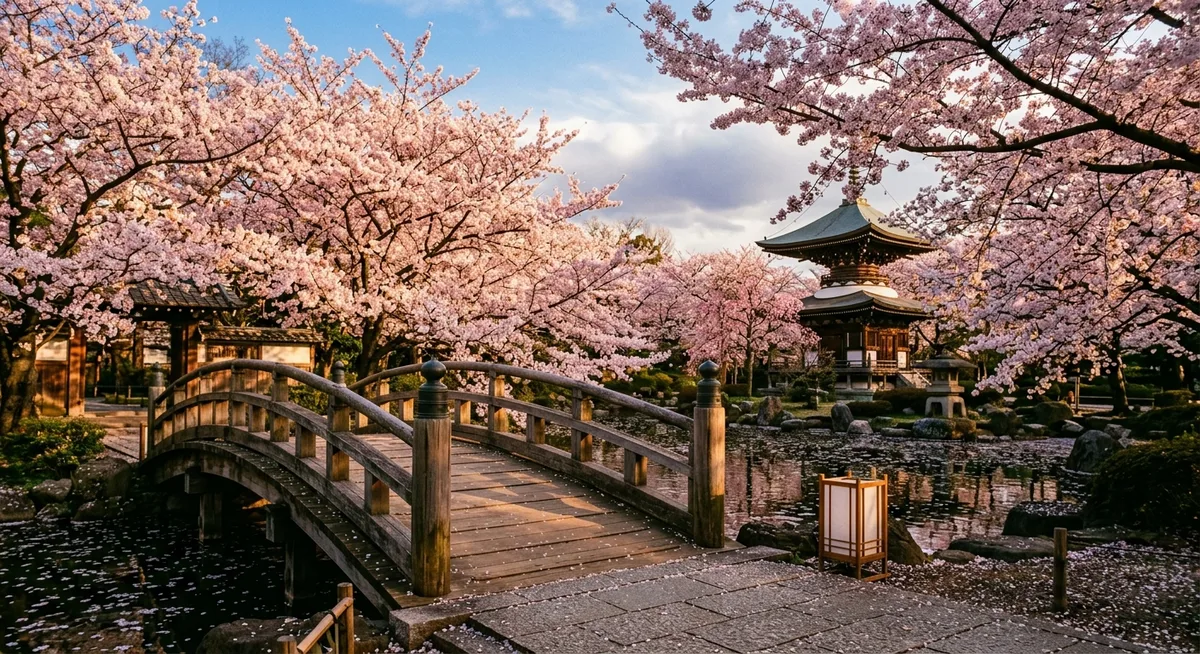
A Flower Worth $12 Billion: Cherry Blossom Season Drives Tourism Economies from Tokyo to Washington
As the first rays of April sun hit the Tidal Basin in Washington D.C., the air is thick with more than just the scent of Yoshino petals. It carries the hum of a massive, synchronized economic engine. Thousands of tourists, clutching cameras and designer coffee, jostle for the perfect shot of the Jefferson Memorial framed by a soft pink canopy. This is not just a botanical event; it is a high-stakes season that defines the fiscal year for thousands of local businesses.
From the ancient gardens of Kyoto to the manicured walkways of the National Mall, the cherry blossom—or sakura—is perhaps the world’s most powerful example of nature as a commercial asset. What was once a localized cultural tradition in Japan has transformed into a multi-billion dollar global phenomenon. In a world of digital distractions, the analog beauty of a flower that lasts only a few days has become a scarcity-driven economic miracle.
The numbers are as striking as the scenery. Estimates suggest that the cherry blossom season contributes over $12 billion to global tourism and retail spending annually. In Japan alone, the domestic impact is staggering, while in the United States, the National Cherry Blossom Festival has become one of the country’s largest and most lucrative spring events. Yet, this economy is built on a foundation of extreme transience. The bloom is a “vanishing asset,” and its predictability is increasingly under threat from a shifting climate.
Japan’s Hanami Economy: A $2.7 Billion Tradition
In Japan, the arrival of the cherry blossom is more than a season; it is a national obsession. The tradition of hanami—literally “flower viewing”—dates back over a millennium, but its modern economic footprint is a marvel of industrial-scale celebration. According to estimates from Kansai University, domestic spending during the sakura season reached approximately $2.7 billion in 2024.
This spending is driven by a unique blend of corporate culture and social ritual. Across Tokyo’s Ueno Park and Kyoto’s Philosopher’s Path, companies dispatch junior employees to claim picnic spots hours, or even days, in advance. These gatherings are not simple affairs; they are catered events requiring billions of yen in bento boxes, sake, and specialized seasonal snacks. For the Japanese food and beverage industry, the sakura season is a “fifth season” of revenue that bridges the gap between the New Year and the summer doldrums.
Source: Kansai University / Japan Tourism Agency
The Japan Meteorological Agency (JMA) plays a central role in this economy. Its “sakura forecasts” are national news, tracked with the intensity of a major sporting event. When the JMA announces the kaika (first bloom) and mankai (full bloom) dates, stock prices for major brewery groups and travel agencies often react. The precision of these forecasts is vital; a three-day error can cost millions in wasted inventory for retailers who stock perishable cherry-themed goods.
Beyond the picnics, the “Sakura Market” extends to high-end retail. Brands like Starbucks Japan and Nestle (which produces the iconic Sakura Kit-Kat) have mastered the art of the seasonal limited edition. These products are often only available for a four-week window, creating a sense of urgency that drives massive sell-through rates. Cosmetics brands, including Shiseido and various luxury European labels, release sakura-themed lines that are now exported globally, capitalizing on the flower’s association with renewal and fleeting beauty.
The $150 Million Gift: Washington D.C.’s Spring Engine
Across the Pacific, the economic impact of the cherry blossom is no less vital, though it is concentrated in a more intense burst of activity. The 3,020 trees that line the Tidal Basin were a 1912 gift from the People of Japan to the City of Washington—a diplomatic gesture that has paid dividends for over a century. Today, the National Cherry Blossom Festival attracts approximately 1.5 million visitors over its four-week duration.
The economic ripple effect for the D.C. region is estimated to exceed $150 million annually. For the city’s hospitality sector, the festival is a lifeline. Hotels in the District often see occupancy rates soar above 90 percent, with room rates during the “Peak Bloom” weekend commanding premiums of 30 to 50 percent over standard spring rates.
“The cherry blossoms are the single biggest driver of domestic tourism to Washington D.C. outside of a presidential inauguration,” noted local tourism officials. The impact extends deep into the suburbs of Virginia and Maryland, as overflow tourists fill hotel rooms and patronize local restaurants. The Washington Metropolitan Area Transit Authority (WMATA) typically records its highest ridership days of the year during the festival, as commuters and tourists alike abandon cars for the train to reach the crowded basin.
Source: D.C. Office of Revenue Analysis / Festival Reports
The festival has also successfully commercialized the “Pink Effect.” The “Cherry Picks” program, which features blossom-themed menus at hundreds of local restaurants, turns a sightseeing trip into a culinary excursion. From cherry-infused cocktails to pink-hued pasta, the creativity of the local business community ensures that the economic benefits of the bloom are captured far from the actual trees.
The Global Bloom: From Jinhae to Wuhan
While Tokyo and Washington D.C. are the historic titans of the cherry blossom economy, the phenomenon is rapidly expanding. In South Korea, the Jinhae Gunhangje Festival is the country’s largest spring event, drawing more than 2 million visitors annually. The festival, which began as a naval memorial, now generates tens of millions of dollars for the southern coastal city, featuring a parade of 360,000 Yoshino trees.
In China, the scale of cherry blossom tourism has reached breathtaking proportions. Wuhan University, home to over 1,000 cherry trees, has become such a popular destination that it had to implement a strict digital lottery system for visitors. During the bloom, the university and surrounding city see a massive influx of “flower tourists” from across the country, prompting significant investments in local infrastructure and high-speed rail capacity to handle the surge.
Europe, too, is catching the fever. In Germany, the city of Bonn has seen its Altstadt (Old Town) transformed into a social media landmark. The “cherry blossom tunnel” on Heerstraße has become a bucket-list item for global travelers, turning a quiet residential street into a seasonal commercial hub. Similar trends are emerging in the Netherlands and the United Kingdom, where public parks are increasingly being marketed as spring destinations.
Social media has acted as an accelerant for this global boom. Platforms like Instagram and TikTok have turned cherry blossoms into the ultimate “visual currency.” For a destination, a successful bloom can provide millions of dollars in free marketing, as user-generated content reaches global audiences. This has led to a “virtuous cycle” of investment: cities are planting more trees to attract more tourists, who post more photos, further driving the global demand for sakura-themed travel.
Climate Change and the Shifting Calendar
However, the very transience that makes the cherry blossom so valuable is also its greatest economic vulnerability. Cherry blossoms are highly sensitive to temperature, making them a “canary in the coal mine” for climate change. As global temperatures rise, the bloom dates are shifting—often with disruptive consequences for the economies that rely on them.
In Washington D.C., the peak bloom date has moved earlier by approximately seven days over the past century. In Kyoto, the shift is even more pronounced; full bloom now arrives more than 10 days earlier than it did in the 1950s. This unpredictability creates a nightmare for festival organizers and travel businesses. A festival scheduled for the first week of April is of little use if the petals have already fallen by March 25th.
Source: National Park Service / EPA
The economic stakes of an “early bloom” are high. Tourists who booked non-refundable flights and hotels months in advance may arrive to find bare branches. Local businesses that prepared inventory for a mid-April peak may find themselves overstocked. Moreover, research suggests that warmer springs can lead to shorter bloom periods, compressing the revenue window for vendors and reducing the overall quality of the experience for visitors.
This shift has forced a technological and logistical response. Travel agencies are increasingly offering “bloom insurance” or flexible booking policies. In Japan, AI-driven forecasting models are being developed to provide even more granular predictions, allowing businesses to adjust their supply chains in real-time. The challenge is clear: the cherry blossom economy must learn to be as adaptable as the trees themselves.
The Psychology of Scarcity: The Seasonal Product Economy
The economic power of the cherry blossom is not just about tourism; it is about the psychology of scarcity. In marketing terms, the sakura is the ultimate “Limited Time Offer.” Because the bloom is guaranteed to end quickly, it triggers a powerful consumer response known as FOMO—fear of missing out.
Global brands have leaned into this. Starbucks Japan’s sakura-themed drinks, launched every February, are a cultural event in their own right, often selling out within days. The design of the cups and the flavor profile (often a mix of cherry and strawberry) are changed every year to maintain novelty. This strategy is now being replicated in other markets; Starbucks stores in the U.S. and Europe have begun introducing their own spring-themed products, though they rarely achieve the cult status of the Japanese originals.
Source: Global Retail Reports, 2024-2025
The beauty and cosmetics industry has also found a goldmine in the petals. From L’Occitane to Kiehl’s, brands release sakura-scented lotions and perfumes that capitalize on the flower’s cultural associations with purity and rejuvenation. For these companies, the cherry blossom provides a “seasonal hook” that drives sales during the transition from winter to spring. The aesthetic appeal of the pink packaging is particularly effective in the “shelfie” era, where products are designed to be as photogenic as the flowers they represent.
The Cultural Economics of Seasonal Beauty
At its heart, the cherry blossom economy is fueled by a profound cultural concept: mono no aware. This Japanese term describes a “pathos of things” or a bittersweet awareness of the transience of all things. It is the understanding that the blossoms are beautiful because they die.
This philosophy creates a predictable economic rhythm. Unlike permanent attractions like the Eiffel Tower or the Statue of Liberty, the cherry blossom creates a surge of demand that is impossible to satisfy. This creates a high “velocity of money” as visitors spend more in a shorter period to maximize their experience. It also underscores the immense value of public parks and green spaces as economic engines.
Investing in urban forestry is no longer just an environmental or aesthetic choice; it is a savvy economic development strategy. In cities like D.C. and Tokyo, the trees act as a form of “living infrastructure” that requires relatively low maintenance compared to the massive revenue they generate. They provide a reason for people to leave their homes, congregate in public, and engage with the local economy.
As we look to the future, the cherry blossom serves as a reminder that the most valuable assets in a global economy are not always digital or industrial. Sometimes, they are as simple and fragile as a petal in the wind. The $12 billion industry that has grown around these trees is a testament to our enduring human desire to witness something fleeting, something beautiful, and something shared. As long as the trees continue to bloom, the world will continue to follow—wallets in hand, cameras ready, waiting for that perfect, transient moment of pink.
| City | Est. Annual Visitors | Primary Tree Variety | Peak Season Window |
|---|---|---|---|
| Tokyo, Japan | 4.5 Million | Somei Yoshino | Late March - Early April |
| Washington D.C. | 1.5 Million | Yoshino / Kwanzan | Late March - Mid April |
| Jinhae, S. Korea | 2.2 Million | King Cherry | Early April |
| Wuhan, China | 1.8 Million | Multiple Varieties | Mid - Late March |
| Bonn, Germany | 0.3 Million | Kanzan | Mid - Late April |
Source: International Tourism Board / Local Municipal Data
Sources
The information presented is for educational and informational purposes only and does not constitute investment advice. MainStreet uses AI to generate content — always verify with qualified financial professionals before making investment decisions. How MainStreet works →
Discussion