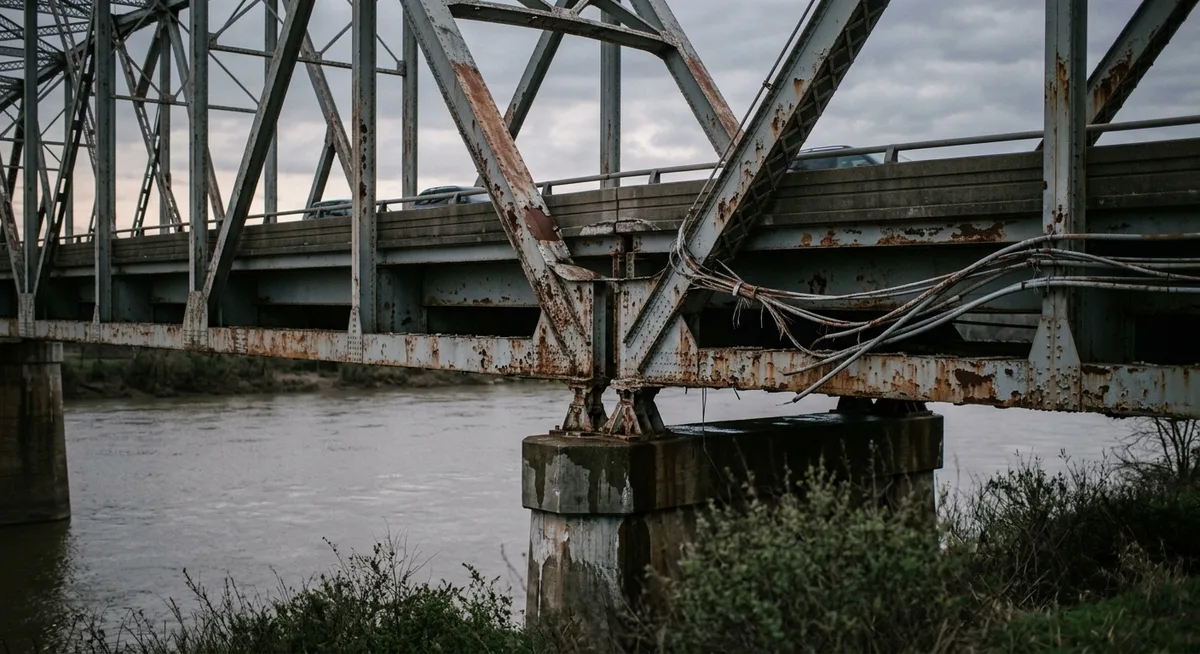
The 47-Year-Old Span: America’s Bridge Inventory Is Reaching a Costly Breaking Point
Every day, Americans cross a bridge rated in poor condition 163 million times—a collective gamble on an infrastructure system that has reached its expiration date. According to the 2025 Bridge Report from the American Road & Transportation Builders Association (ARTBA), these crossings represent a persistent vulnerability in the nation’s transit network.
While these structures may appear as routine stretches of concrete or steel to the millions of motorists utilizing them, the national bridge inventory is facing a significant structural transition. Data from the American Society of Civil Engineers (ASCE) indicates the average bridge in the United States is now 47 years old. The majority of these spans were constructed during the infrastructure expansion of the 1950s and 60s, designed with a projected 50-year service life. As of 2026, nearly half of the nation’s bridges have surpassed or are approaching this original design limit, necessitating repairs that are increasingly technical and capital-intensive.
The Scale of the Maintenance Deficit
The logistical burden of this aging infrastructure is measurable in hours and dollars. Mid-2025 data reveals that approximately 220,300 U.S. bridges—roughly 35 percent of the national inventory—require major repair or replacement. Although the 2021 Infrastructure Investment and Jobs Act (IIJA) allocated $40 billion toward bridge improvements, the impact has been mitigated by external economic factors.
Recent ARTBA analysis indicates the rate of structural improvement is decelerating. While 41,677 bridges are currently rated as “poor,” the cost of rehabilitation has risen sharply. Between 2021 and 2024, construction costs for bridges and highways increased by 54 percent. This surge in material costs and a persistent shortage of specialized labor have absorbed a significant portion of the federal funding intended for backlog reduction.
This deficit creates a direct economic drag on the American supply chain. According to data from the American Trucking Associations (ATA), infrastructure-related delays and detours add billions in operational costs to the logistics sector annually. In rural regions, where bridge density is high but tax bases are smaller, the impact is acute. Iowa remains the center of this challenge; as of 2025, it contains 4,424 bridges in poor condition—nearly 19 percent of its inventory. Conversely, Nevada has maintained its backlog at just 1 percent, demonstrating the regional variance in asset management and funding stability.
Source: ASCE 2025/FHWA
Global Competitiveness and Shipping Efficiency
The condition of the U.S. bridge network has broader implications for global trade. The United States currently ranks 13th globally in infrastructure quality according to the World Economic Forum, trailing nations like Singapore, Switzerland, and Japan. This disparity is linked to investment levels as a percentage of the total economy.
As of the 2024-2025 fiscal period, the U.S. invested approximately 1.6 percent of its GDP into infrastructure. In contrast, China’s investment reaches approximately 4.8 percent, and the European Union averages 2.9 percent. This funding gap translates to a competitive disadvantage for American manufacturers and farmers. When a bridge is weight-restricted or closed, it creates a “bottleneck effect” that increases the price of American exports.
The European experience demonstrates that even high-output economies are susceptible to maintenance backlogs. Following the partial collapse of the Carola Bridge in Dresden in late 2024, German authorities identified 4,000 motorway bridges and 12,000 other spans requiring urgent modernization. However, nations like Japan have mitigated these risks through a shift toward predictive maintenance. By utilizing a Scientific Bridge Management System—incorporating AI and integrated sensors—Japan aims for a 100-year structural lifespan. This proactive model is currently being studied by U.S. transportation agencies as a way to extend the life of existing assets without the total costs of replacement.
Source: Global Infrastructure Hub / World Bank
Engineering Challenges in a Changing Climate
The deterioration of Eisenhower-era designs is being accelerated by environmental stressors that were not accounted for in mid-20th-century engineering models. Beyond the standard wear of traffic, structures are facing increased instances of “scour”—the erosion of soil around bridge foundations caused by high-velocity water during frequent flooding events.
A 2024 study published in ‘PLOS ONE’ concluded that one in four steel bridges in the U.S. could face structural failure by 2050 if they are not retrofitted for climate resilience. Research from the University of Colorado Boulder indicates that extreme temperature fluctuations cause steel components to expand and contract beyond their original design tolerances, leading to premature cracking and metal fatigue. These environmental variables mean that bridges once considered stable are now degrading at an accelerated pace.
These engineering vulnerabilities extend to the water. The 2024 collapse of the Francis Scott Key Bridge in Baltimore highlighted the risk posed by modern maritime traffic. According to the National Transportation Safety Board (NTSB), many older bridges were not designed to withstand the impact of modern container ships, which are significantly larger than the vessels in use when these spans were built. Following the Baltimore event, the NTSB called for urgent risk assessments on 68 major bridges across 19 states that remain vulnerable to similar vessel strikes, noting that older designs can be up to 30 times more vulnerable than current standards allow.
The Economic Cost of Failure
The financial impact of a deficient bridge system reaches the household level through the price of consumer goods. The ASCE estimates that failure to bring the nation’s infrastructure into a state of good repair will cost the average American household $700 annually in lost productivity and vehicle wear by 2033.
In the agricultural sector, the burden is even more immediate. According to The Fertilizer Institute, weight limits on aging bridges are forcing delivery trucks to take 45-mile detours rather than 20-mile direct routes. These extra miles lead to higher fuel consumption and increased driver hours, costs that are eventually passed to consumers.
When the political and financial will is localized, the pace of repair can be significantly accelerated. The replacement of the Fern Hollow Bridge in Pittsburgh, which collapsed in 2022, was completed in 11 months at a cost of $25.3 million. This project demonstrated that the timeline for bridge replacement can be reduced in emergency scenarios by bypassing standard bureaucratic delays.
According to Transportation for America, the integration of remote monitoring technology could offer a more efficient path forward than traditional visual inspections alone. By using sensors to identify structural health in real-time, states can avoid unnecessary weight restrictions on bridges that remain structurally sound while prioritizing those in the most critical need of intervention.
Despite these advancements, the current rate of repair remains insufficient to clear the backlog quickly. ARTBA estimates that at the current pace, it would take nearly 75 years to address every bridge currently identified as needing replacement. For the millions of Americans crossing a “poor” rated bridge today, the “C” grade assigned to U.S. infrastructure by the ASCE serves as a reminder of the urgent need for sustained, systemic investment. Without a significant increase in the pace of replacement, the efficiency and safety of the American transit network will continue to decline.
Sources
The information presented is for educational and informational purposes only and does not constitute investment advice. MainStreet uses AI to generate content — always verify with qualified financial professionals before making investment decisions. How MainStreet works →
Discussion