Public Media Blackout Shifts Emergency and Education Costs to Rural Families
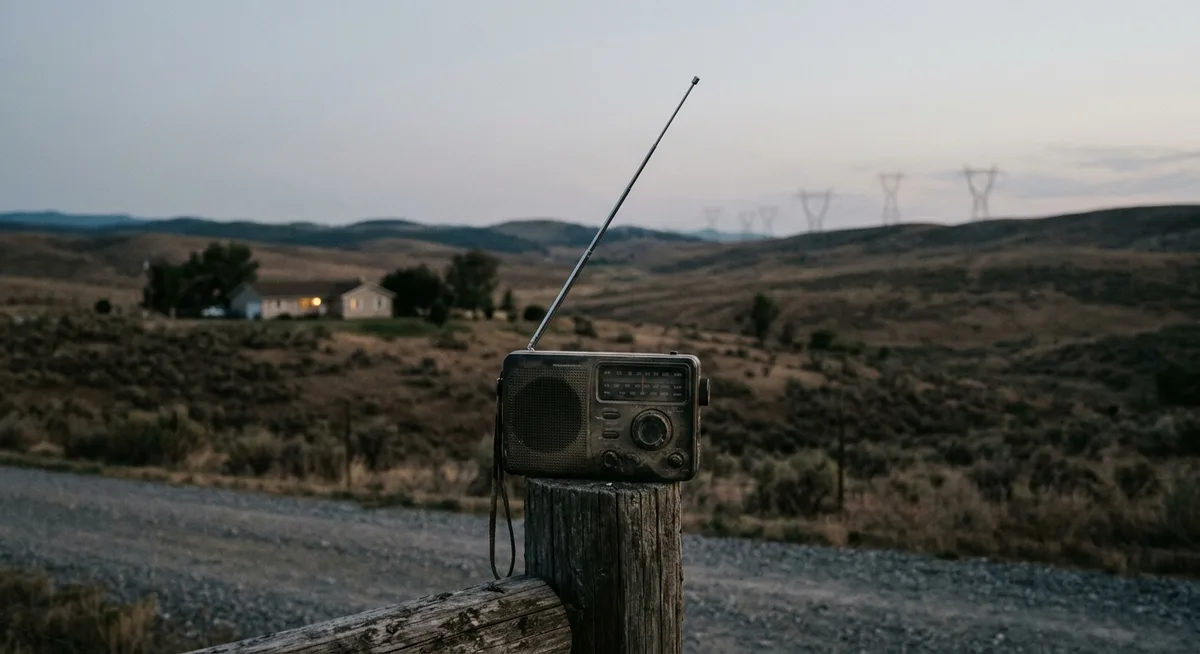
Across the Zuni Pueblo in New Mexico, a profound silence settled over the radio dial on January 6th. For decades, the local station KSHI served as a primary artery for local news, cultural preservation, and public safety. Following the cessation of federal support for the Corporation for Public Broadcasting (CPB), the station faced the loss of nearly all of its total budget. For the Zuni people, the loss of the signal meant the disappearance of one of the few media outlets dedicated to their community and language.
The local impact in New Mexico reflects a broader shift across the American media landscape. Following a federal rescission process that began in 2025, public broadcasting stations transitioned from a federally supported model to an uncertain private future. This transition has created an information gap based on geography. While urban stations often have a donor base large enough to sustain operations, rural stations relied on federal grants for an average of 17 percent of their revenue, according to 2025 figures from Statista. For urban stations, that figure was closer to 9 percent. The removal of this federal support floor has shifted the financial burden of essential information services onto the communities least equipped to provide it.
The federal funding rescission, documented by the Public Media Alliance, effectively dismantled a system that had been a fixture of American life for nearly six decades. The move to strip federal support for public media was not merely a budgetary decision; it fundamentally altered the infrastructure of rural American life.
The Erosion of the Safety Net
One primary result of the CPB’s dissolution is the degradation of the nation’s emergency infrastructure. Public broadcasting served as the physical backbone of the Emergency Alert System (EAS). The PBS WARN system delivered Wireless Emergency Alerts to mobile phones, relying on hundreds of local stations to ensure that life-saving information reached citizens even when cellular networks failed.
The loss of this redundant path has left rural communities more vulnerable to natural disasters. Consider a scenario in a county with spotty cellular coverage during a flash flood or a wildfire. In many such regions, the local public radio tower was the only reliable source of information. According to PBS.org, the WARN system was designed specifically to provide a “fail-safe” for the cellular grid. Without federal maintenance of these transmitters, that redundant safety path has been dismantled. In the absence of a federally funded backbone, those living in “dead zones” are now reliant on commercial providers that may not have the same mandate for universal coverage or the infrastructure to withstand localized outages.
Source: Statista
Education by Zip Code
Beyond safety, the collapse of public media has created an educational deficit. In states with limited state-funded preschool programs, public broadcasting functions as a de facto early childhood education system for families living in “childcare deserts.” Educational studies have consistently shown that public media provides critical literacy and problem-solving opportunities for children who lack access to traditional preschool.
A study released by PBS LearningMedia and New America found that children who engaged with public media educational programming saw measurable increases in literacy and problem-solving skills compared to their peers. For a family in a rural county, replacing this free educational content with private alternatives is often a significant financial hurdle. As the public option disappears, parents are increasingly required to pay for private educational apps or streaming services that were previously provided as a public utility for roughly $1.60 per taxpayer per year. This creates a disparity where the quality of a child’s early education is increasingly determined by their family’s ability to pay for subscriptions.
The Global Outlier
The decision to eliminate public media funding has made the United States a global outlier. Even before the recent cuts, the United States ranked at the bottom of high-income countries in per capita public media funding, according to data from Nieman Lab. The gap between the U.S. and its peers represents a different philosophy regarding the role of information in a democracy.
While countries like Germany and the United Kingdom provide substantial per capita funding, Canada offers perhaps the most relevant comparison. Canada faces similar geographical challenges to the U.S., with a need to reach remote and indigenous populations across vast distances. Canada provides approximately $32.43 per capita for CBC/Radio-Canada, recognizing that the market alone cannot provide news and cultural content to sparsely populated regions.
Source: Nieman Lab (2022) and Radio-Canada (2024)
Japan’s NHK serves as a critical infrastructure for earthquake and tsunami warnings, functioning as an essential public utility. By retreating from this model, the U.S. has effectively privatized its airwaves, leaving rural regions to navigate the “market failure” of commercial media, which rarely finds it profitable to serve low-density populations.
The Economic and Cultural Toll
The economic fallout of the CPB’s closure is evident in the labor market. Approximately 6,000 people were employed by rural public media stations across the country. Following the rescission vote, staff reductions began in earnest. Vermont Public reduced its staff by 14 percent, and Alabama Public Television saw a 13 percent reduction in its workforce.
These cuts represent a loss of local journalism in regions that are already categorized as news deserts. When a local station reduces its staff or ceases operations, community-specific reporting on school boards, county commissions, and local elections often vanishes. According to 2025 data, many U.S. counties now lack a full-time local journalist, making public media the “last resort” for community accountability.
Source: Public Media Alliance, October 2025
For Native American communities, the impact is particularly acute. More than 30 public media stations, many on reservations, relied on the CPB for at least 50 percent of their total revenue. These stations provided programming in indigenous languages and served as the primary news source for populations that are frequently ignored by commercial media. Without federal support, these stations struggle to maintain even minimal staffing on shoestring budgets.
A Fragile Private Future
Following the federal exit, a patchwork of community-led fundraising efforts and crowdfunding campaigns has emerged to fill the void. While these initiatives demonstrate local commitment, they are fundamentally unstable. They rely on the charity of rural populations that are often facing economic pressure from inflation and the rising costs of basic services.
The public media system was originally designed to ensure that the lack of profitability in providing news to sparsely populated areas did not leave those citizens in the dark. As this era of public support ends, the question of whether a citizen wants to pay $1.60 for public television has been replaced by a more complex calculation. Families must now weigh the cost of private subscriptions, the loss of educational tools, and the increased risks associated with a weakened emergency alert system. The cost of information has not disappeared; it has merely been transferred from a collective public investment to the individual, often leaving those in the most remote areas to pay the highest price.
Sources
- Statista — Where Public Media Relies on Federal Funding Most, 2025
- Nieman Lab — Do countries with better-funded public media also have healthier democracies?, 2022
- Free Press — The Defunding of Public Media Is Hitting Local Stations Hardest, 2025
- Cornell Law School — Counting the Cost: Without PBS, Kids Stop at 1-2-3, 2026
- Public Media Alliance — The impact of the Federal Rescission on US Public Media, 2025
- https://www.npr.org/2025/08/28/nx-s1-5519337/public-media-emergency-alert-funding
- https://www.pewresearch.org/short-reads/2025/03/26/americans-more-likely-to-support-than-oppose-continuing-federal-funding-for-npr-and-pbs/
The information presented is for educational and informational purposes only and does not constitute investment advice. MainStreet uses AI to generate content — always verify with qualified financial professionals before making investment decisions. How MainStreet works →
Discussion