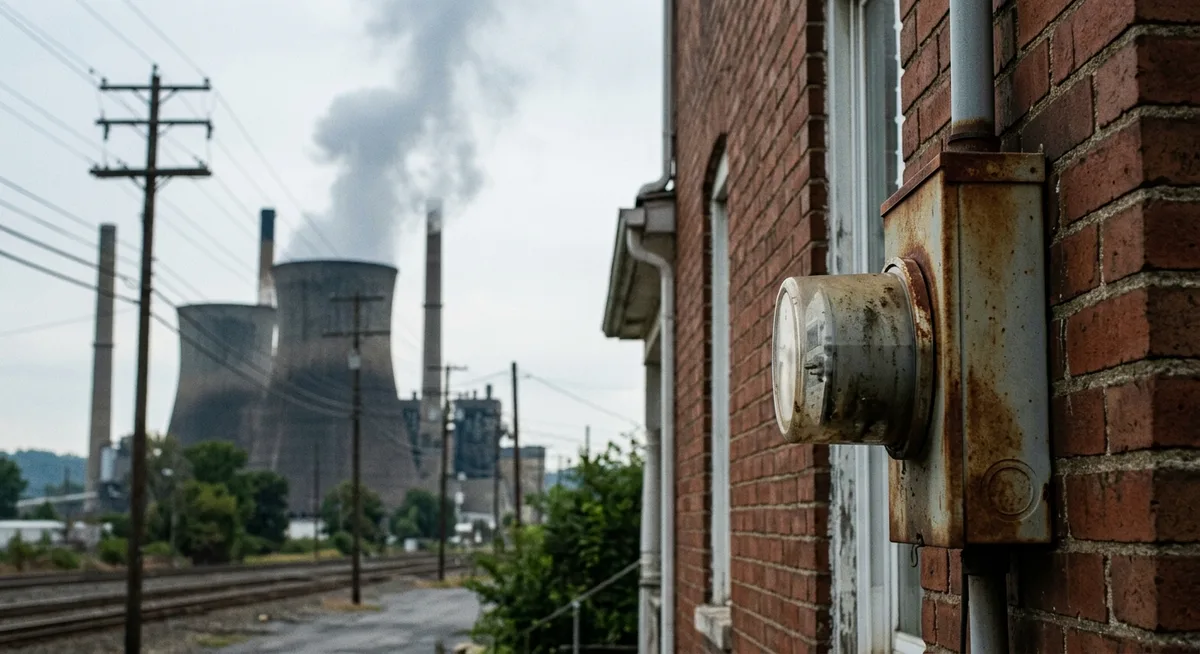
Why Your Energy Bill Is Still Propped Up by $7 Trillion in Hidden Subsidies
When you pull up to a gas station in the United States today, the price on the marquee tells only a fraction of the story. The remainder of the cost is accounted for in the internal revenue code and the public health expenditures of local municipalities.
We are living in the era of the carbon tax that wasn’t. Instead of charging companies for the damage their emissions cause, the global economy is doing the opposite: paying them to keep going.
In its most recent analysis, the IMF estimated global explicit fossil fuel subsidies—the direct cash transfers and tax breaks governments hand out—at $1.3 trillion. That is a massive sum, but it represents only the visible portion of state support. The more significant figures are found in “implicit” subsidies. These are the costs that fossil fuel companies never have to pay, such as the price of environmental damage, the healthcare costs associated with air pollution, and the economic impacts of climate change.
When you add those in, the total global support for fossil fuels reached a record $7 trillion, according to the IMF’s 2025 update. Implicit subsidies alone account for approximately $5.7 trillion, or about 5 percent of global GDP.
The $7 Trillion Blind Spot
If the world were to pivot from subsidizing carbon to pricing it correctly, the economic windfall could be transformative. This shift represents what economists call a “triple dividend.” Full reform of fossil fuel pricing—which means eliminating both direct subsidies and the underpricing of environmental costs—is projected to reduce global CO2 emissions by 43 percent below baseline levels by 2030.
The first dividend is human life. The IMF estimates that removing these distortions and implementing efficient taxation would save lives by preventing approximately 1.6 million premature deaths from air pollution each year.
The second dividend is fiscal health. Global revenue gains from full price reform could reach approximately $3 trillion—about 3 percent of global GDP. These are funds that could be used to lower income taxes, reduce national debts, or fund public infrastructure.
The third dividend is market parity. Global renewable energy capacity has continued to set records, yet investment in green technology remains hampered by the fact that it is competing against a fossil fuel industry that is not required to pay for its own externalities. By removing the financial floor beneath fossil fuels, renewable alternatives become the naturally dominant economic choice.
Source: IMF 2025 Working Paper
The American Subsidy Machine
In the United States, the push to move away from fossil fuels often clashes with a deeply entrenched system of financial support for oil and gas producers. Direct producer subsidies in the U.S. have remained stubbornly high, with federal and state-level support totaling billions annually. According to reports from Oil Change International, these are not just simple checks written by the Treasury; they are woven into the tax code through sophisticated accounting mechanisms.
One of the most significant is the “Intangible Drilling Costs” (IDC) deduction. This provision allows oil companies to immediately subtract the majority of their drilling costs from their taxable income. Most other industries are required to depreciate such capital investments over several years, but the oil and gas sector receives a unique front-loaded tax benefit.
Analysis from Oil Change International indicates these subsidies incentivize production that would otherwise be economically unviable, with a significant portion of the financial benefit accruing to institutional investors and industry executives rather than the general public.
Then there is the Percentage Depletion Allowance. This allows companies to keep up to 15 percent of their gross income tax-free to compensate for the eventual exhaustion of a well. This persists even as the U.S. economy has continued to grow. While the economy remains robust, the growth of these subsidies suggests a market that is heavily influenced by state intervention.
Source: Oil Change International
The Stockholm Syndrome vs. The Riyadh Reality
The geography of energy policy is increasingly divided between those who tax carbon and those who print checks for it. On one end is Sweden, which maintains one of the world’s highest carbon taxes at approximately $130 per metric ton. For a typical Swedish household, this results in some of the highest fuel prices in the world, yet the policy has helped Sweden cut its emissions by 27 percent since 1990 while the economy grew by more than 80 percent. The revenue from these taxes is often funneled back into the social safety net, reducing the burden on labor and income taxes.
On the other end are countries where fossil fuel support is a cornerstone of the social contract. In the Middle East and North Africa (MENA), total subsidies relative to GDP are the largest in the world, averaging roughly 16 percent. For a resident in Riyadh, Saudi Arabia, the cost of gasoline is kept artificially low through state intervention—a policy that acts as a de facto social safety net.
Major oil producers like Saudi Arabia and Turkmenistan spend significant sums per person annually on these subsidies. In some cases, the figure exceeds $1,000 per capita. For these nations, cheap fuel is a primary tool for wealth distribution, but it comes at the cost of extreme fiscal vulnerability to oil price fluctuations.
China provides the largest total dollar amount of support. When both explicit and implicit costs are included, China provided approximately $2.2 trillion in fossil fuel support, according to the most recent IMF analysis. This massive investment in traditional energy sources exists alongside China’s status as the global leader in renewable energy installations, creating a scenario where the state is simultaneously funding both sides of the energy transition.
Source: IMF 2025 Working Paper
The Inefficiency of Equity
The argument for keeping fuel prices low is usually one of equity—helping lower-income households afford to heat their homes or commute to work. However, the data suggests that fossil fuel subsidies are an incredibly blunt and inefficient tool for addressing energy poverty.
For every dollar spent by governments on explicit fuel subsidies, the poorest 20 percent of households receive only 8 cents, according to IMF data. The vast majority of the benefit flows to wealthier households who own more vehicles and larger homes, consuming more energy and thus capturing more of the subsidy.
Institutional analysis by Human Rights Watch indicates that these subsidies are often regressive and can reinforce existing income inequalities. Beyond the fiscal cost, there is a biological one. Underpricing for local air pollution and climate damages accounted for approximately 70 percent of total global fossil fuel support in 2023. This means that the “low” price at the pump is effectively being paid for in hospital bills and lost productivity.
Research from ZEW Mannheim suggests that while removing explicit subsidies has a marginal impact on emissions, accounting for local externalities could reduce global CO2 output by 32 percent. Economic modeling from the same institution shows that removing these supports would improve public finances globally, creating new revenue streams while lowering the fiscal cost of meeting climate targets.
The G7’s Broken Promise
The irony of the current situation is that the world’s most powerful economies have already promised to change. The G7 countries have a long-standing commitment to phase out “inefficient” fossil fuel subsidies. However, the data shows a different trajectory.
The G7 provided significant levels of fossil fuel subsidies in recent years, according to the International Institute for Sustainable Development (IISD). Instead of a rapid phase-out, many countries increased support to shield consumers from energy price shocks following geopolitical instability in Europe. In the U.S., much of the recent growth in subsidies has occurred at the state level. Producer subsidies in certain states rose significantly between 2020 and 2023, largely driven by state-level tax expenditures in energy-producing regions like West Virginia, Alaska, and Texas.
There are signs of progress elsewhere. The Philippines successfully removed many of its fuel subsidies and now applies a 12 percent VAT to fuel. The revenue is used to fund a national social safety net, providing a model for how a country can transition without leaving its most vulnerable citizens behind.
Data from the Energy Watch Group suggests that nations continuing to subsidize fossil fuel infrastructure risk losing industrial competitiveness to markets that have more aggressively integrated renewable energy into their economic frameworks. As we move toward the end of the decade, the IMF warns that global fossil fuel subsidies could continue to rise as consumption increases in emerging markets.
The global economy is currently functioning like a vehicle being driven with both the accelerator and the brake pressed to the floor. Governments are spending trillions to incentivize the very fuels they are simultaneously spending trillions to transition away from. Until the true cost of carbon is reflected at the pump, the energy market will remain a distorted mirror, reflecting a price that is easy for consumers to pay today, but impossible for the planet to afford tomorrow.
Sources
- IMF — Underpriced and Overused: Fossil Fuel Subsidies Data 2025 Update, December 2025
- The Guardian — Fossil-fuel firms receive US subsidies worth $31bn each year, September 2025
- IISD — How the G7 Can Advance Action on Fossil Fuel Subsidies in 2025, April 2025
- ZEW Mannheim — Fossil Fuel Subsidies Are Detrimental to Prosperity, 2025
- Our World in Data — How much in subsidies do fossil fuels receive?, January 2025
- EarthDay.org — Fueling the Distortion: How Oil Subsidies Skew Markets, October 2024
The information presented is for educational and informational purposes only and does not constitute investment advice. MainStreet uses AI to generate content — always verify with qualified financial professionals before making investment decisions. How MainStreet works →
Discussion